26 Small Kitchen Ideas to Maximize Space
A small kitchen doesn’t have to feel like a compromise. But most of them do — cramped counters, nowhere logical to put anything, a sense that you’re always fighting the layout instead of just cooking in it. The problem isn’t usually the size itself. It’s that small kitchens require more intentional design decisions than large ones, and most people never make those decisions. They just live with whatever they inherited and call it a small kitchen problem when it’s really a design problem.
The good news is that small kitchen ideas are genuinely well-developed territory. Designers have been solving this puzzle for decades, and the solutions that actually work have been tested in real apartments and real homes by real people. This list covers 26 of the best — from storage hacks that cost almost nothing to layout decisions that change how the whole kitchen functions. Whether you’re renting a studio apartment or own a home with a galley kitchen, there’s something here that applies directly to your situation.
Best Small Kitchen Ideas to Try in Your Home
The best small kitchen ideas share one principle that most people overlook: in a small space, every decision affects everything else. The cabinet color affects how big the room feels. The lighting affects how usable the counter is. The storage system affects how cluttered the counters get. Nothing exists in isolation. That interconnectedness is actually an advantage — because it means one good decision ripples outward and improves multiple things at once.
What follows covers the full range — from quick, affordable fixes like clearing the counters and adding under-cabinet lighting, to more considered investments like open shelving, a fold-down table, or light-colored cabinetry. Some of these you can do this weekend. Others take more planning. All of them are worth knowing, because a small kitchen that’s been thoughtfully designed is genuinely one of the most satisfying rooms in a home.
Clear Counter Small Kitchen Idea
This one sounds so obvious that most people dismiss it without really trying it. But clearing the counters completely — putting every appliance, every utensil holder, every random object away — and then only putting back what’s used daily is one of the most transformative things you can do for a small kitchen. A clear counter makes a small kitchen look twice the size. Every additional object takes visual space, and in a small kitchen, visual space is the real scarcity.
The rule is simple: if you don’t use it every single day, it doesn’t live on the counter. The toaster goes in the cabinet. The coffee maker stays — most people use it daily. The blender goes away unless it’s a daily habit. An appliance garage from IKEA or a custom pull-out shelf in the cabinet stores appliances hidden but accessible for about $50-150 total. What’s left on the counter should be intentional: a wooden cutting board leaned against the backsplash, a plant, one or two beautiful objects. Nothing more.
Light Cabinet Color Small Kitchen Idea
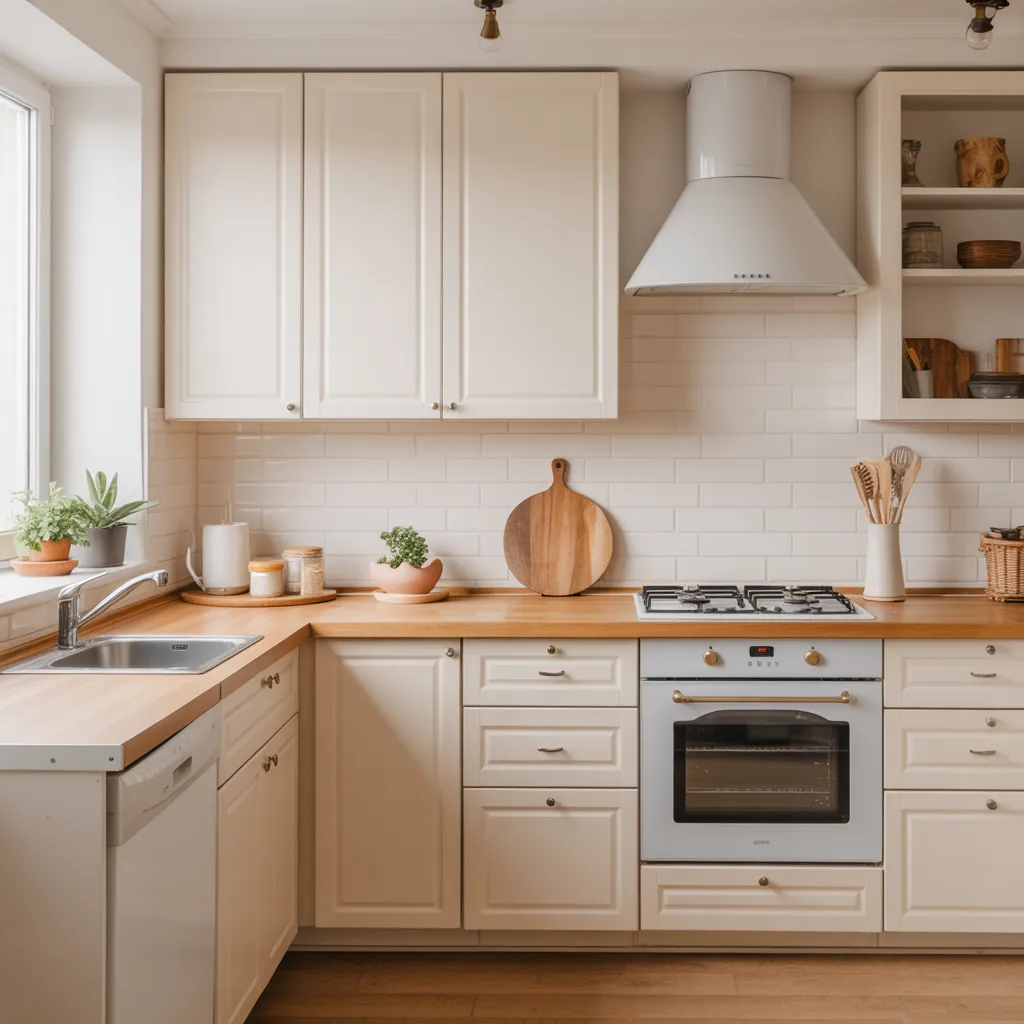
Dark cabinets in a small kitchen work against you. They absorb light, make walls feel closer, and compress the visual space of the room in a way that’s genuinely hard to overcome with any other design decision. Light-colored cabinets — white, cream, pale grey, soft sage — do the opposite. They reflect light, open up the visual field, and make the kitchen feel significantly more spacious than dark cabinets in the same square footage.
If you’re renovating, choose white or cream for the upper cabinets at minimum. If you’re refreshing existing cabinets with paint, one quart of cabinet-specific paint from Benjamin Moore or Sherwin-Williams covers most upper cabinets in a standard small kitchen and runs about $30-50. Benjamin Moore’s Chantilly Lace or White Dove are consistently top-rated whites for kitchen cabinets. If painting feels like too much commitment, even swapping hardware to a lighter or warmer finish makes the existing cabinets feel brighter and more intentional.
Open Shelving Small Kitchen Idea
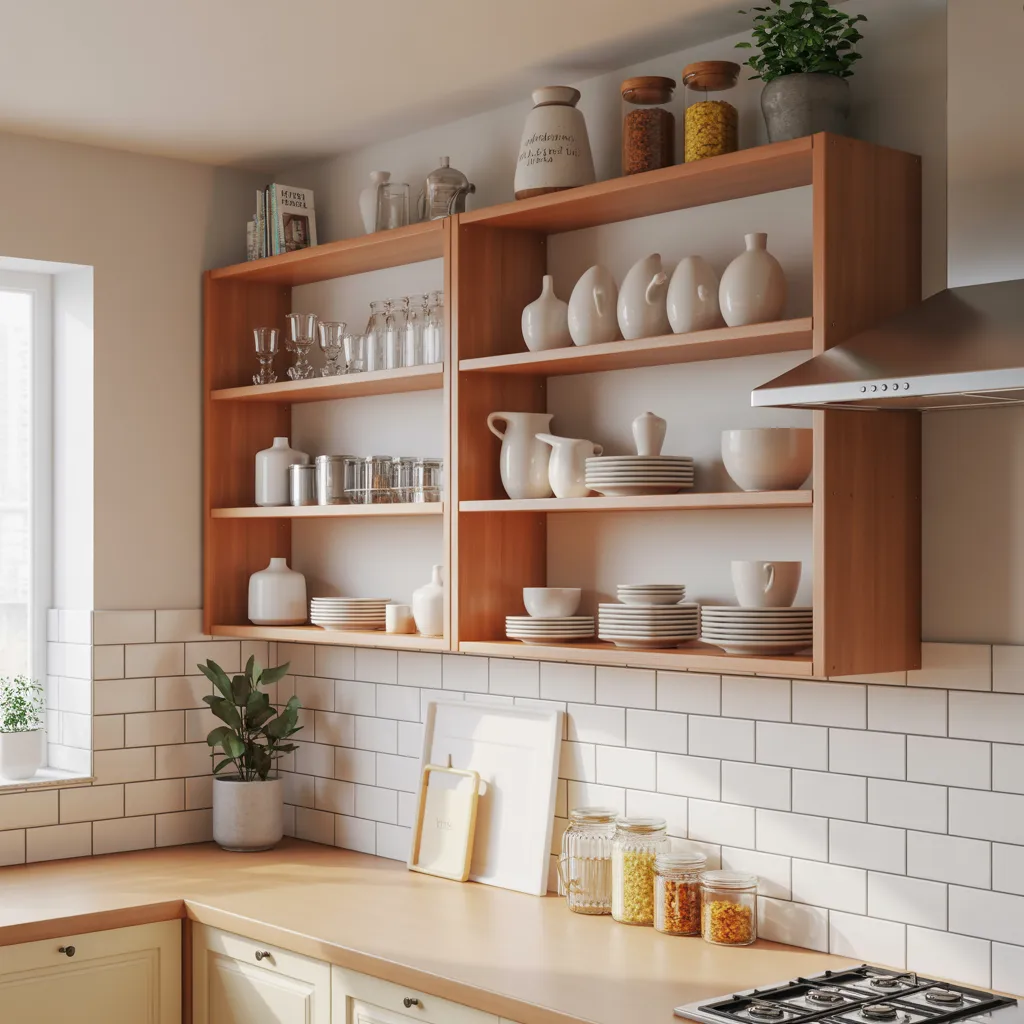
Open shelving in a small kitchen does something that closed cabinets can’t — it lets the eye travel through the space rather than stopping at a solid surface. When the wall behind the shelf is visible, the kitchen feels deeper and more open. When cabinets are closed, the wall stops at the cabinet face and the room feels smaller. This is the main reason open shelving works so well in small kitchens, even though it requires more organizational discipline to maintain.
Replacing two or three upper cabinet doors with open shelves — or removing them entirely and adding floating shelves — costs almost nothing if you’re using the existing cabinet box with the door removed. New floating shelves from IKEA’s Bergshult line run about $20-40 per shelf and look clean and minimal. The key is keeping them curated: matching dishes, a few plants, organized food jars. Open shelves that look good require editing — put the mismatched plastic containers in a closed cabinet below.
Under-Cabinet Lighting Small Kitchen Idea
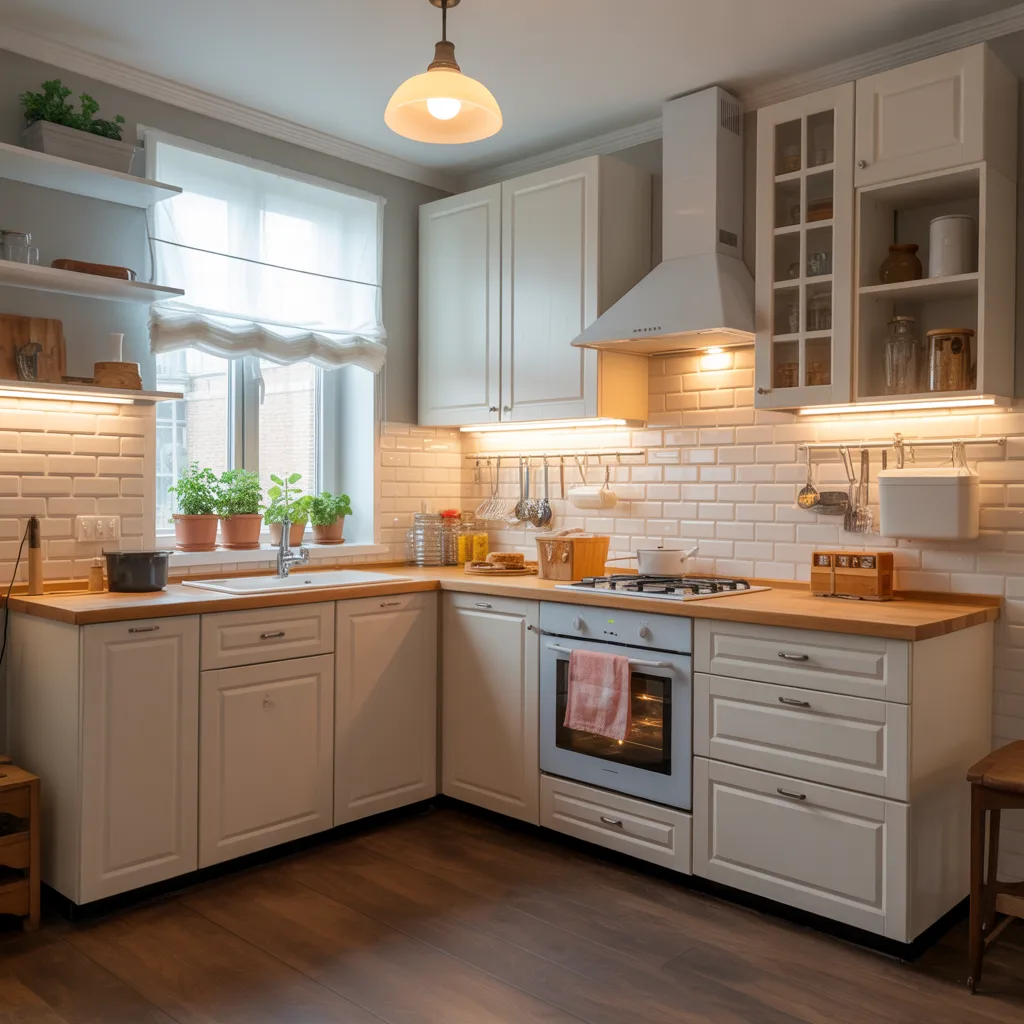
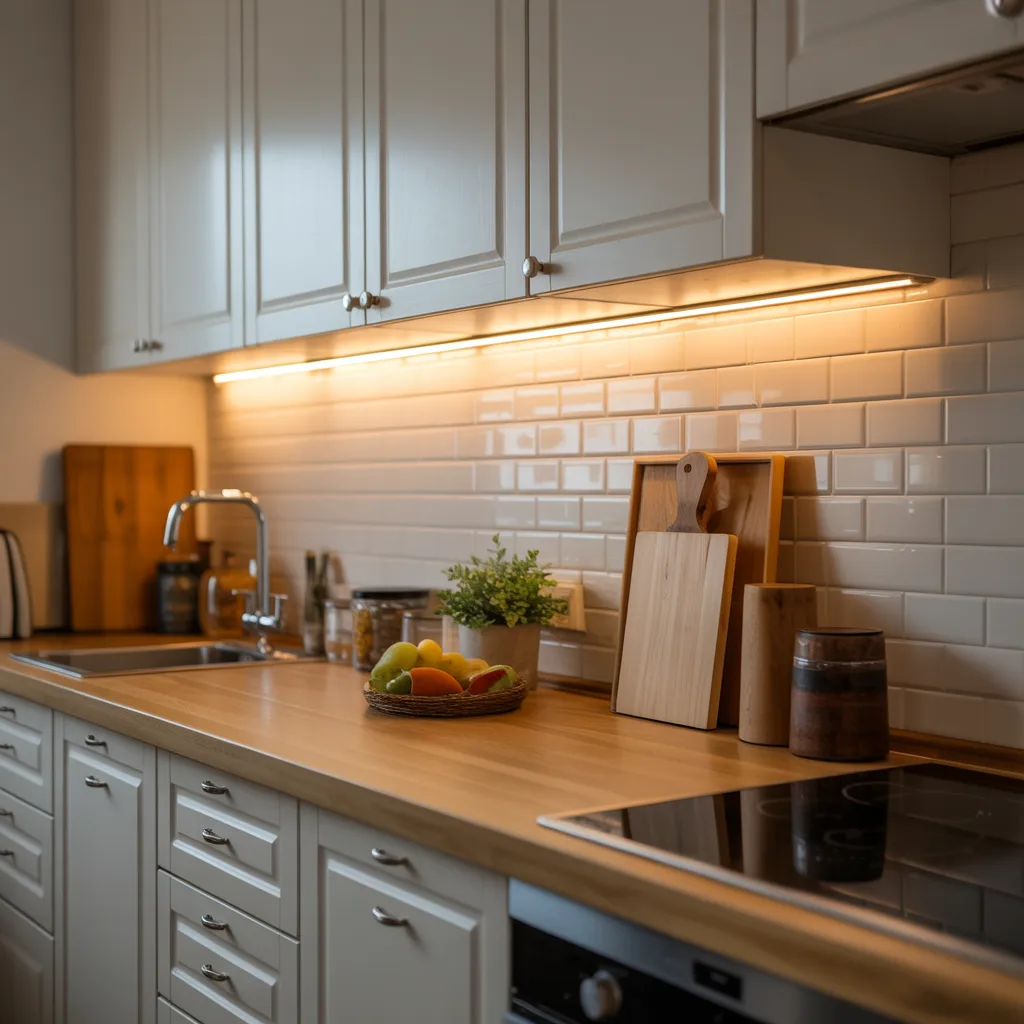
Under-cabinet lighting solves two problems at once: it illuminates the counter work surface where overhead lighting almost always creates shadows, and it adds warmth and depth to the kitchen at eye level. Most small kitchens have a single overhead light that does neither of these things well. Under-cabinet lighting changes how usable the kitchen is and how it looks, which is a genuinely rare combination in home improvement.
LED strip lights with peel-and-stick backing from Amazon run about $15-25 for a set that covers most small kitchen uppers. Choose warm white (2700-3000K) rather than cool white — cool under-cabinet light makes food look unappetizing and the counter feel clinical. Plug-in versions are the easiest to install (no wiring required); hardwired versions are cleaner but need an electrician. Either way, the investment pays for itself in how much better the kitchen looks and functions every single day.
Vertical Storage Small Kitchen Idea
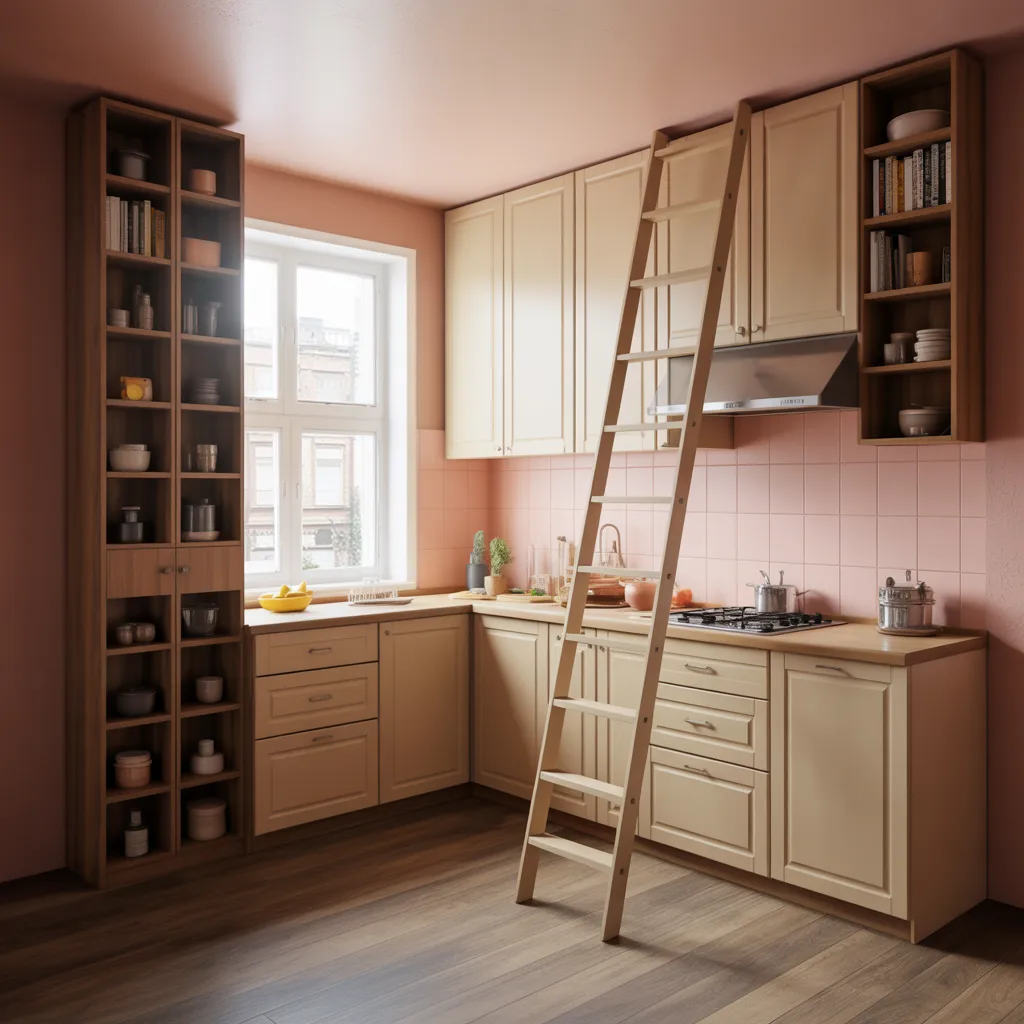
Small kitchens almost always have more wall height available than floor space. Most people ignore this completely. Shelves that stop at eye level leave 12 to 18 inches of perfectly usable wall space above them — space that could hold the things that are currently crowding the counters or jammed into cabinets. Going vertical with storage is one of the most reliable ways to add meaningful capacity to a small kitchen without changing its footprint at all.
Extend cabinets to the ceiling if you’re doing a renovation — this adds one full shelf’s worth of storage per cabinet run, which in a small kitchen can mean another 20-30 items off the counter and out of sight. If you can’t change the cabinets, add a shelf or two above the existing uppers for items you use seasonally or rarely. A tall narrow pantry cabinet from IKEA — the Sektion system starts at about $100 — adds significant vertical storage in almost no floor space.
Magnetic Knife Strip Small Kitchen Idea
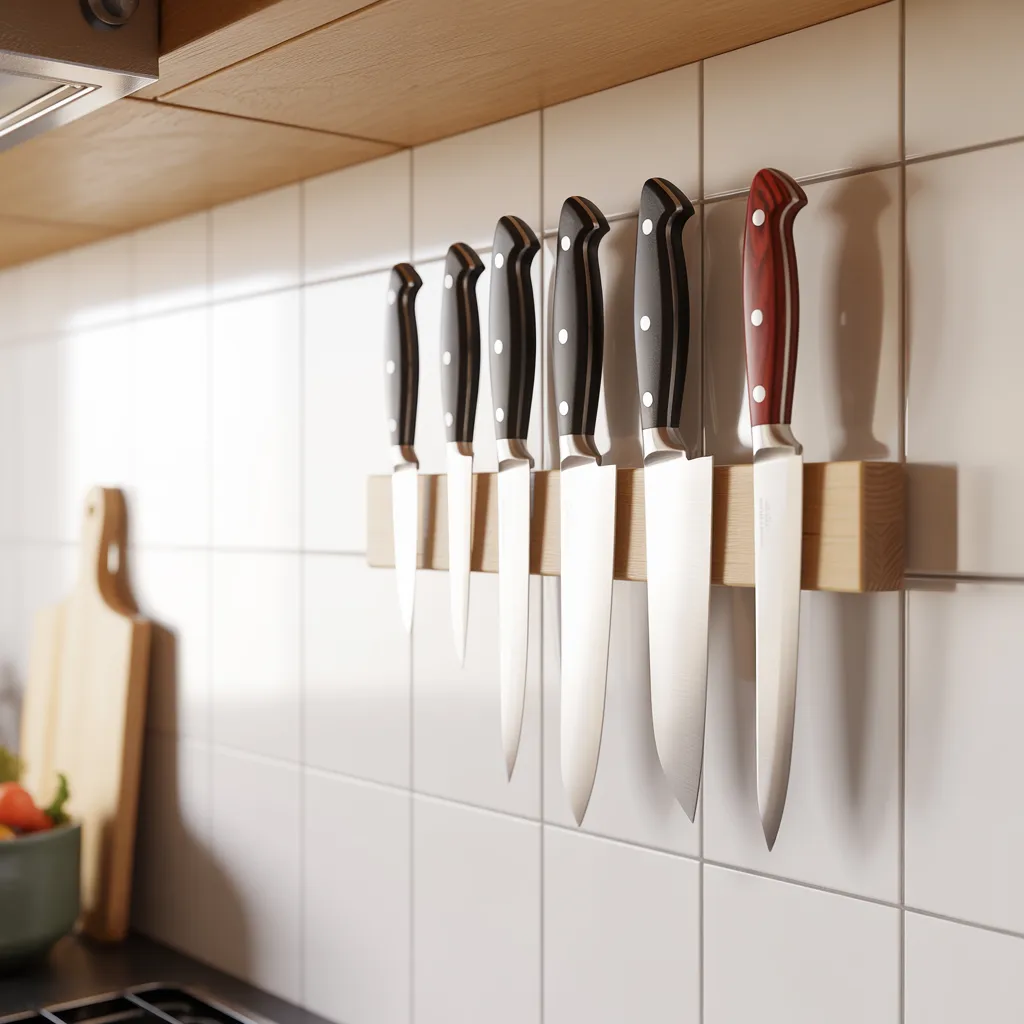
A knife block takes up valuable counter space and a knife drawer requires careful organization that most people don’t maintain. A magnetic knife strip mounted on the wall above or beside the counter holds every knife you own in a single strip of wall space, keeps them accessible, and frees up the counter completely. It’s one of the most-recommended small kitchen storage ideas for good reason — it solves a real problem in about ten minutes.
A quality magnetic knife strip from Utopia Kitchen or Ouddy runs about $15-25 on Amazon for a 16-inch strip, which holds 8-10 knives. Mount it on the wall at arm’s reach from the cooking area — ideally on the side wall beside the stove or on the backsplash above the counter. Use command strips if you’re renting and can’t put holes in the wall; the heavy-duty version holds about 7 pounds, which is enough for a full knife set.
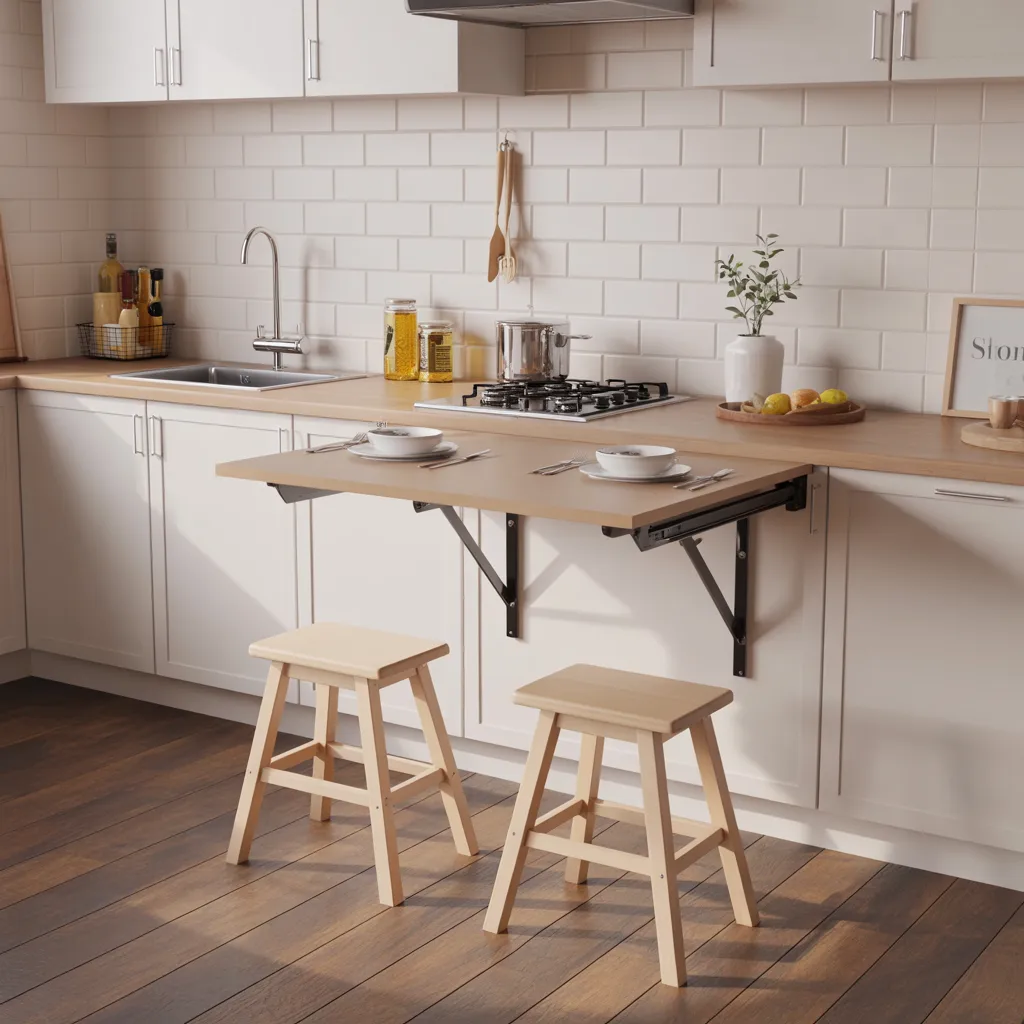
Fold-Down Table Small Kitchen Idea
A fold-down wall-mounted table gives a small kitchen a dining surface that disappears completely when it’s not being used. Mounted on a wall beside the kitchen or at the end of a galley, it folds flat against the wall when folded and takes up zero floor space. Extended, it seats two people comfortably for a meal. It’s one of the most space-efficient pieces of furniture available for small apartments and studio kitchens where a dedicated dining table isn’t possible.
IKEA’s Norberg wall-mounted drop-leaf table is one of the most popular versions — it costs about $50 and folds to just 6 inches deep against the wall when closed. A more design-forward option: a custom fold-down table made from a piece of hardwood and two wall-mounted hinged brackets, which can be built for about $60-100 in materials and looks intentionally designed rather than like a space-saving compromise. Pair it with folding stools that hang on hooks below when not in use.
Rolling Kitchen Cart Small Kitchen Idea
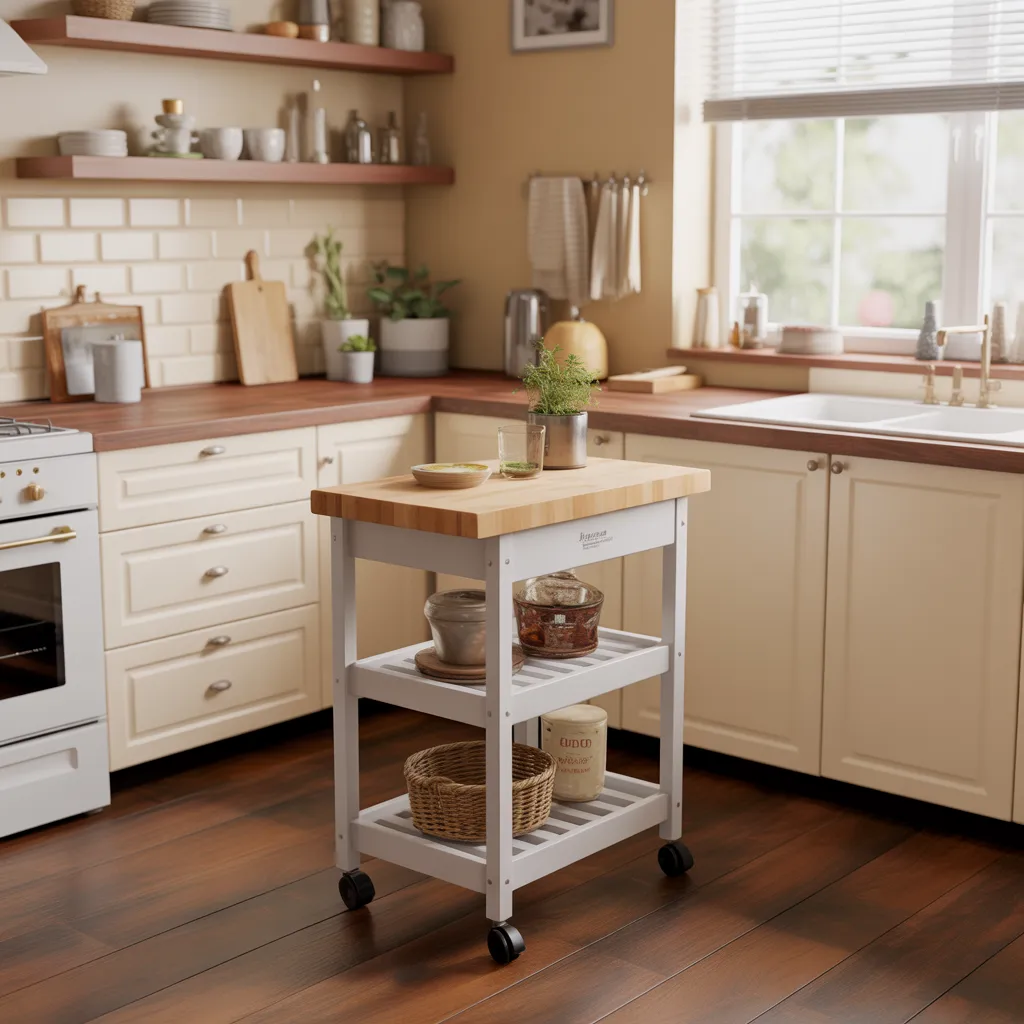
A fixed island isn’t possible in most small kitchens. But a rolling kitchen cart gives you extra prep surface and storage without permanently taking up floor space — roll it where you need it, tuck it against a wall or into a corner when you don’t. In a kitchen where counter space is the primary constraint, a rolling cart can nearly double the usable prep area during cooking and disappear when the kitchen needs to function as a walkway.
IKEA’s Råskog cart is one of the most versatile options — it’s compact, relatively affordable at about $30-40, and works as extra counter space, a serving cart, or storage. The Bror cart from the same range is heavier-duty at about $90-130 and has a stainless top that’s genuinely useful for food prep. For something that looks more like furniture, a butcher block topped rolling island from Wayfair or Amazon runs about $100-200 and reads as a proper kitchen piece rather than a cart.
Light Backsplash Small Kitchen Idea
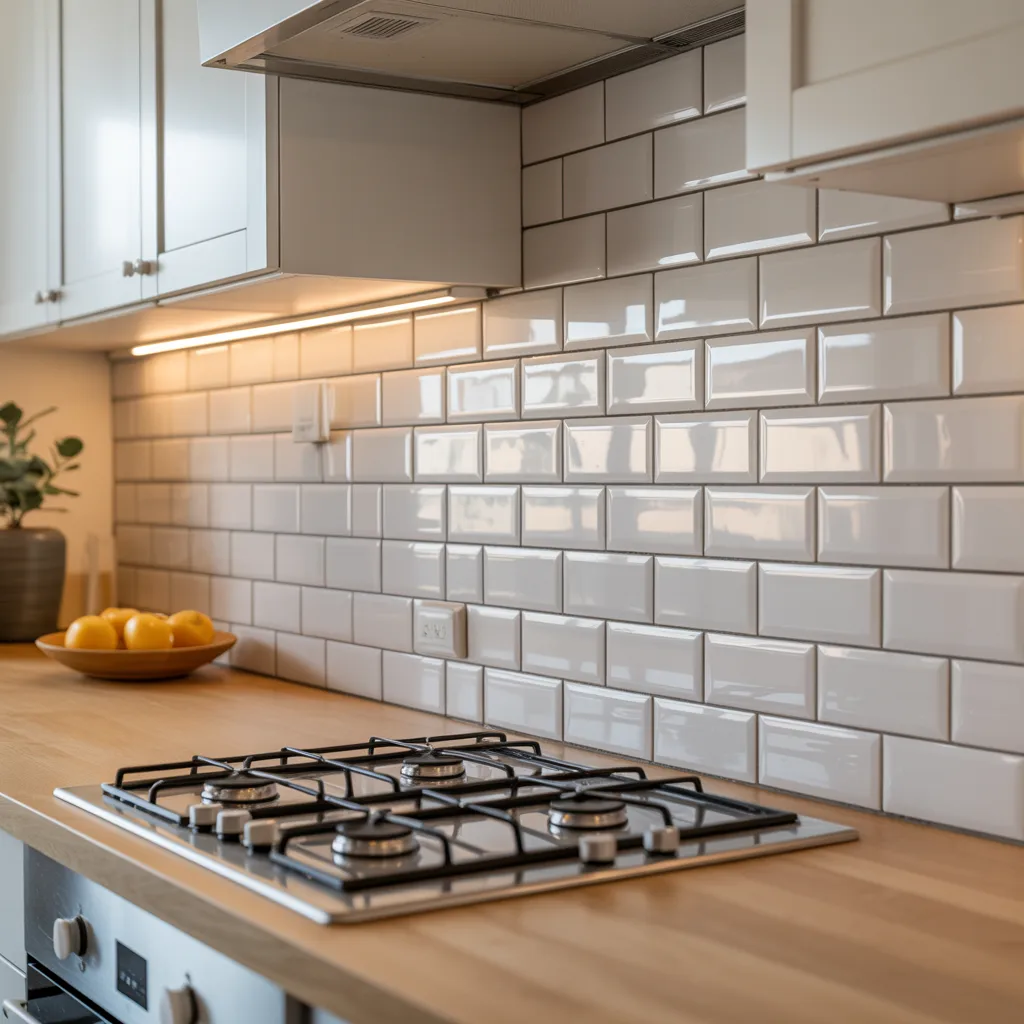
The backsplash in a small kitchen is more visually prominent than in a large one, because you can see all of it at once from any position in the room. A dark or busy backsplash compresses the space visually. A light, reflective backsplash does the opposite — it bounces light around the room and makes the kitchen feel more open. White subway tile is the most reliable choice, but it’s far from the only one.
White or cream zellige tile reads as warm and artisanal rather than clinical. Pale grey or soft sage green tile adds color without heaviness. Glossy tiles in any light color reflect more light than matte ones — a meaningful advantage in a small kitchen that may already be short on natural light. Peel-and-stick tile backsplash from Smart Tiles or Aspect runs about $10-15 per square foot and installs without any tools or adhesive, making it perfect for renters.
Hanging Pot Rack Small Kitchen Idea
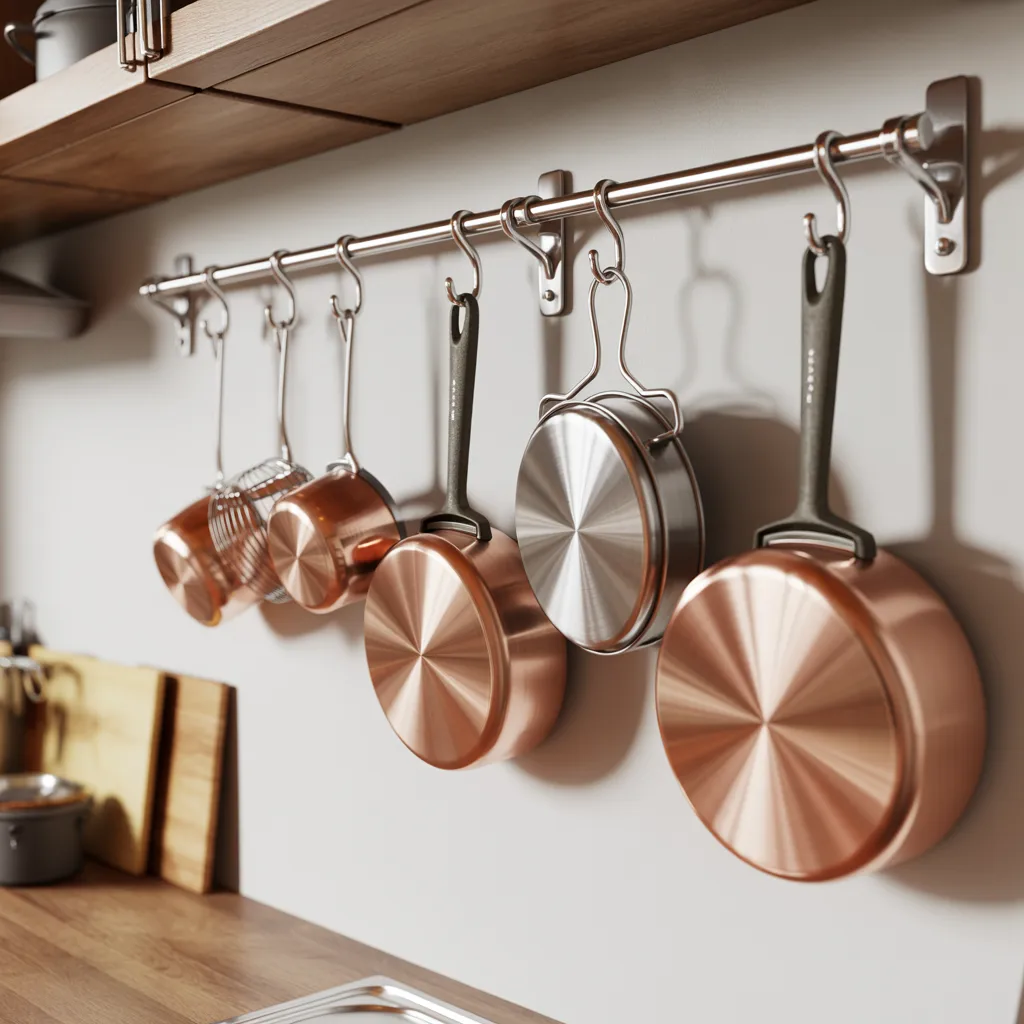
Pots and pans are among the most space-consuming items in any kitchen, and in a small kitchen they can take up an entire cabinet on their own. A ceiling-mounted or wall-mounted pot rack moves them off the shelves and onto an otherwise unused surface — the ceiling or the wall above the stove — freeing up significant cabinet space for other things. It also makes the kitchen look more like a real kitchen, which is a pleasant side effect.
A simple wall-mounted pot rail from IKEA — the Kungsfors rail in stainless steel runs about $15 — holds four to six pots and pans with S-hooks included. A ceiling-mounted rack requires more commitment but holds more and looks more dramatic. Round ceiling-mounted pot racks from Amazon or Wayfair run about $50-150 depending on size and material. Make sure to anchor into ceiling joists rather than just drywall — pots are heavy and the rack needs a secure mount.
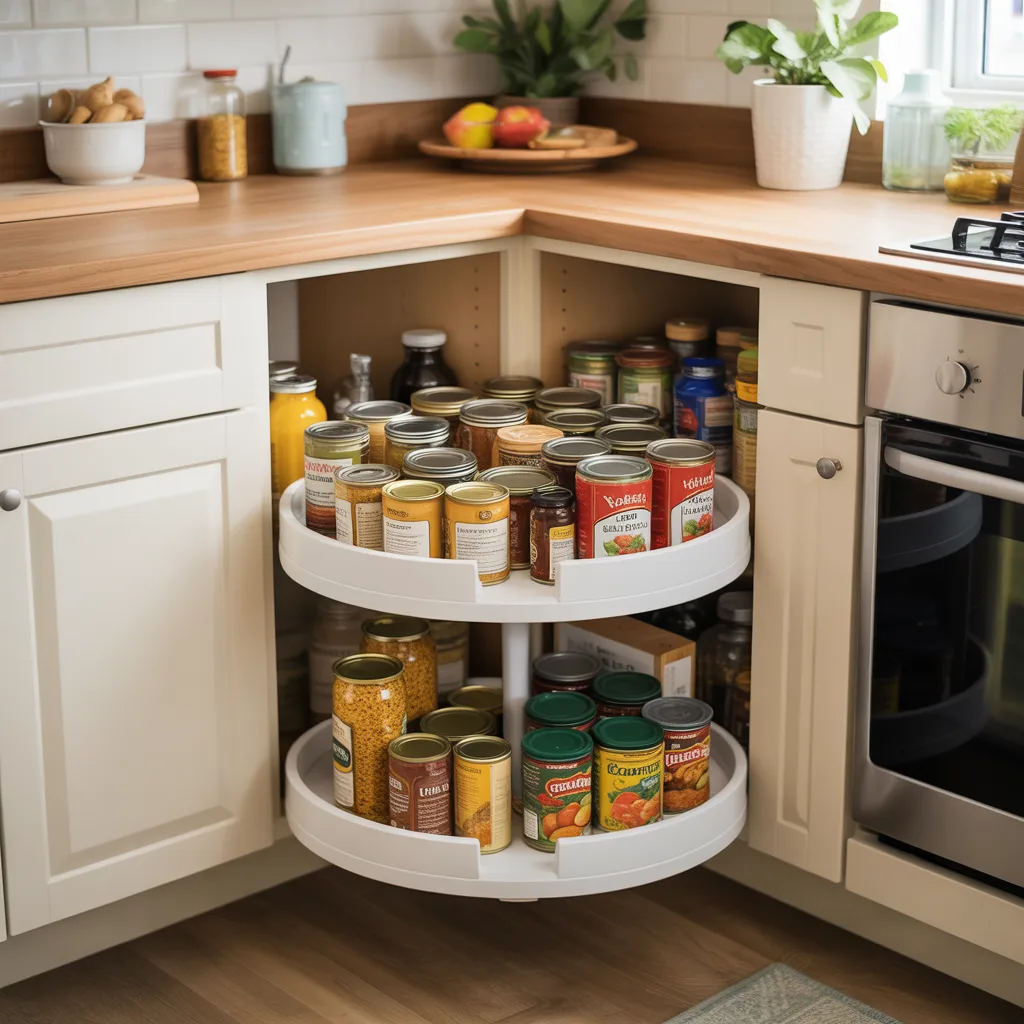
Corner Cabinet Solution Small Kitchen Idea
Kitchen corners are almost universally wasted space. A standard cabinet in a corner hides the items at the back behind a wall of items at the front, so everything that lives in a corner cabinet is effectively inaccessible unless you’re willing to empty the cabinet to reach it. In a small kitchen where every inch of storage matters, fixing the corners pays significant dividends.
A lazy Susan — the rotating shelf system — is the most affordable fix for a corner cabinet, running about $20-40 for a set from Amazon or a hardware store. Pull-out drawer systems for corner cabinets (the LeMans system from Häfele is the most popular) allow full access to everything at the back and run about $100-200. Both options are dramatically better than a fixed shelf in a corner. If you’re doing a full renovation, a diagonal corner cabinet or a blind corner pull-out maximizes the corner footprint most efficiently.
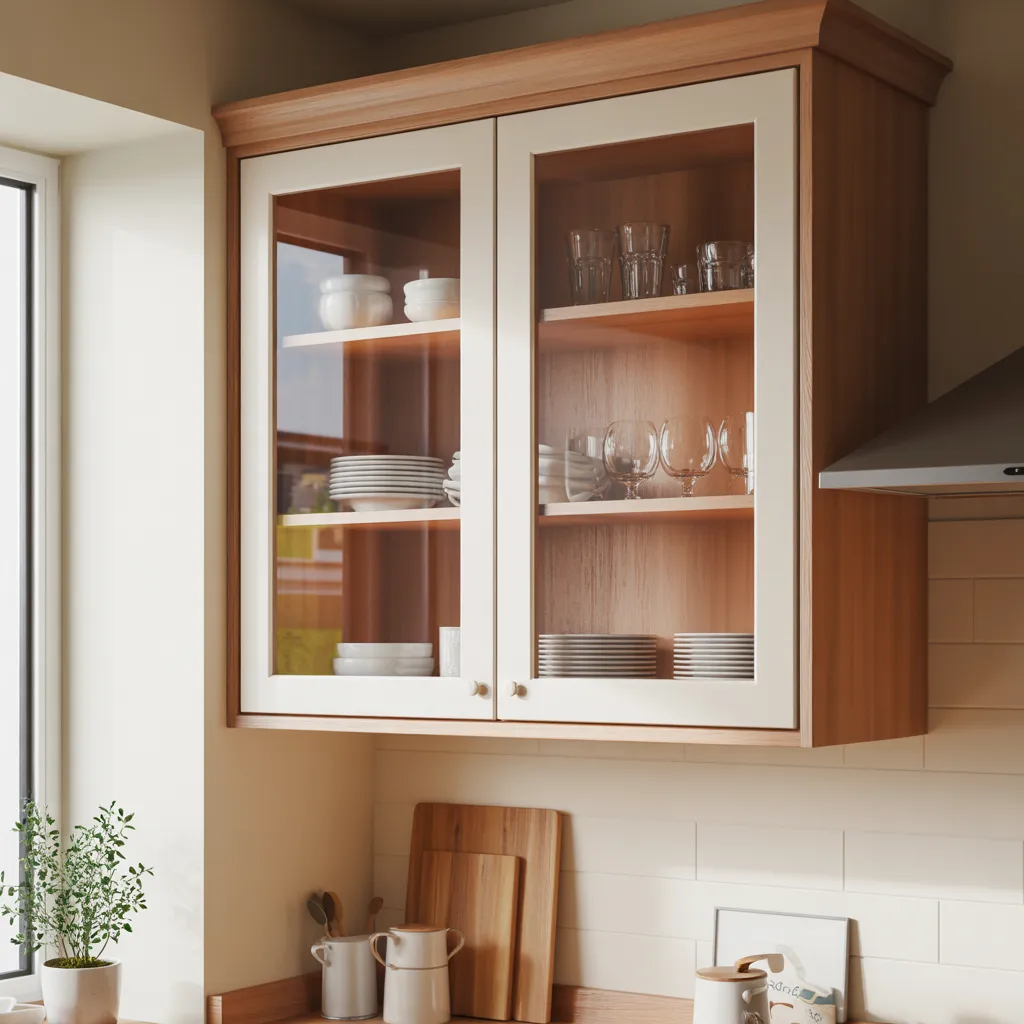
Glass Front Cabinet Small Kitchen Idea
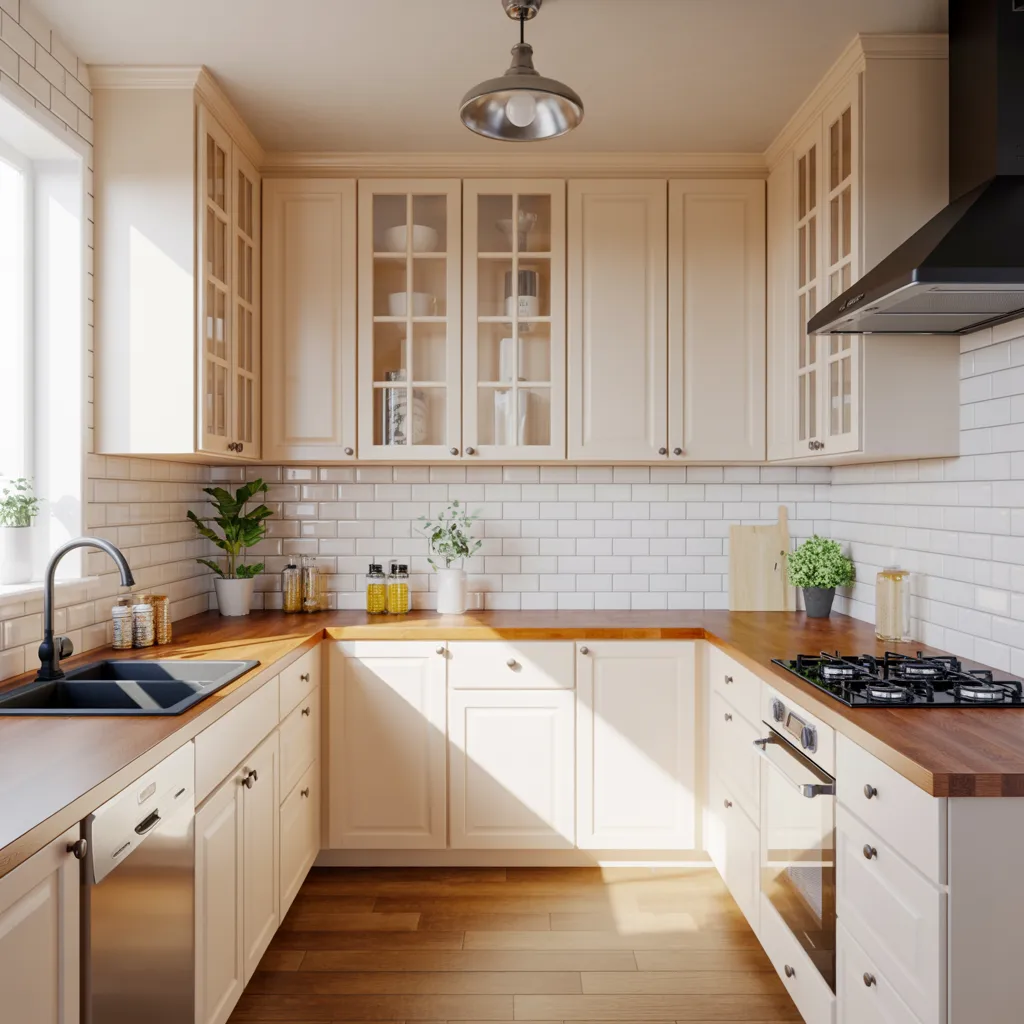
Glass-front cabinet doors let the eye travel into the cabinet rather than stopping at a solid surface. That visual depth makes a small kitchen feel larger — not by much, but measurably. They also encourage better organization, because the contents are always visible, which means mismatched plastic containers and random items tend to migrate to closed cabinets where they’re hidden. Glass fronts tend to upgrade the overall quality of the kitchen just by requiring more intentional storage.
Replacing solid cabinet doors with glass-front versions costs about $150-400 per door if you’re ordering custom, but many standard cabinet door sizes are available from IKEA or Home Depot for $40-80 per door. Frosted glass offers the visual lightness without fully exposing the contents, which is useful for cabinets where the organization isn’t perfect. Chicken wire or reeded glass are more design-forward alternatives that add texture while still allowing light to pass through.
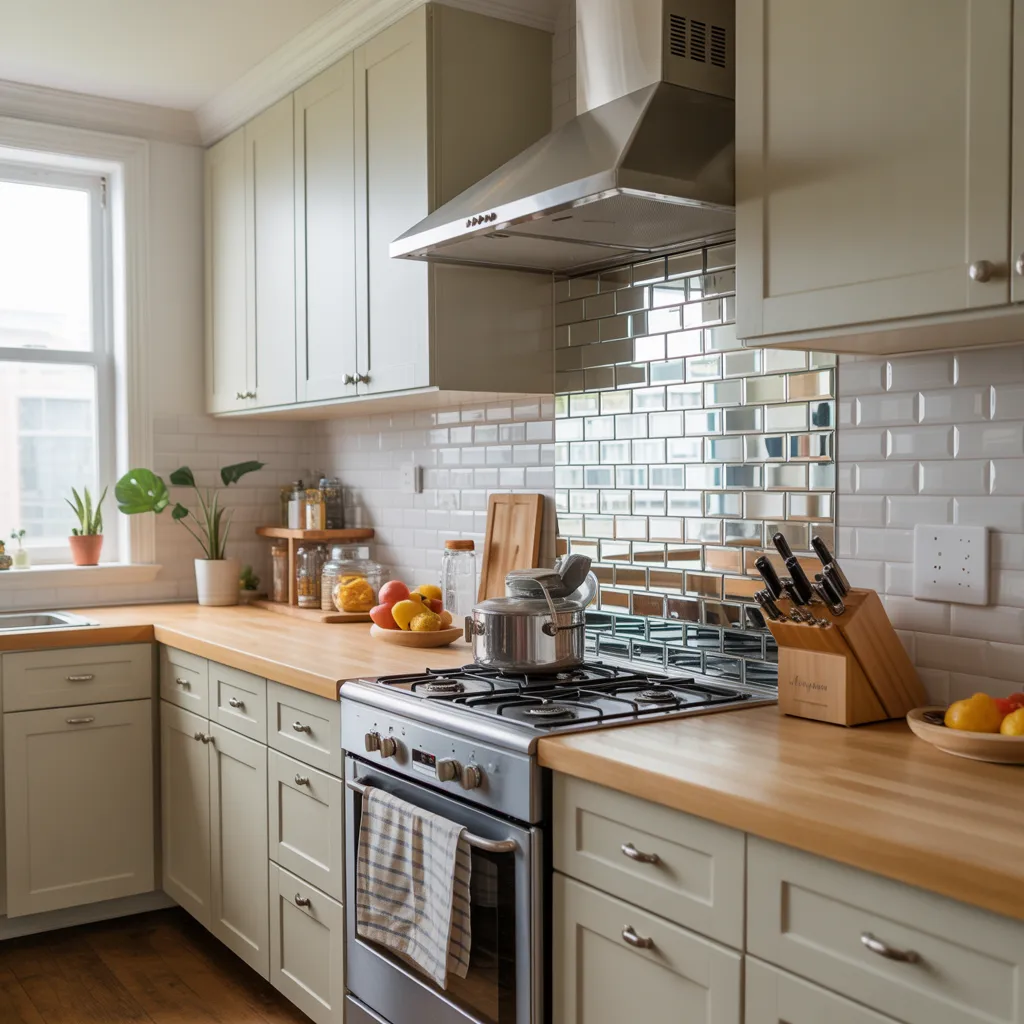
Mirrored Backsplash Small Kitchen Idea
A mirrored backsplash is one of the most effective visual tricks available for a small kitchen. It reflects the light from windows and overhead fixtures and doubles the perceived depth of the room behind it, making a kitchen that feels cramped suddenly feel more open and airy. It’s particularly effective on the wall behind the stove, where it reflects both the cooking activity and the overhead range hood, creating a sense of depth in the tightest part of many small kitchens.
Mirror tiles specifically designed for backsplash use — sealed against moisture and grease — are available from specialty tile retailers and Amazon for about $10-20 per square foot. They’re more durable than standard mirror and easier to keep clean. Antique mirror tiles add warmth and a slightly imperfect reflection that looks more intentional than flat mirror. For renters, peel-and-stick mirror tiles from Amazon run about $15-25 for a set and remove without damage.
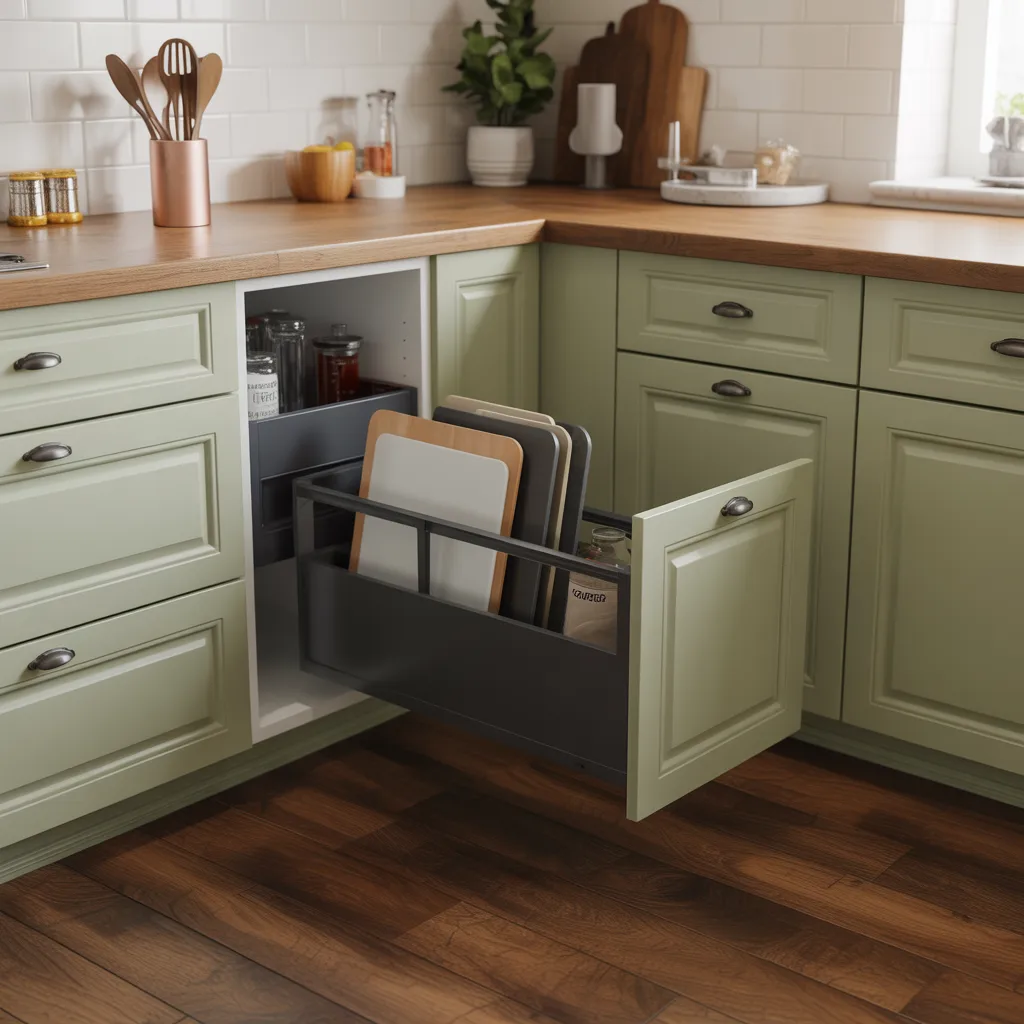
Toe-Kick Drawer Small Kitchen Idea
The toe-kick space — the recessed area at the very base of kitchen cabinets — is almost always completely unused. It’s the last bit of floor-level space that most people never think to use. But toe-kick drawers installed in this space hold flat items that are difficult to store anywhere else: baking sheets, cutting boards, pizza stones, flat lids, placemats and tablecloths. In a small kitchen where every inch of storage matters, this hidden space is genuine found storage.
Toe-kick drawers are a renovation project rather than a quick fix — they need to be planned during cabinet installation or retrofitted carefully. A carpenter can retrofit toe-kick drawers into existing cabinets for about $100-200 per run of cabinets. Push-to-open mechanisms are the most practical since reaching down to pull a handle is awkward. If you’re doing a full kitchen renovation, specify toe-kick drawers from the start — they add minimal cost to the overall project and significantly more storage capacity.
Narrow Side Cabinet Small Kitchen Idea
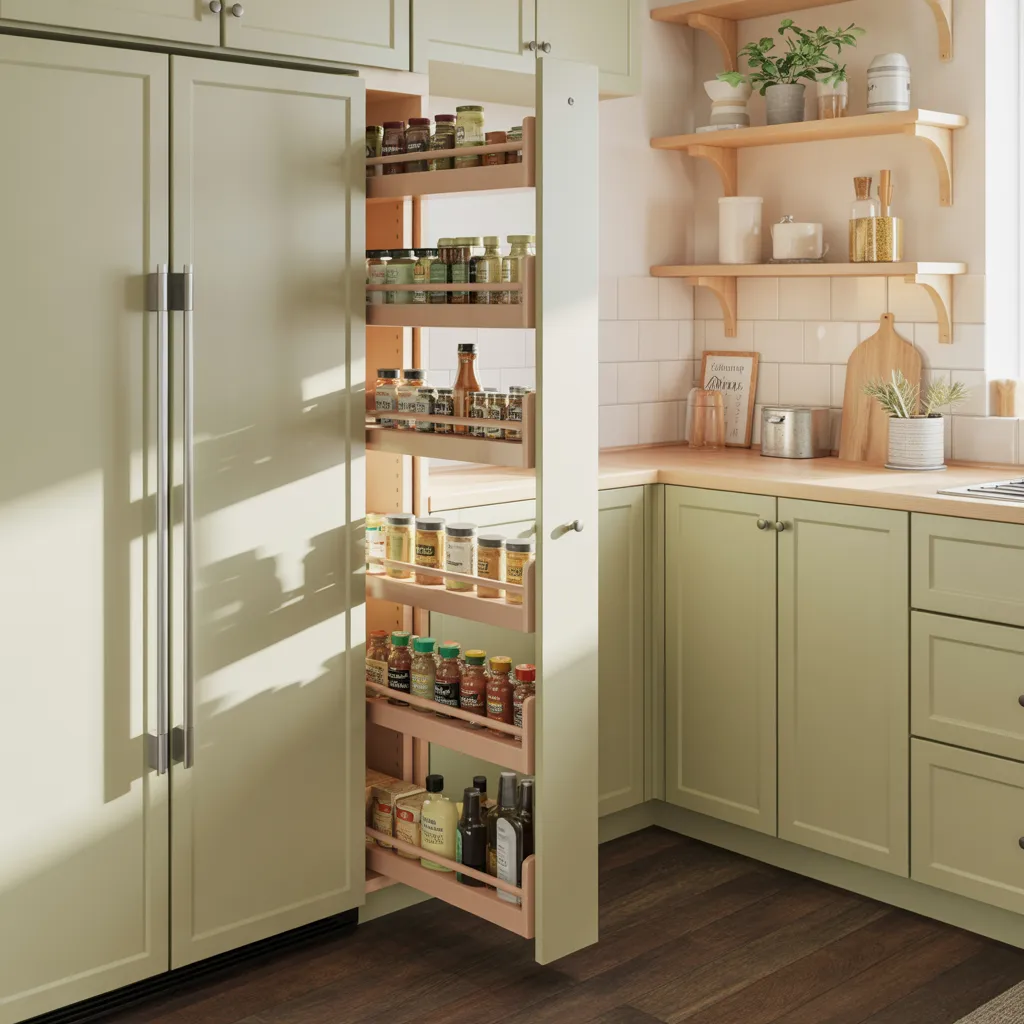
The narrow gap between a refrigerator and the wall — often 3 to 6 inches wide — is one of the most consistent wastes of space in a small kitchen. It’s too narrow for a standard cabinet but perfectly sized for a slim pull-out pantry: a tall, narrow rolling cabinet that slides into the gap and holds spices, canned goods, condiments, and small pantry items vertically on thin shelves. It’s probably the most efficient storage addition available for a small kitchen.
Slim rolling pantry cabinets for refrigerator gaps are available on Amazon for about $50-120 depending on height and configuration. Measure the gap carefully before ordering — most run between 4 and 7 inches wide, and the cabinet needs to fit with room to slide in and out. These hold a surprising amount: a typical 72-inch tall version stores 50-100 items that would otherwise crowd a shelf or counter. It’s one of the best small kitchen investments available.
Window Herb Garden Small Kitchen Idea
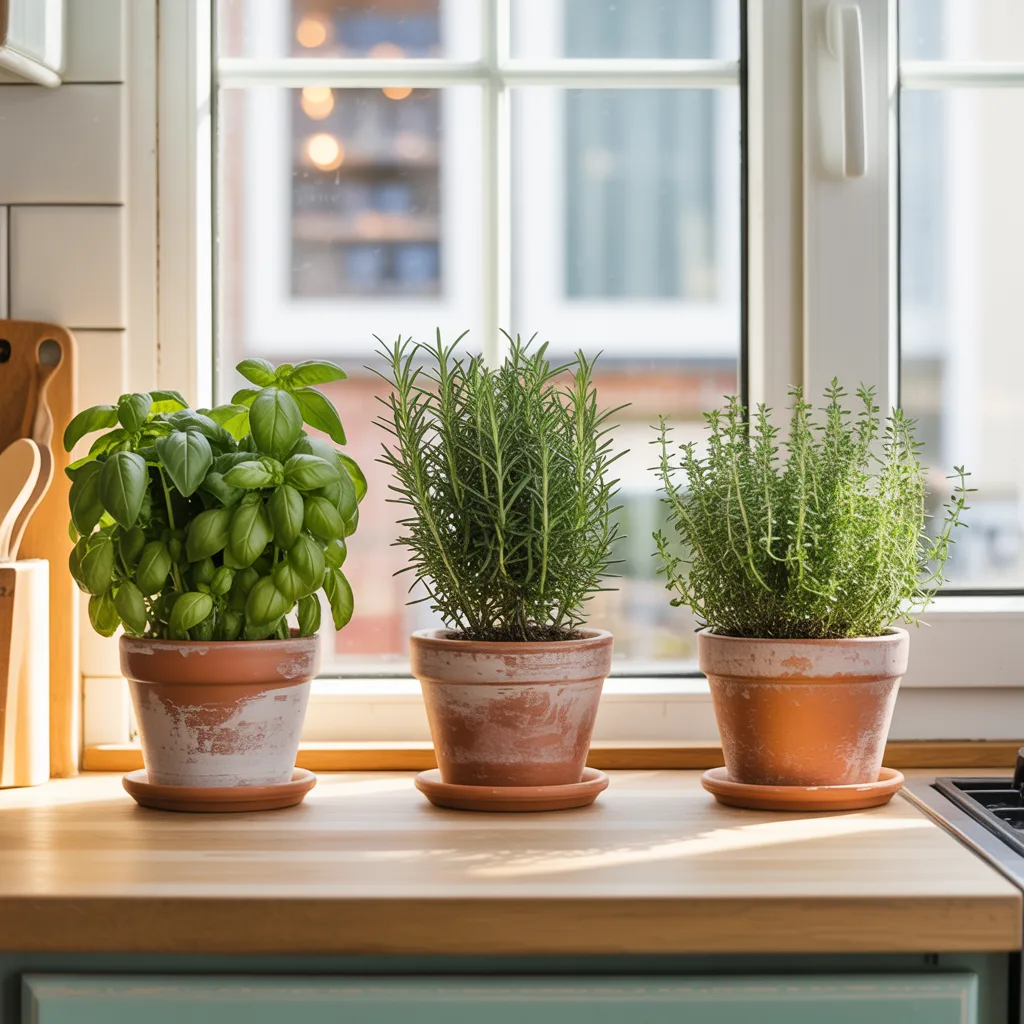
A small herb garden on the kitchen windowsill is one of those small kitchen ideas that earns its place in multiple ways at once. Fresh herbs at arm’s reach while cooking. A natural, living element in a space that can otherwise feel all-hard-surfaces. The visual warmth of green plants against a window. And the practical benefit of always having basil, thyme, rosemary, or mint without a trip to the store. It does all of this in about 12 inches of windowsill space.
Three small terracotta pots — about $2-3 each at a hardware store or IKEA — filled with starter plants from a nursery (about $3-5 each) is the most affordable version. Self-watering planters from Amazon or West Elm in the $15-25 range per pot are worth it if you tend to forget to water things — they maintain consistent moisture without daily attention. Most kitchen herbs need 4-6 hours of direct sun, so a south or east-facing window works best. North-facing windows usually aren’t sunny enough.
Statement Hardware Upgrade Small Kitchen Idea
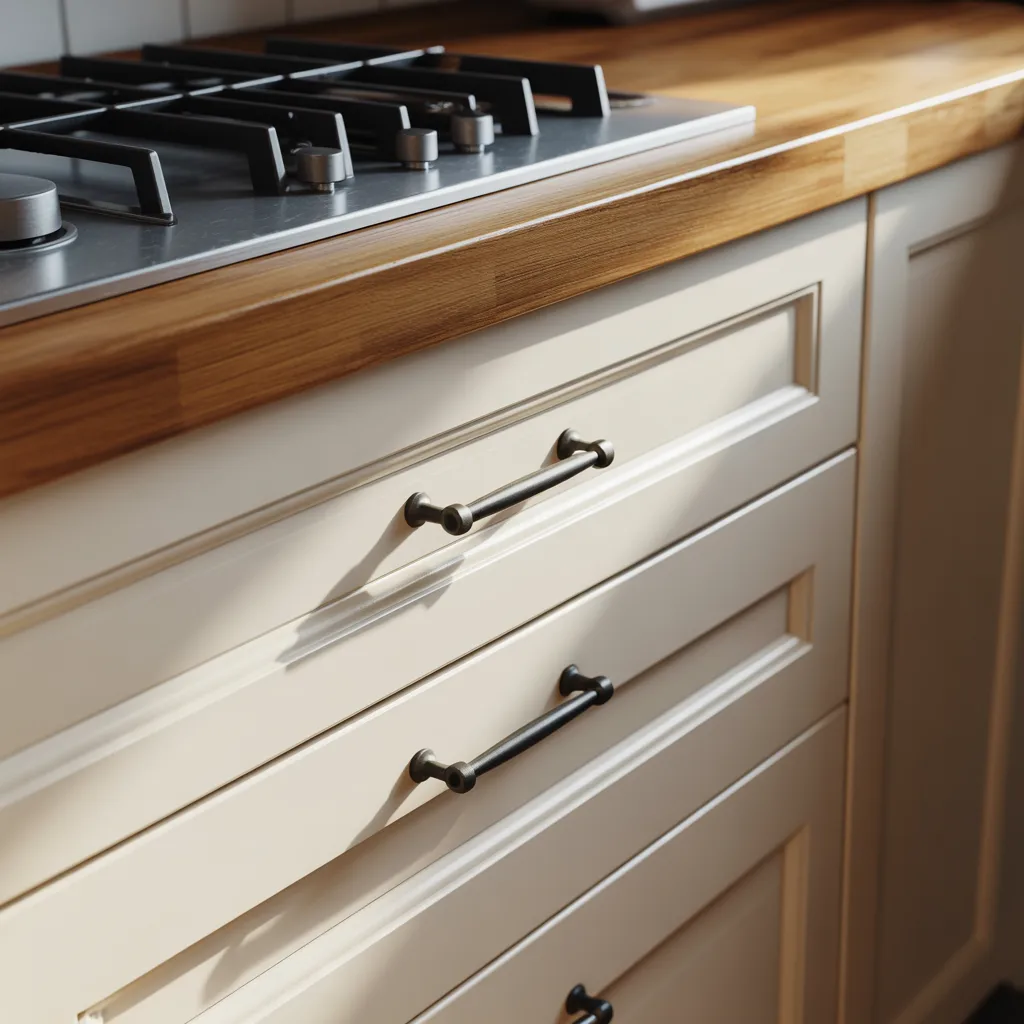
Cabinet hardware is the most overlooked detail in most small kitchens, and it’s one of the easiest to change. The pulls and knobs on your cabinets are touched dozens of times a day, they’re visible from every position in the kitchen, and they have a significant effect on how much the cabinets look intentional versus generic. Cheap, generic hardware makes even decent cabinets look bargain. Upgraded hardware makes the same cabinets look custom.
Swapping cabinet hardware in a standard small kitchen takes about an hour and costs about $30-100 total depending on the finish and style you choose. Matte black, brushed brass, and brushed nickel are all strong choices right now. Rejuvenation and Anthropologie Home have the most design-forward options; Amazon has virtually identical hardware at a fraction of the price if you’re not picky about brand. Stick to one finish throughout the kitchen — mixing metals in a small space reads as unresolved.
Pegboard Kitchen Wall Small Kitchen Idea
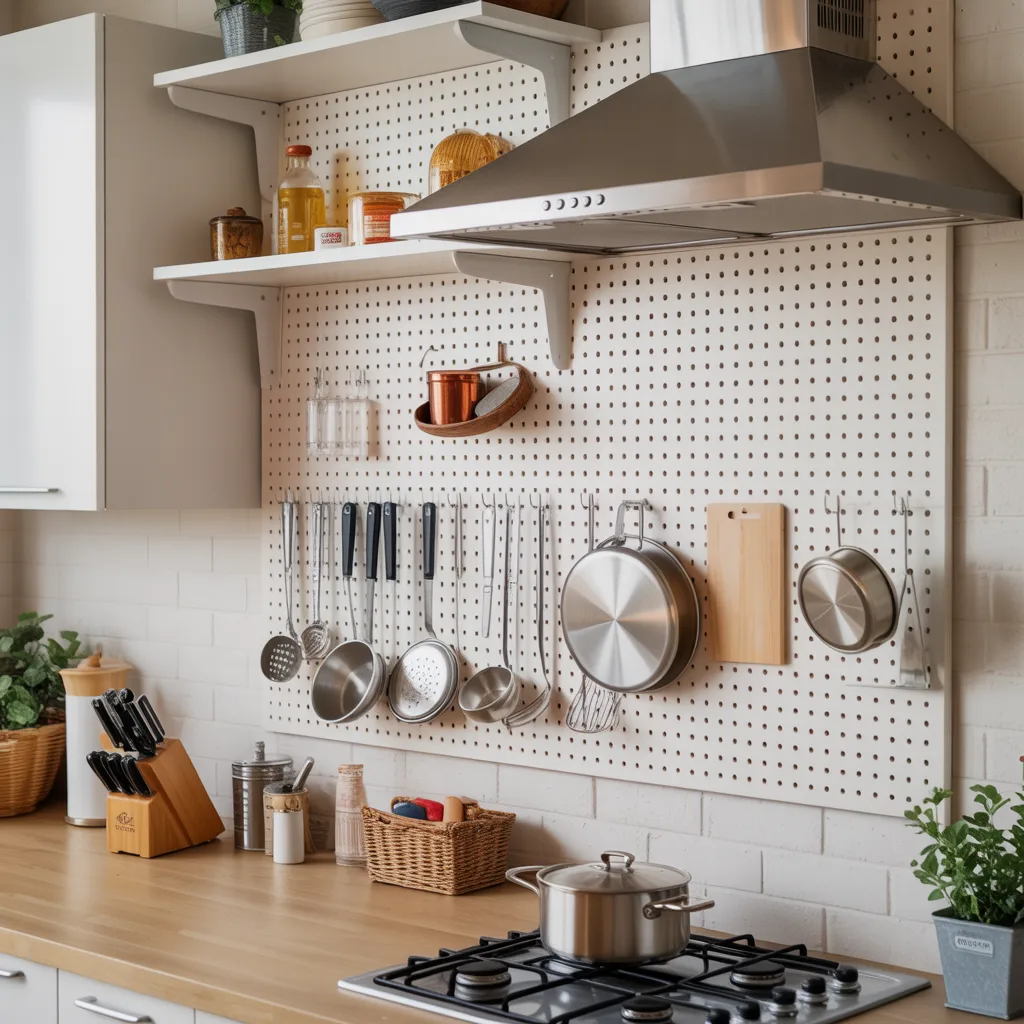
A pegboard on one kitchen wall — painted to match the walls or in a contrasting color — holds utensils, small pots, measuring cups, cutting boards, and anything else that usually crowds a drawer or counter. In a small kitchen where every drawer and cabinet is at capacity, moving frequently-used items to the wall frees up storage for the things that actually need to be stored. It’s a simple idea that solves a persistent problem.
A 2×4 foot sheet of pegboard from a hardware store costs about $15. Paint it before mounting — the wall color for a seamless look, or a bold accent color to make it a feature. A pegboard hook kit from Amazon runs about $15 and includes far more variety than you’d expect. Mount with 1-inch spacers behind it so the hooks fit properly. The whole setup, installed and stocked, costs under $50 and frees up more drawer and counter space than most cabinet additions at ten times the price.
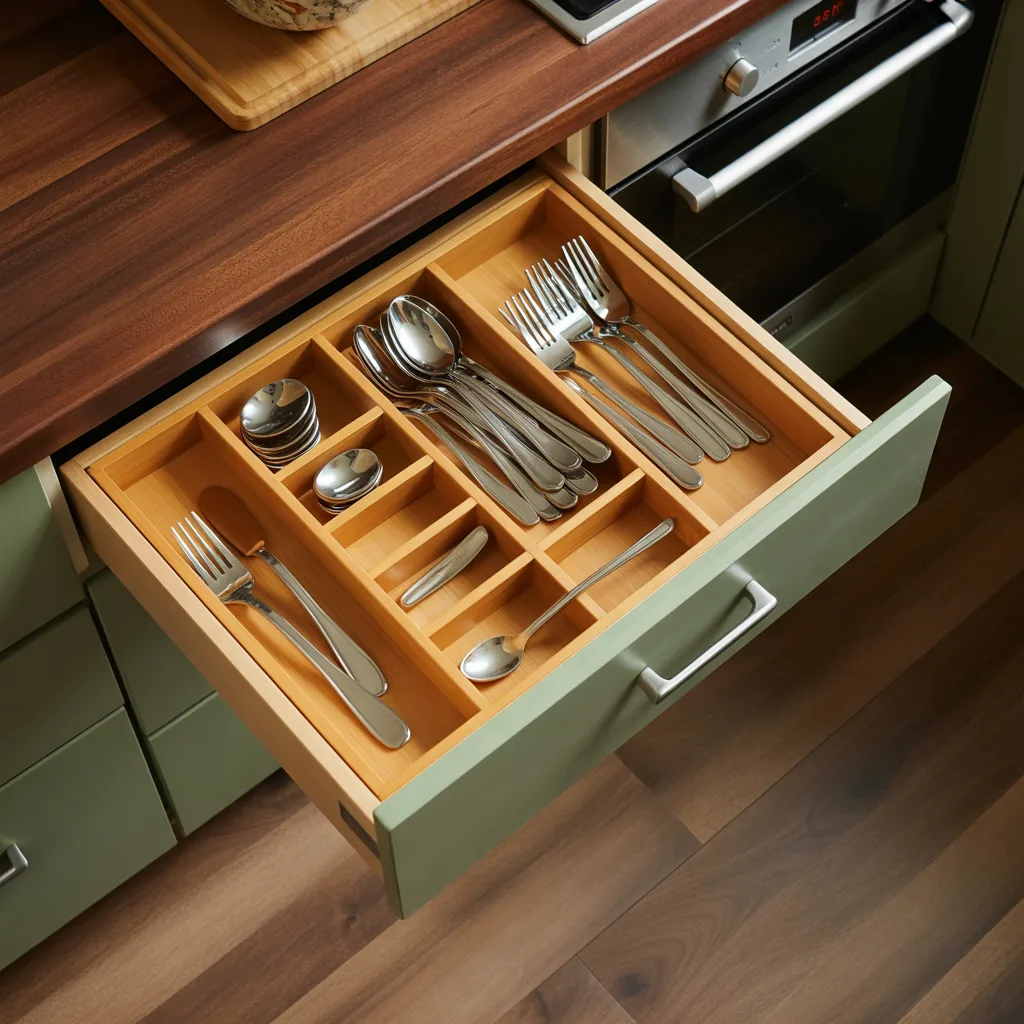
Drawer Organizer Small Kitchen Idea
Kitchen drawers in small kitchens become catch-alls almost immediately. The utensil drawer, the junk drawer, the miscellaneous-things drawer — they all become chaotic within weeks of moving in, and then they stay that way because the mess is hidden and life is busy. But a kitchen where you can’t find the vegetable peeler without excavating a drawer full of random items is a kitchen that adds friction to every cooking session.
Bamboo drawer organizers from Amazon or The Container Store run about $15-30 for a set that divides a standard kitchen drawer into organized sections. Spend 30 minutes emptying and editing every drawer — remove anything that doesn’t belong in the kitchen — then organize what remains with dividers. The difference is immediate and lasting if you maintain the edit. This is genuinely one of the highest-return organizational investments in a small kitchen: minimal cost, maximum daily improvement.
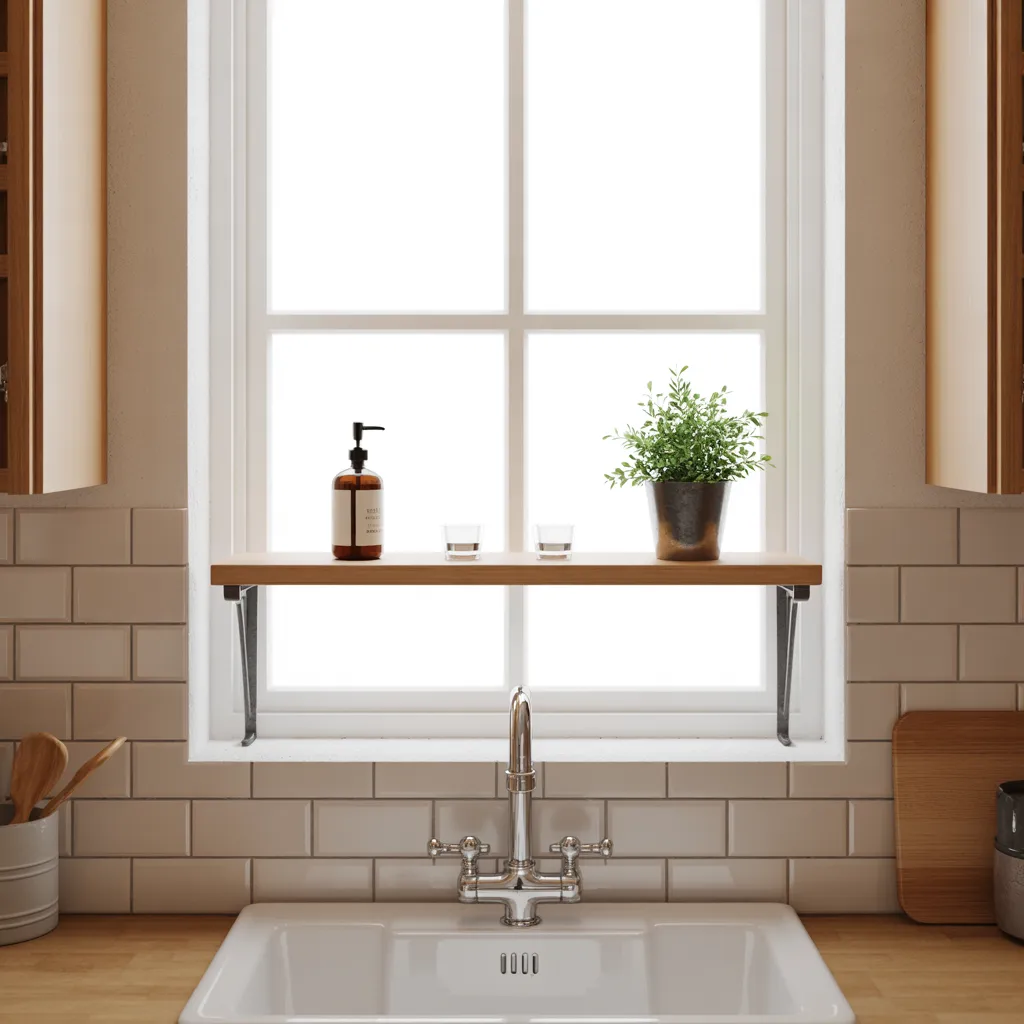
Over-the-Sink Shelf Small Kitchen Idea
The space directly above a kitchen sink is almost always unused — a few inches of window or wall that nobody knows what to do with. An over-the-sink shelf, mounted just above head height, turns this dead space into accessible storage for dish soap, a small plant, a soap dispenser, or a couple of cups. In a kitchen where every inch counts, the space above the sink is a consistent overlooked opportunity.
A simple metal or wood shelf mounted above the sink with two brackets costs about $20-40 total from a hardware store. It needs to clear whatever fixture is above the sink — leave at least 18-24 inches of clearance above the basin. A tension-mounted shelf that fits between the two walls of a window alcove above the sink requires no installation at all and costs about $15-25 on Amazon. Both options add usable surface without taking any counter or cabinet space.
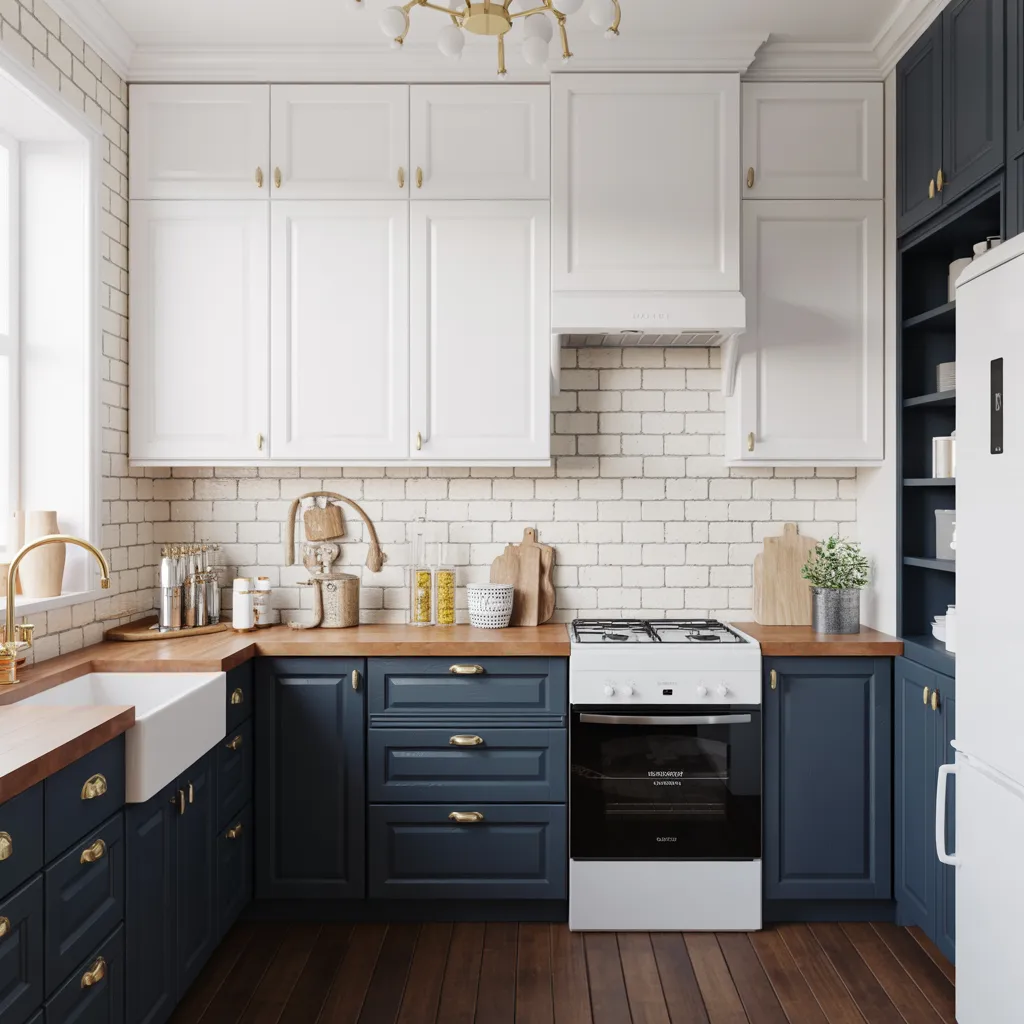
Two-Tone Cabinet Small Kitchen Idea
Two-tone cabinets — darker on the bottom, lighter on top — solve a specific small kitchen problem: the kitchen needs some visual interest and personality, but a fully dark or fully bold cabinet scheme would make the space feel even smaller. A two-tone approach gives you the grounding effect of a darker lower cabinet while keeping the upper cabinets light to maintain visual openness. It’s the best of both approaches, and it reads as significantly more designed than a single-color scheme.
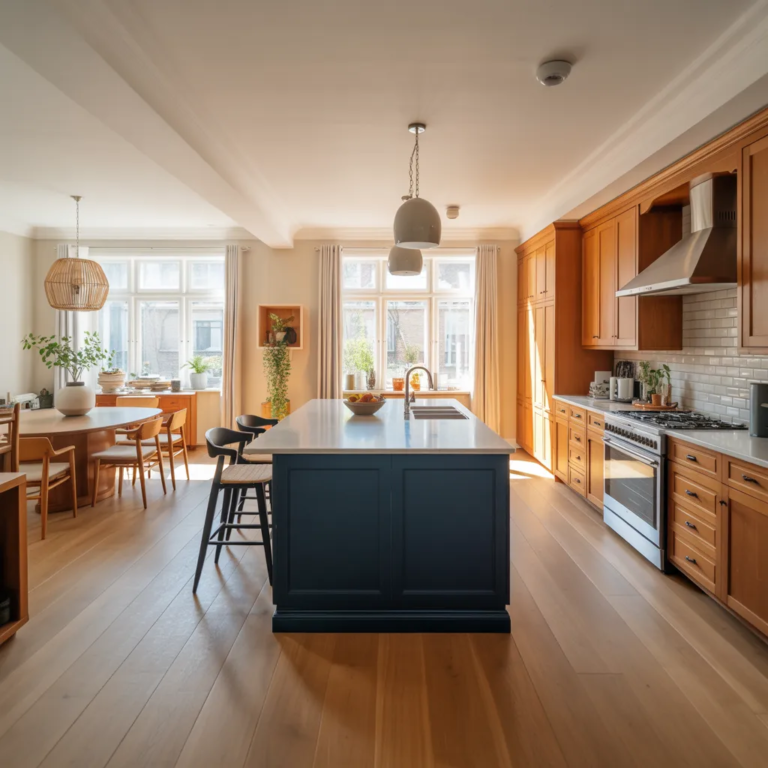
The most popular combination right now is white or cream uppers with navy, forest green, or charcoal lowers. The lowers sit below the counter and carry the visual weight at floor level; the uppers disappear into the walls and keep the upper half of the kitchen feeling open. Paint the lowers yourself with cabinet-specific paint from Benjamin Moore — about $50-70 for a quart — and refresh the uppers in white at the same time for a kitchen that looks completely renovated for under $150 in materials.
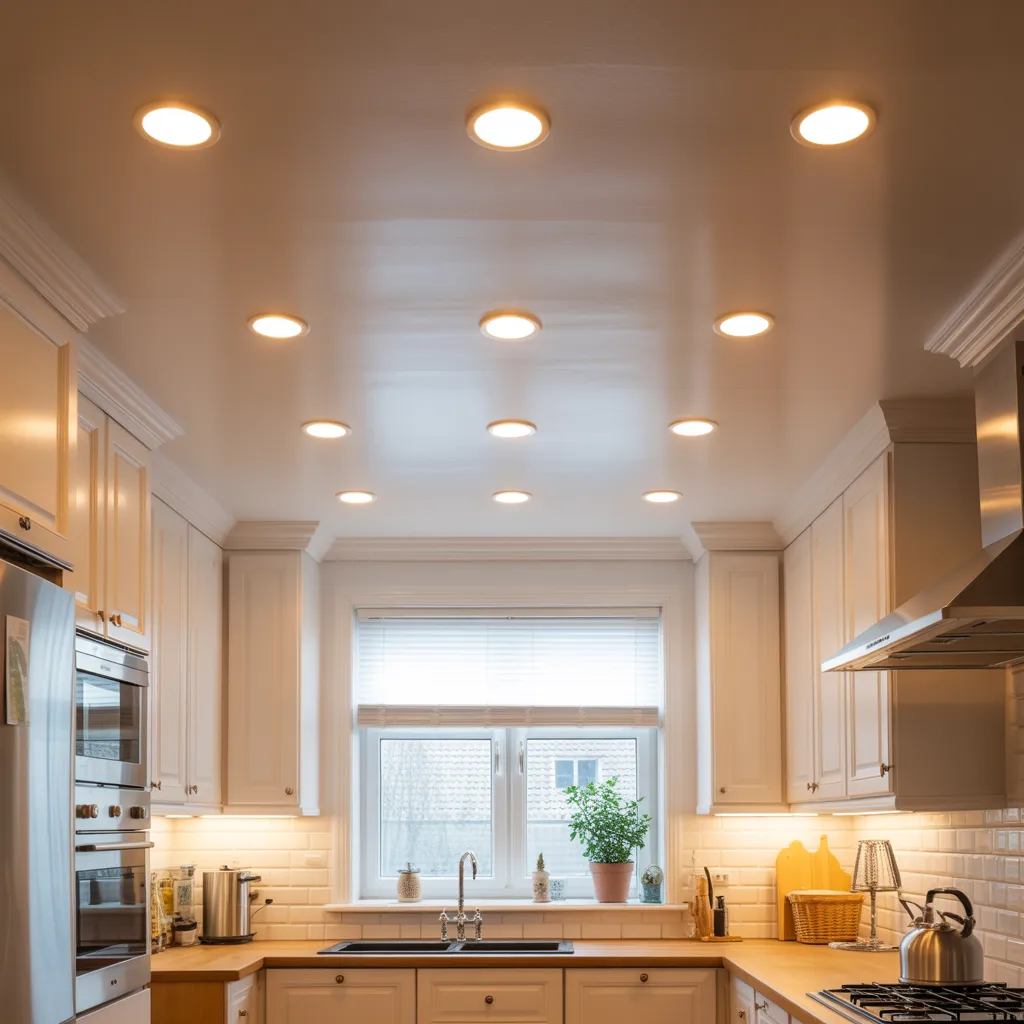
Recessed Lighting Small Kitchen Idea
Small kitchens often rely on a single pendant light or a basic flush mount that doesn’t distribute light evenly across the room. Recessed lighting changes this completely. A grid of four to six recessed lights in a small kitchen provides even, shadow-free illumination across every counter surface and every corner — no more dark spots where the overhead light doesn’t reach, no more unflattering shadows when you’re working at the counter.
Recessed lighting installation is typically a professional electrical job — budget about $100-200 per fixture including installation, or $400-800 total for a standard small kitchen setup. It’s not a DIY project for most people. But if you’re already doing electrical work in a renovation, adding recessed lighting is one of the most practical upgrades available. Pair it with a dimmer switch so you can shift from bright cooking light to warm ambient light when the kitchen is just background to the rest of the evening.
Window Seat Storage Small Kitchen Idea
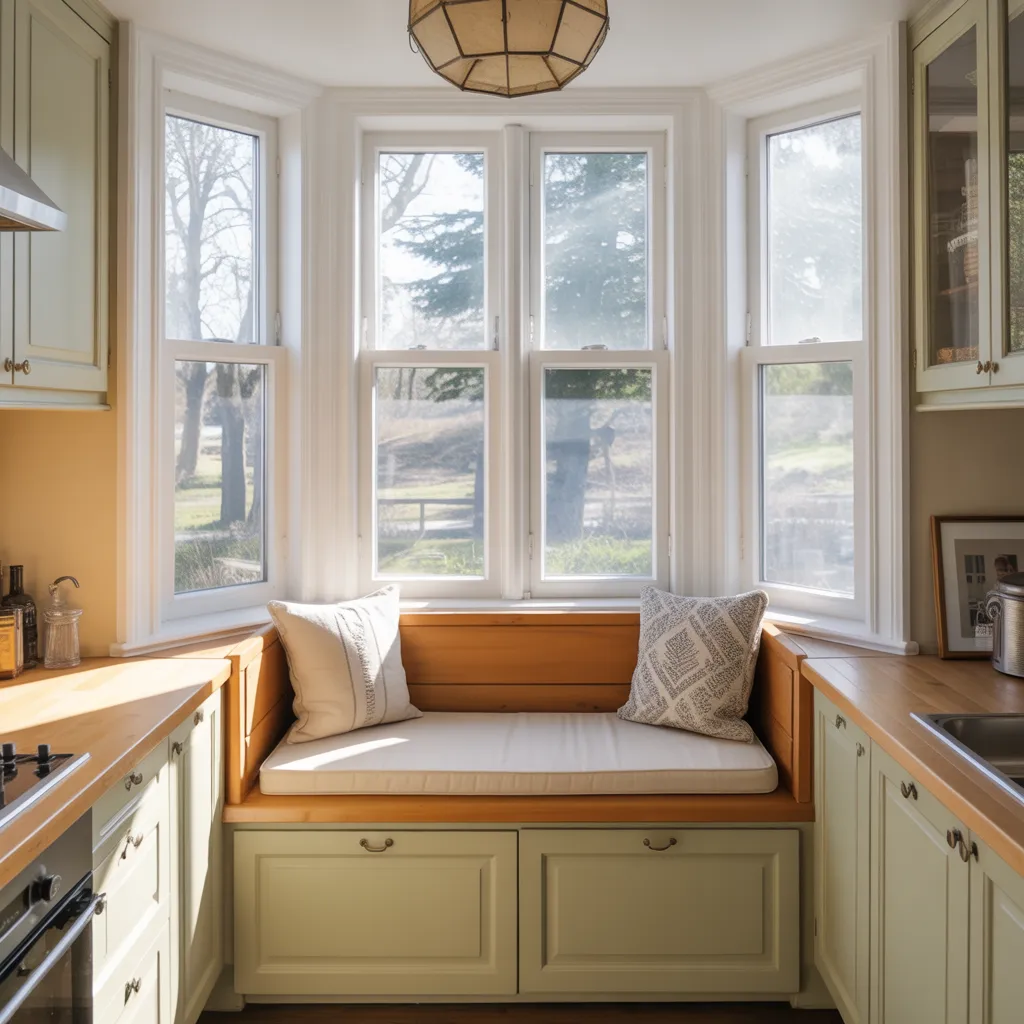
If your small kitchen has a bay window or a window alcove with any depth, a built-in window seat with storage beneath transforms unused space into a dining nook and a storage cabinet simultaneously. It’s one of the most efficient small kitchen additions available — it serves as seating, as a dining surface anchor, and as hidden storage, all without taking any additional floor space beyond what the alcove already occupies.
A simple window seat can be built from plywood and basic trim for about $200-400 in materials, with a cushion sewn from outdoor fabric (durable and washable) for about $50-100. Hinged lid versions give easy access to the storage below. Built-in versions by a carpenter run about $800-1,500 but look custom and add genuine real estate value. Either way, the combination of seating, storage, and dining function in one footprint is hard to beat in a small kitchen.
Floating Island Small Kitchen Idea
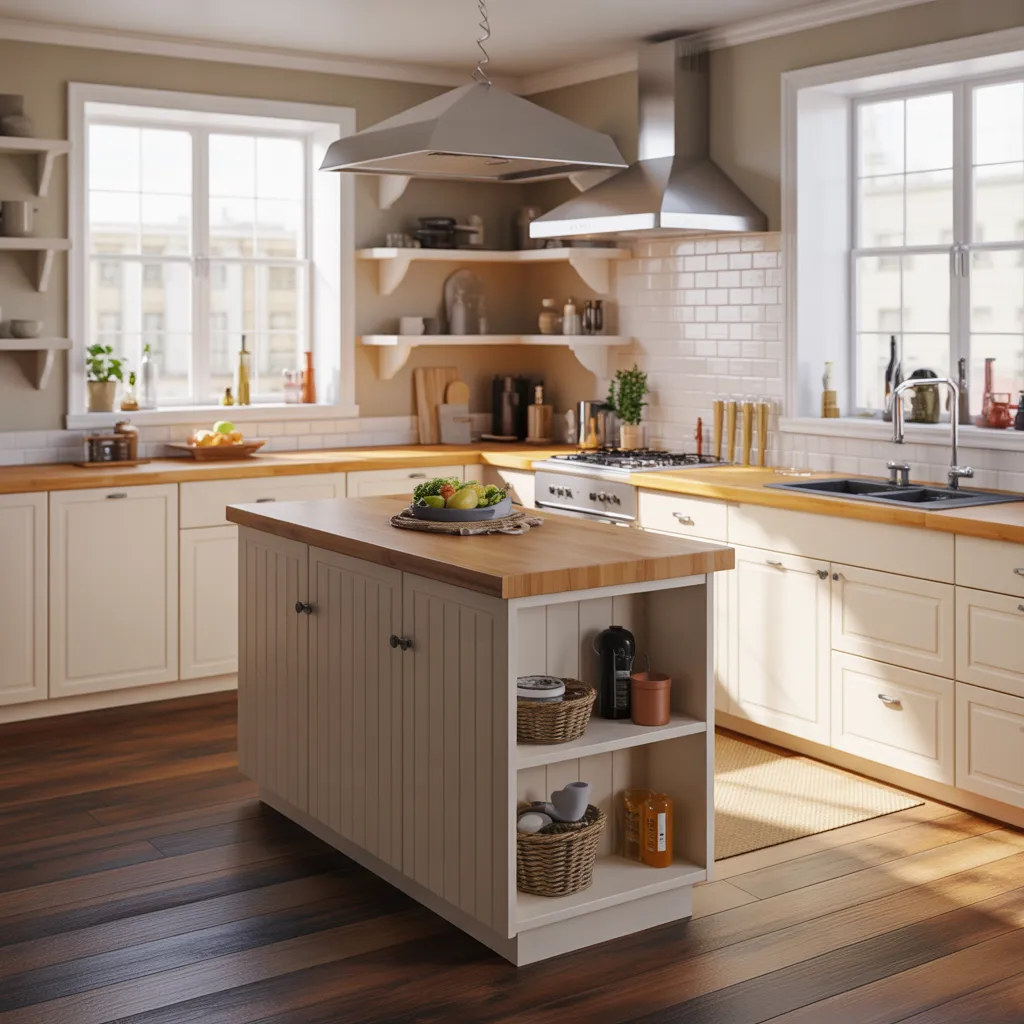
A small floating island — not a rolling cart, but a fixed built-in island designed specifically for the kitchen’s dimensions — is possible in more small kitchens than most people assume. The key is getting the clearance right: a minimum of 36 inches on all working sides, 42 inches on high-traffic sides. If that clearance exists, even a narrow 18-inch deep island adds meaningful counter space and below-counter storage without making the kitchen feel cramped.
A custom built-in island for a small kitchen runs about $500-1,500 depending on materials and complexity. A more affordable approach: an IKEA kitchen cabinet base unit turned sideways and topped with a butcher block or quartz countertop. This approach costs about $200-400 and can be perfectly sized to the available space. Add open shelving on the sides for cookbooks, a wine rack, or baskets. The result looks intentional and adds function that a small kitchen rarely has enough.
Pantry Cabinet Addition Small Kitchen Idea
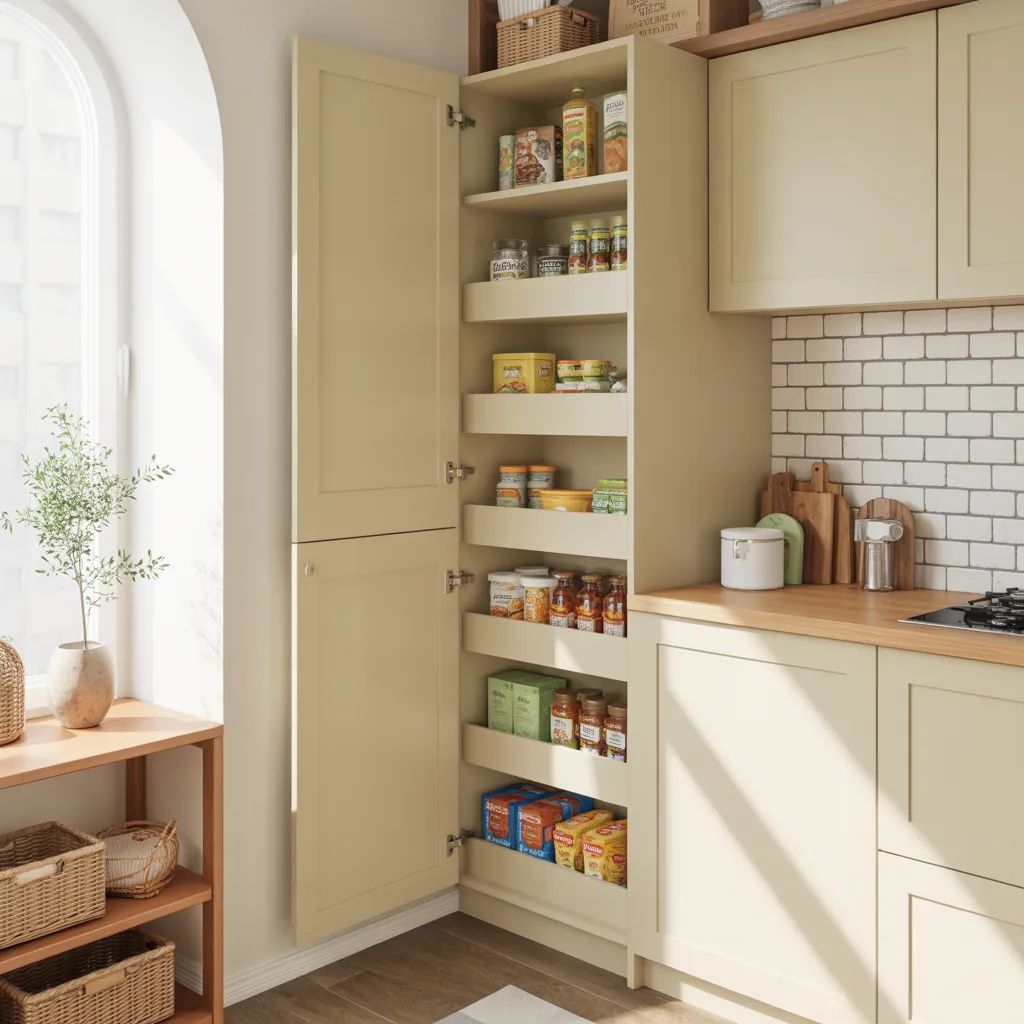
Most small kitchens have no pantry at all — just whatever fits in the cabinets, which is never quite enough. Adding a tall, slim pantry cabinet in an unused corner or against a wall that doesn’t have cabinets yet solves the pantry problem without a full renovation. Even a single 12-inch wide pantry cabinet adds the equivalent of two or three standard shelves’ worth of storage capacity, which in a small kitchen means the difference between organized and chaotic.
IKEA’s Sektion pantry cabinet system lets you configure a custom pantry in whatever dimensions fit your space — a 15×90 inch column runs about $150-250 depending on door style. Add interior organizers from the Utrusta line for pull-out drawers and wire baskets that make every inch of the cabinet accessible. For a more furniture-like look, a freestanding pantry cabinet from Pottery Barn or Restoration Hardware runs $400-800 but reads as a proper kitchen piece rather than installed cabinetry.
FAQs About Small Kitchen Ideas
What small kitchen ideas make the biggest difference without spending much?
Clear the counters completely, add under-cabinet lighting, and paint the walls or cabinets in a light color. These three changes cost under $100 combined and have the most immediate visual impact. Clearing the counters is free and makes the kitchen look twice the size instantly. Under-cabinet LED strips cost about $15-25 and make every cooking task easier. A light wall paint costs about $25 and opens up the visual space significantly.
How do I add storage to a small kitchen with no space?
Go vertical and go to the walls. Shelves extended to the ceiling, a pegboard on one wall, magnetic knife strips, over-the-sink shelves, and a slim pull-out cabinet in the refrigerator gap all add meaningful storage without taking any floor space. Under the sink is also consistently underused — an adjustable organizer from The Container Store or Amazon for about $20-30 nearly doubles the usable space in most under-sink cabinets.
What colors make a small kitchen look bigger?
Light colors — white, cream, pale grey, soft sage — reflect more light than dark ones and make the room feel more open. The more consistent the palette, the more spacious the kitchen reads. Matching the wall color and upper cabinet color (painting them the same shade) makes the upper half of the kitchen feel like one continuous surface rather than two separate elements, which significantly increases the sense of space. Light backsplash tile in a glossy finish amplifies this further.
Is open shelving a good idea in a small kitchen?
Yes, with one condition: you have to be willing to keep it organized. Open shelves make a small kitchen feel more open and spacious because the eye can travel through the space. But disorganized open shelves — mismatched dishes, random items, clutter — make a small kitchen feel smaller and more chaotic than closed cabinets would. If you’re naturally organized and can commit to keeping it edited, open shelving is one of the best small kitchen upgrades available.
What’s the best small kitchen layout for a tiny space?
For very small spaces, a galley layout — two rows of cabinets facing each other along a narrow room — is the most efficient because it minimizes wasted movement between the sink, stove, and refrigerator. The kitchen triangle (the path between these three points) should ideally total 12-26 feet. For L-shaped kitchens, a rolling cart in the corner of the L provides extra counter space without blocking the workflow. The single-wall layout works for studios and very narrow kitchens and benefits most from a fold-down table for dining.
Conclusion of Small Kitchen Ideas
A small kitchen isn’t a limitation — it’s a design constraint. And constraints, when you work with them rather than against them, produce better decisions than unlimited space ever does. The best small kitchens are the ones where every choice was made deliberately: the light cabinet color that opens up the room, the open shelving that makes items accessible and the space feel larger, the counter cleared down to only what’s used daily. These aren’t compromises. They’re the decisions that make a kitchen actually work.
Start with whatever causes the most friction in your kitchen right now. Cramped counters? Clear them first. Dark, low light? Fix that next. Running out of storage? Go vertical. One good decision leads to the next, and the kitchen that emerges from those decisions — made thoughtfully, one at a time — is one you’ll enjoy cooking in far more than the one you inherited.