27 Bedroom Ideas for Small Rooms That Make Every Inch Actually Count
There’s a specific frustration that comes with a small bedroom — the feeling that no matter what you do, the room still feels cramped, cluttered, and smaller than it actually is. You move the furniture around. You buy more storage. You try to keep things tidy. And somehow it still feels like the room is working against you. The thing is, most small bedroom problems aren’t really size problems. They’re design problems. The wrong furniture choices, the wrong color, the wrong storage strategy — these things make a perfectly livable small room feel impossible.
This article covers 27 bedroom ideas for small rooms that genuinely change how the space feels and functions. Some are about making the room appear larger. Some are about using space more efficiently. Some are just about making the room feel more intentional and personal despite its size. All of them are based on the same principle: a small room, designed well, is often more comfortable and more characterful than a large room that was never really thought about.
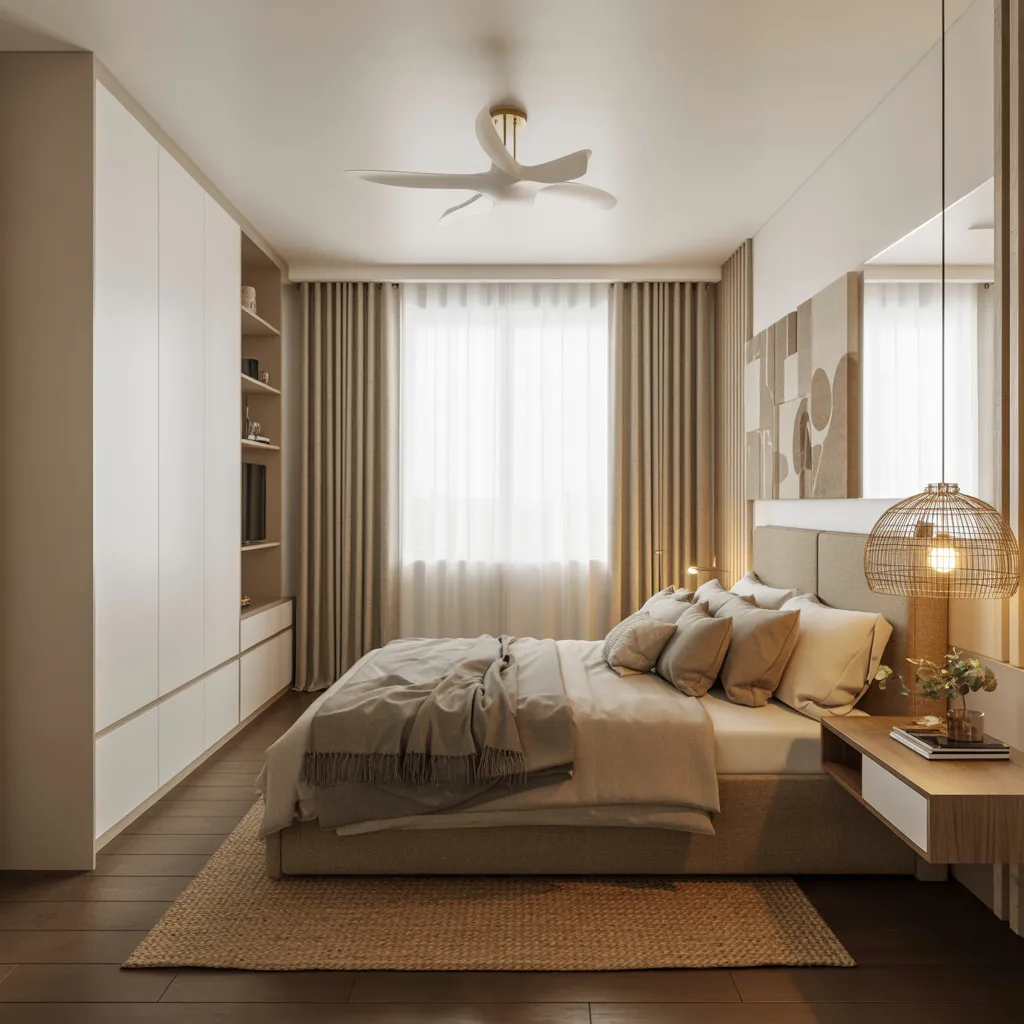
Best Bedroom Ideas for Small Rooms to Try in Your Home
The best bedroom ideas for small rooms all work with the space rather than against it. They don’t try to pretend the room is bigger than it is — they accept the size and make deliberate choices that maximize what’s there. The result is a bedroom that feels calm and considered rather than cramped and apologetic. And that shift in feeling, from a room that limits you to a room that works for you, is what good small room design actually delivers.
What follows covers everything from the foundational decisions — bed size, storage strategy, wall color — to the smaller details like curtain height, mirror placement, and how to keep the floor visually clear. Some of these cost almost nothing. Others are genuine investments. All of them are worth knowing if you’re living with a small bedroom and want it to finally feel like it belongs to you.
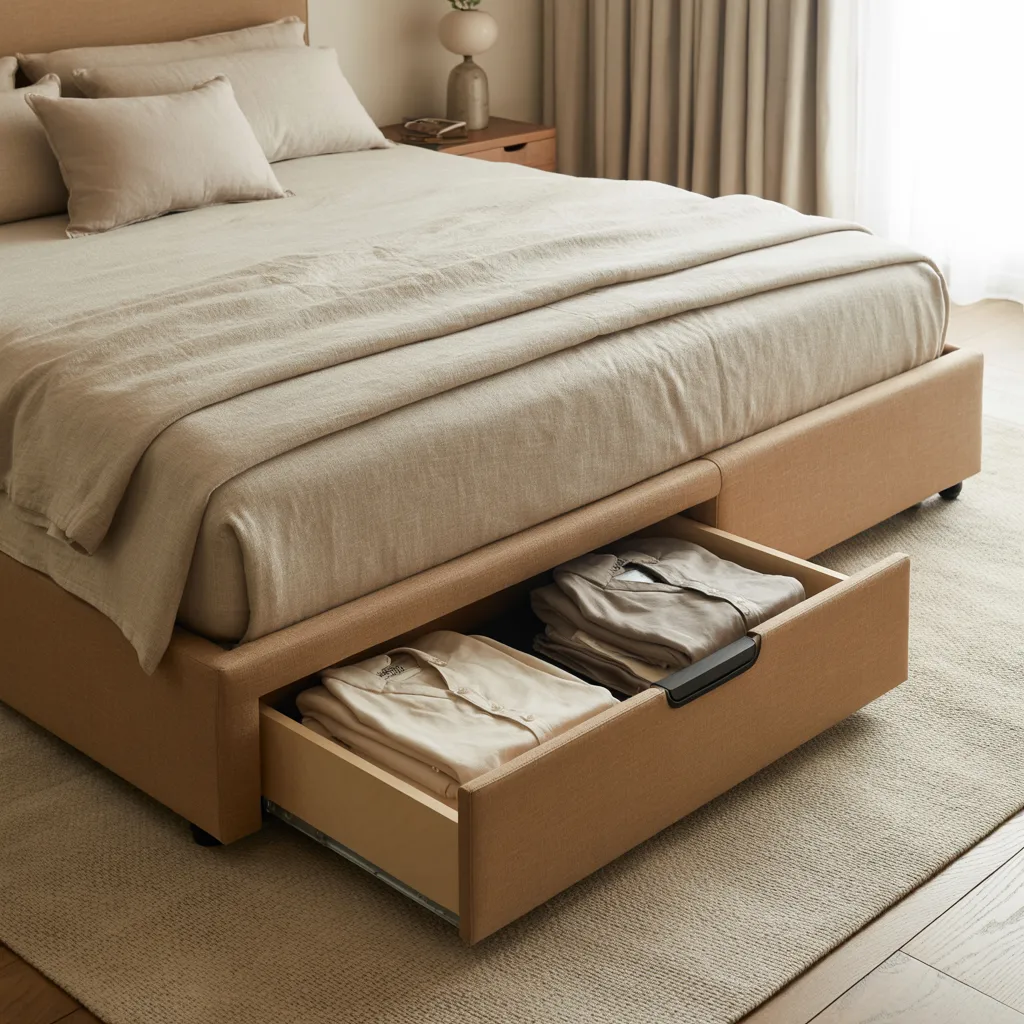
Storage Bed Idea
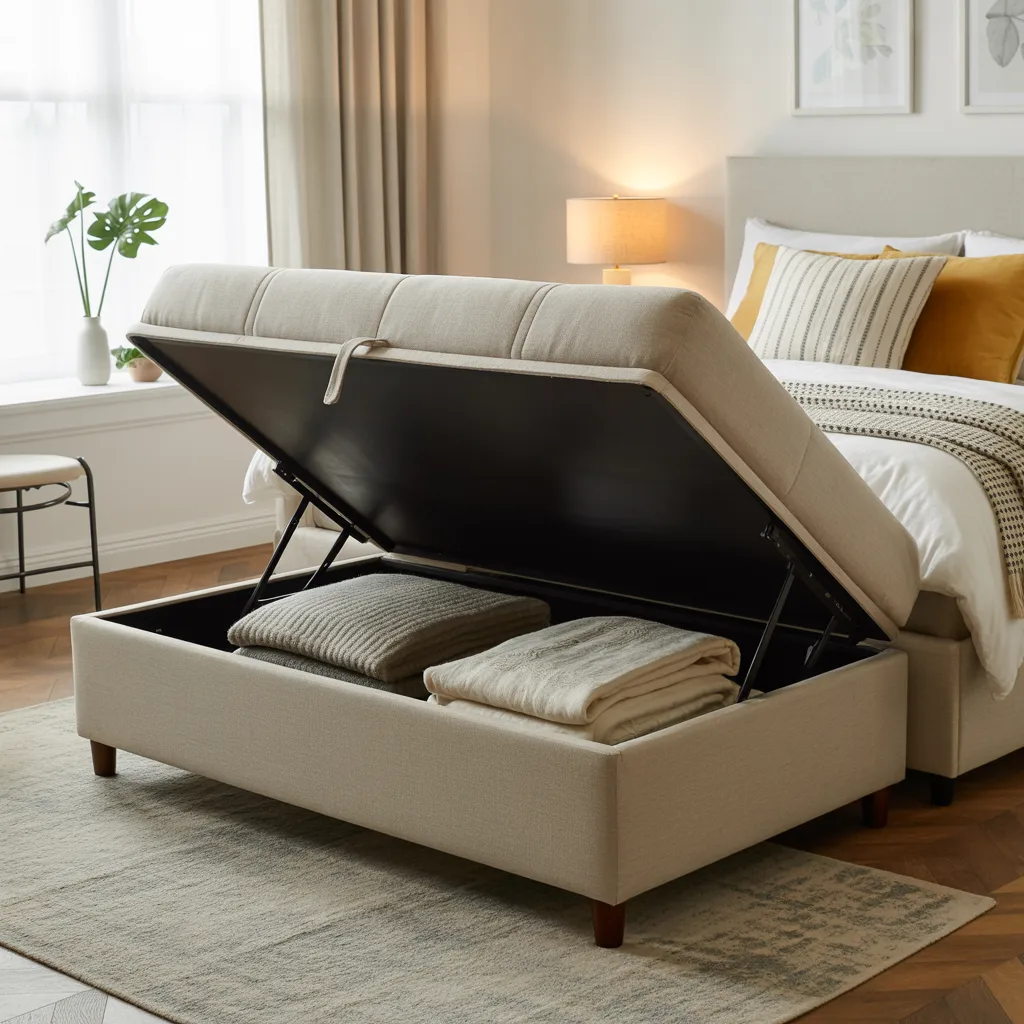
In a small bedroom, the bed takes up the majority of the floor space. A bed that doesn’t use that space for storage is a missed opportunity every single night. Storage beds — with drawers built into the base or a hydraulic lift mechanism that reveals a full storage compartment beneath the mattress — hold the equivalent of a full dresser without taking a single extra inch of floor space. They’re not a compromise. They’re genuinely the smartest furniture choice available for a small bedroom.
Ottoman storage beds with a hydraulic lift are the most storage-efficient option — the entire under-mattress space becomes accessible at once, holding seasonal clothing, extra bedding, or anything else that needs a home but doesn’t need to be reached daily. These run about $400-800 for a queen from Wayfair or IKEA. Drawer storage beds are slightly more accessible but hold less total volume — about $300-600 in the same size range. Either way, the trade-off in convenience is minimal compared to the storage gained.
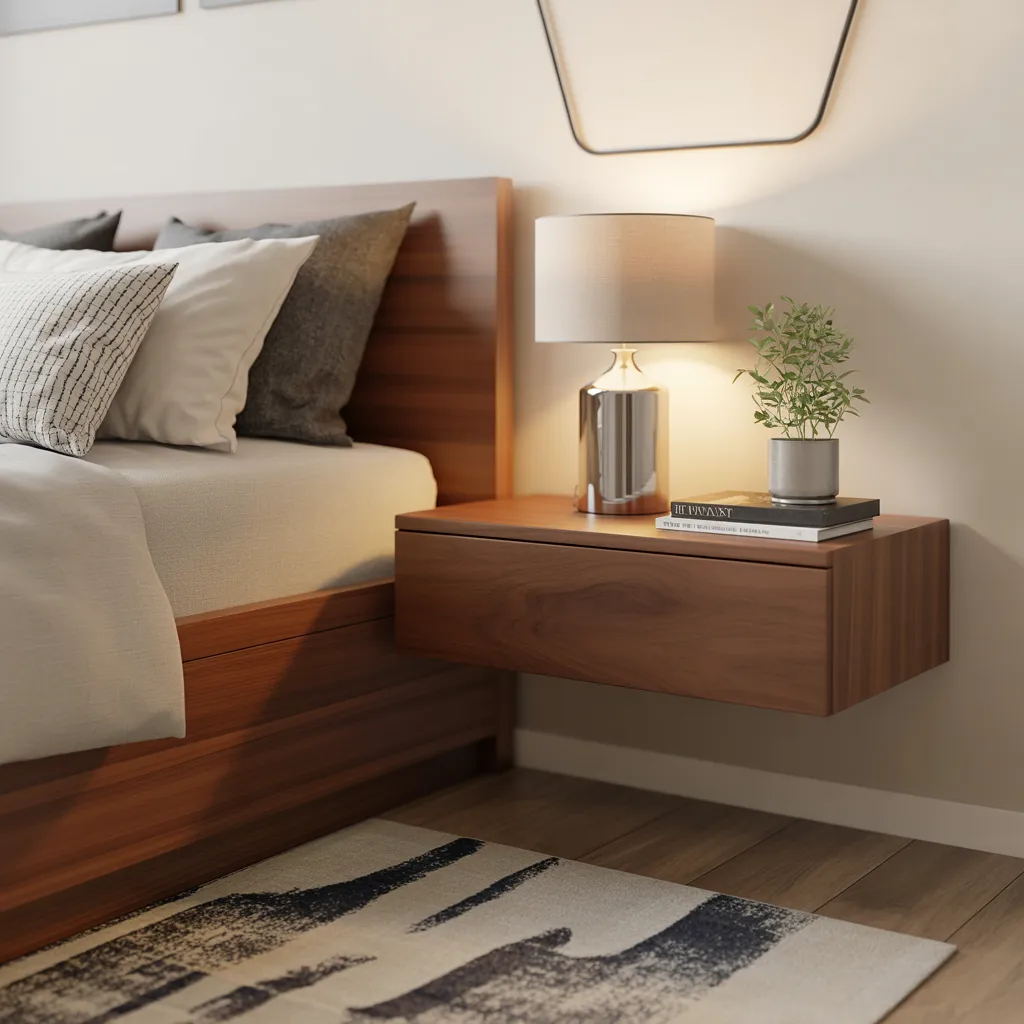
Wall-Mounted Nightstand Idea
Traditional nightstands take up floor space beside the bed — space that in a small bedroom is genuinely valuable. A floating wall-mounted nightstand takes zero floor space. It holds everything a standard nightstand does — a lamp, a book, a glass of water, a phone charger — while letting the floor beneath it remain visible and clear. That visible floor space is one of the most reliable visual tricks for making a small bedroom feel larger than it actually is.
IKEA’s Lack wall shelf at $15 per shelf makes an excellent floating nightstand with minimal installation. A more refined option: a solid wood floating shelf in walnut or oak from Amazon or Etsy in the $40-80 range looks genuinely beautiful beside the bed and feels like a considered design choice rather than a storage hack. Install at standard nightstand height — about 24-28 inches from the floor — so it feels proportionally right relative to the bed.
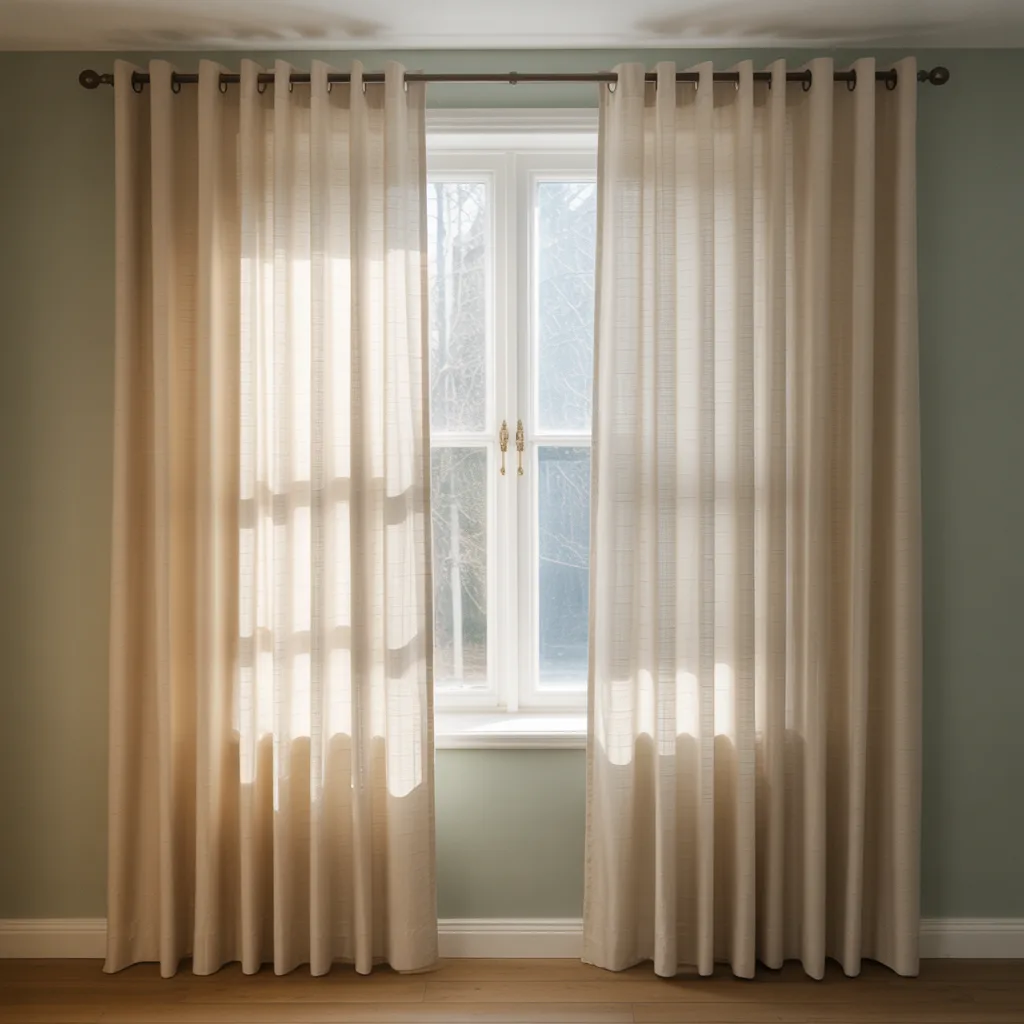
Ceiling-Height Curtains Idea
Curtains hung just above the window frame make the ceiling feel lower and the room feel smaller. This is one of the most common small bedroom mistakes, and it’s entirely avoidable. Hanging curtains at ceiling height — with floor-length panels that just graze the floor — does the opposite. The eye follows the vertical line all the way from floor to ceiling and reads the room as taller than it actually is. This one change, at essentially no extra cost, makes a measurable difference in how a small bedroom feels.
Mount the curtain rod as close to the ceiling as possible — ideally 1-2 inches below the ceiling or crown molding. Extend the rod 8-12 inches beyond the window frame on each side so the panels stack clear of the glass when open, maximizing natural light. IKEA’s Ritva linen curtains in white or cream work beautifully at about $20-30 per panel and are long enough for most ceiling heights. The visual effect of ceiling-height curtains in a small room is significant enough that it’s genuinely one of the first things to address.
Light Wall Color Idea
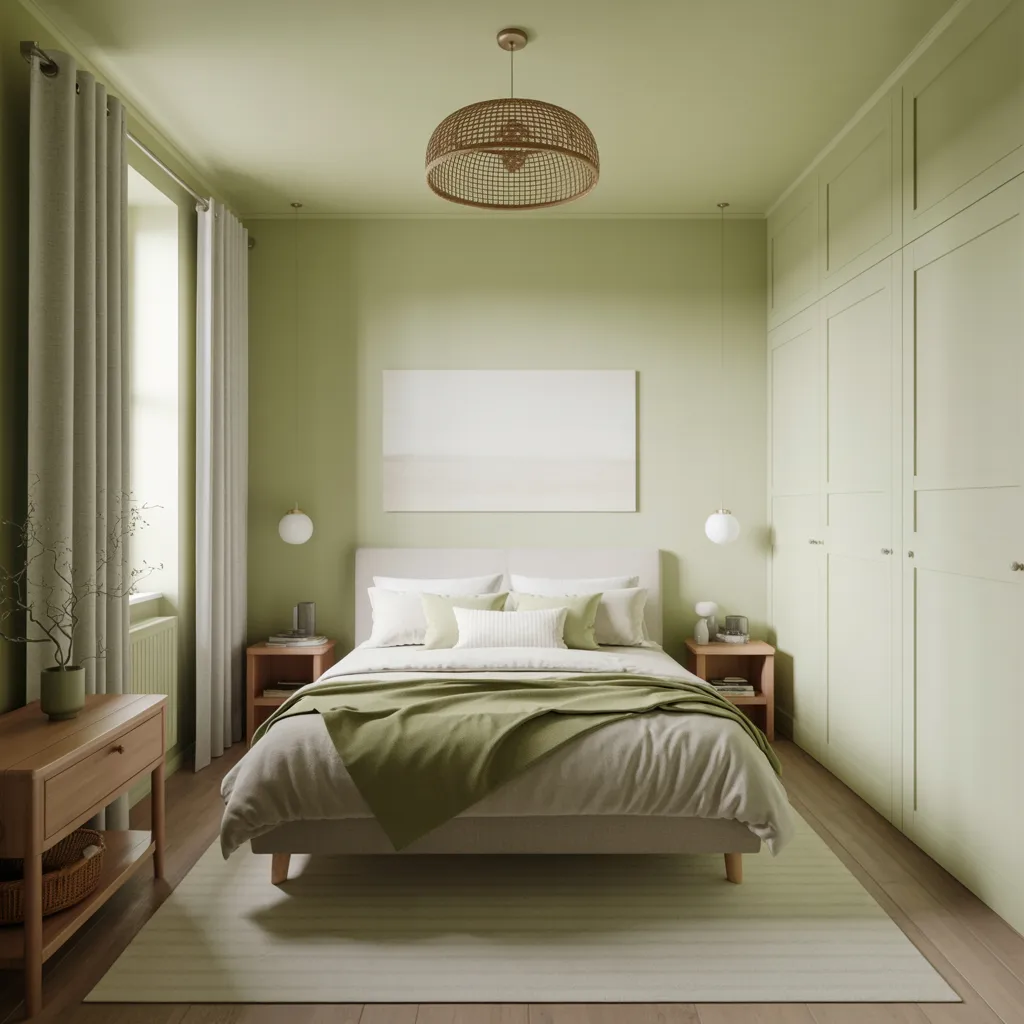
Dark walls in a small bedroom feel cozy to some people and claustrophobic to others. But light walls — warm white, soft cream, pale sage, dusty blue — reliably make a small room feel more open and more airy regardless of the room’s actual dimensions. Light colors reflect more light than dark ones, and more light in a small space makes it feel less contained. This isn’t a rule you have to follow — dark accent walls behind the bed can work beautifully — but it’s a useful starting point for rooms that currently feel too small.
Benjamin Moore’s White Dove and Chantilly Lace are two of the most popular light bedroom colors for good reason — they’re warm enough not to feel clinical but light enough to open up the room. A gallon of Benjamin Moore paint runs about $60-70 and covers most small bedrooms with two coats. If you want a light color with more personality, try Pale Oak (a warm greige), Pale Smoke (a very soft blue-grey), or Sea Salt from Sherwin-Williams — all of which read as light without feeling like just another white room.
Multifunctional Furniture Idea
Every piece of furniture in a small bedroom should earn its place by doing at least two things. A bench at the foot of the bed that opens for storage. A nightstand with drawers rather than an open shelf. A dresser that doubles as a TV console. An ottoman that serves as seating, a surface, and hidden storage. Multi-functional furniture reduces the total number of pieces needed in the room, which directly reduces visual clutter and increases usable floor space.
The ottoman with storage is one of the most versatile multi-functional pieces available — it can sit at the foot of the bed, serve as a coffee table with a tray on top, and open to hold blankets, pillows, or anything else that needs a home. Target and Amazon both carry solid options in the $50-120 range. A Murphy bed — a wall-mounted bed that folds up to reveal a desk or shelving unit — is the ultimate small bedroom multifunctional piece, transforming the bedroom into a daytime living and working space.
Under-Bed Storage Idea
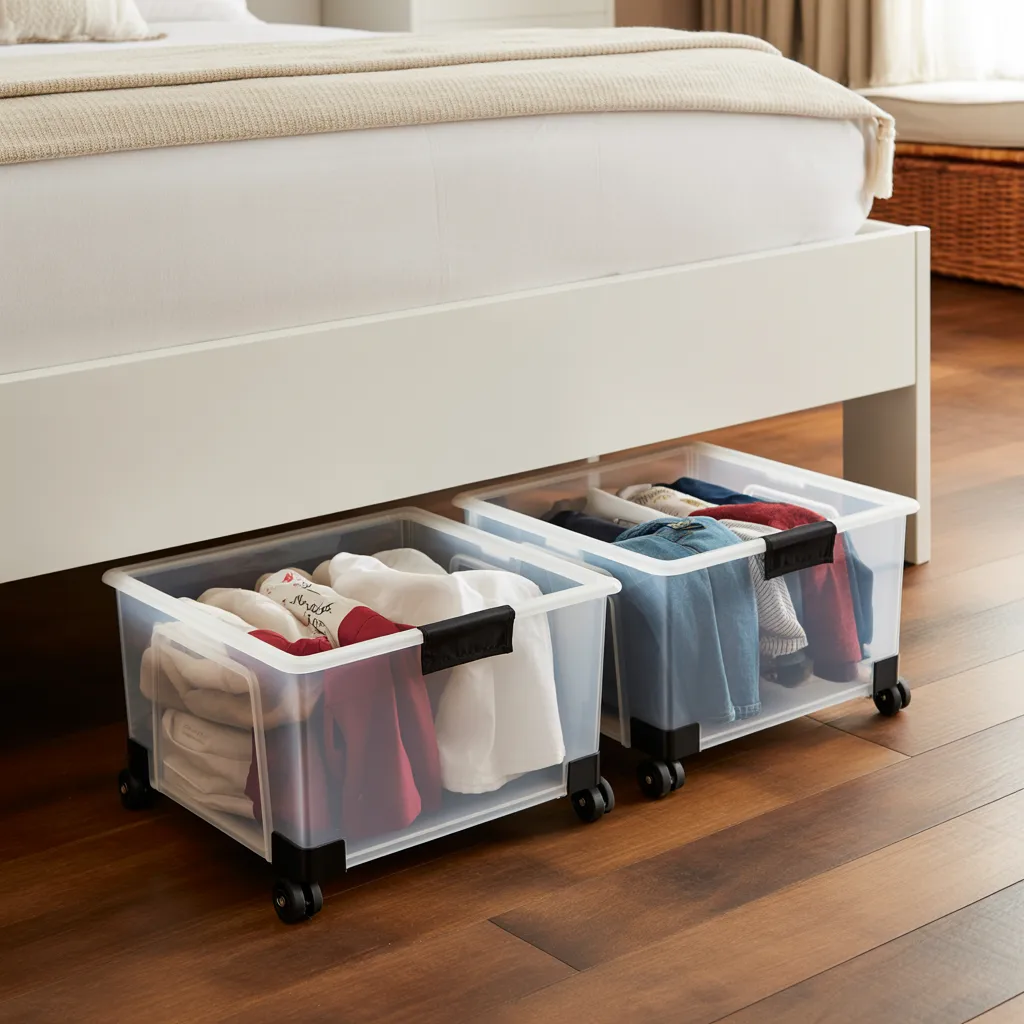
If your bed doesn’t have built-in storage, the space underneath it is the most consistently wasted real estate in a small bedroom. Flat rolling bins on wheels, vacuum-seal storage bags for seasonal clothing, shallow baskets for shoes — all of these use space that currently contributes nothing. A bed skirt or a low-profile bed frame hides the storage completely. The result is a room with significantly more storage capacity that still looks clean and intentional.
Clear rolling under-bed storage bins from IKEA — the Sockerbit runs about $10 per bin — hold a full season’s worth of sweaters or jeans and slide out easily on hard floors. For carpeted bedrooms, look for bins with wheels rather than just sliders. Vacuum storage bags for bulky items like duvets and winter coats compress to about one-third their original volume — a set of six from Amazon runs about $20-25 and frees up an enormous amount of under-bed space for other things.
Vertical Wall Storage Idea
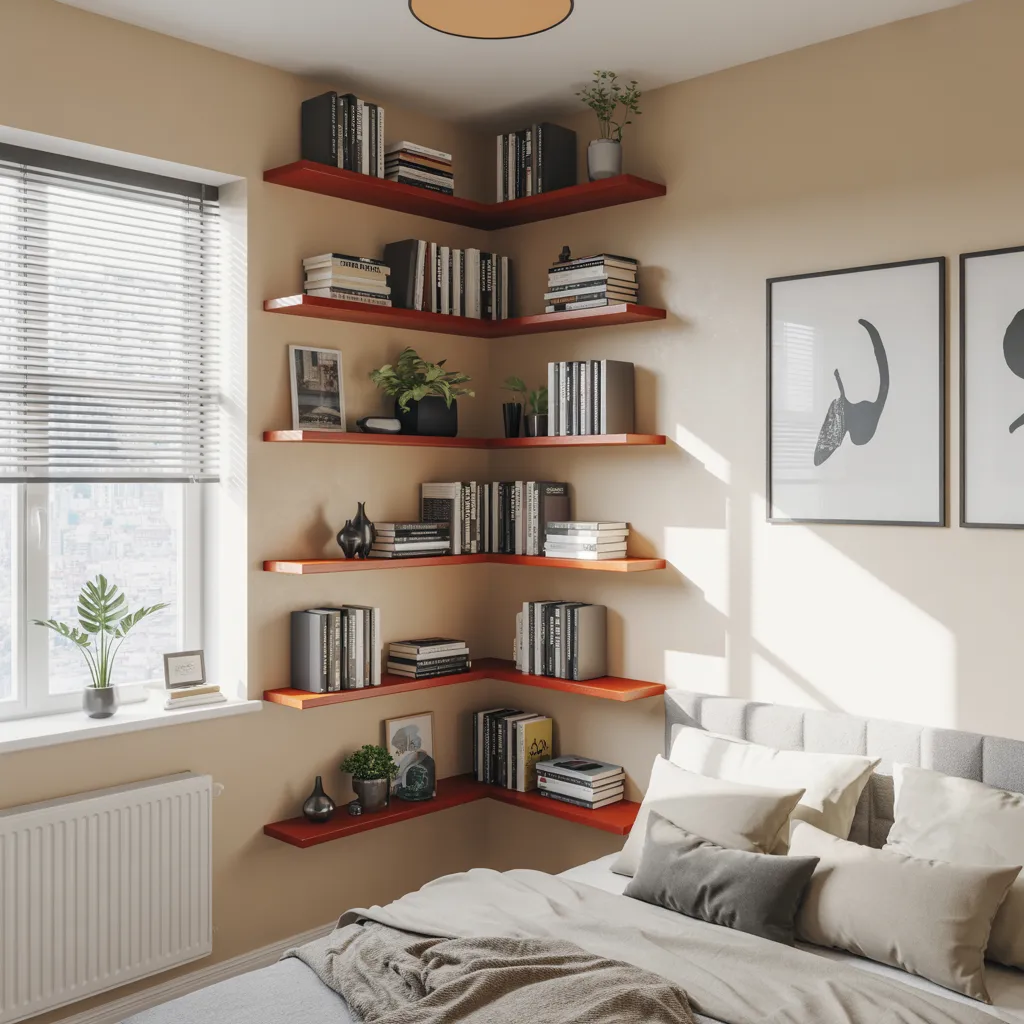
A small bedroom with limited floor space still has all of its wall space available, and most small bedrooms leave most of that wall space completely unused. Floating shelves above the bed or beside it, a tall narrow bookcase in a corner, wall hooks for bags and accessories — these all add storage and display space without taking a single inch of floor. The key is going vertical: shelves that reach toward the ceiling use space that a freestanding piece of furniture never could.
IKEA’s Billy bookcase is one of the best value vertical storage pieces available — it’s tall (79 inches standard), relatively narrow, and can be fitted with extension units to reach the ceiling. It runs about $60-80 depending on configuration. Wall hooks from Command or simple Shaker-style hooks from IKEA at $3-5 each handle bags, robes, and accessories without a single nail hole that wouldn’t be covered by the hook itself. Both are excellent renter-friendly options.
Large Mirror Idea
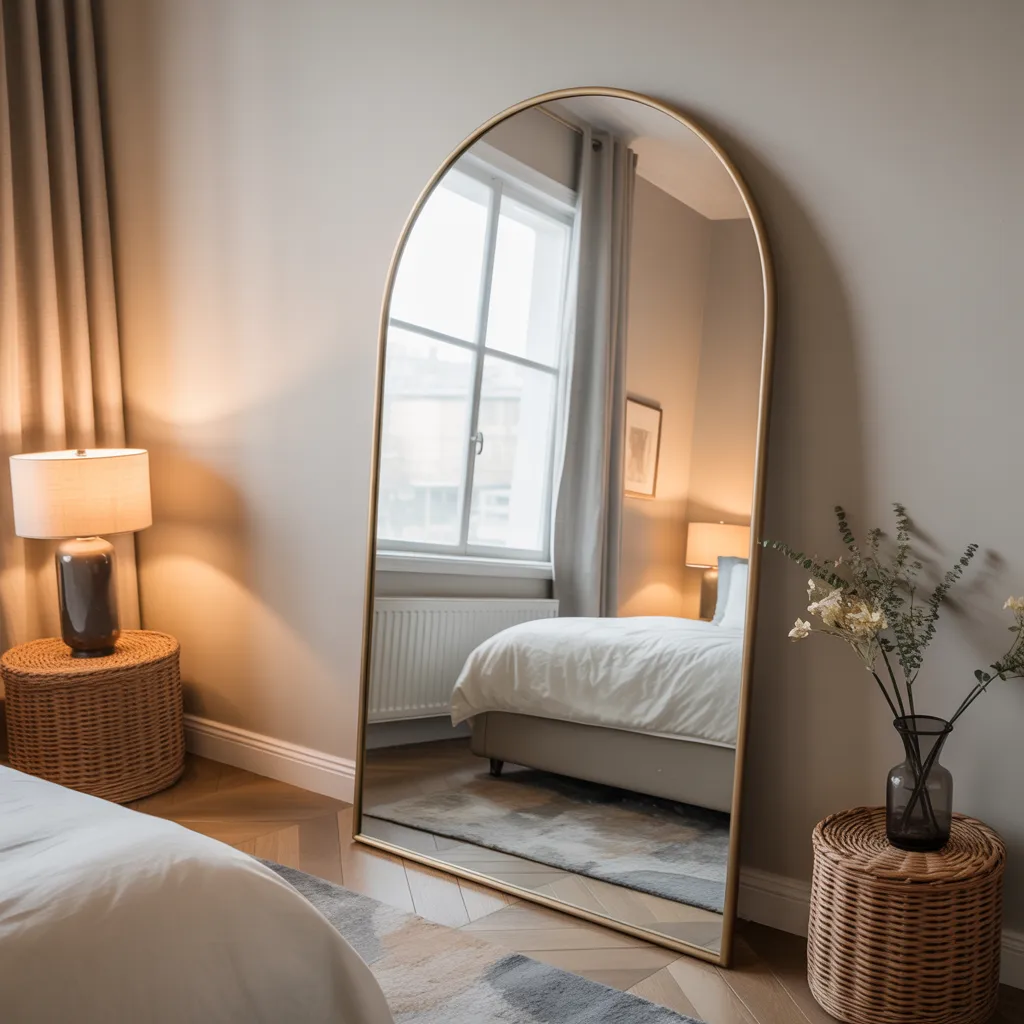
A large mirror in a small bedroom is one of the most reliable visual tricks in interior design, and it works every single time. A floor mirror leaned against the wall, a wall-mounted mirror above the dresser, or a full-length mirror on the back of the closet door — all of these reflect light and visual space back into the room, making it feel broader and deeper than its actual dimensions. And unlike almost any other design choice, the effect is immediate the moment the mirror is in place.
An arched full-length floor mirror from Amazon or Target in the $80-150 range is one of the best investments available for a small bedroom. Position it to reflect either a window (doubling the natural light in the room) or the most visually interesting part of the space. For wall mounting, a large rectangular mirror from IKEA’s Nissedal line runs about $50-80 and looks significantly more expensive than its price. Either option earns its space in a small bedroom several times over.
Built-In Wardrobe Idea
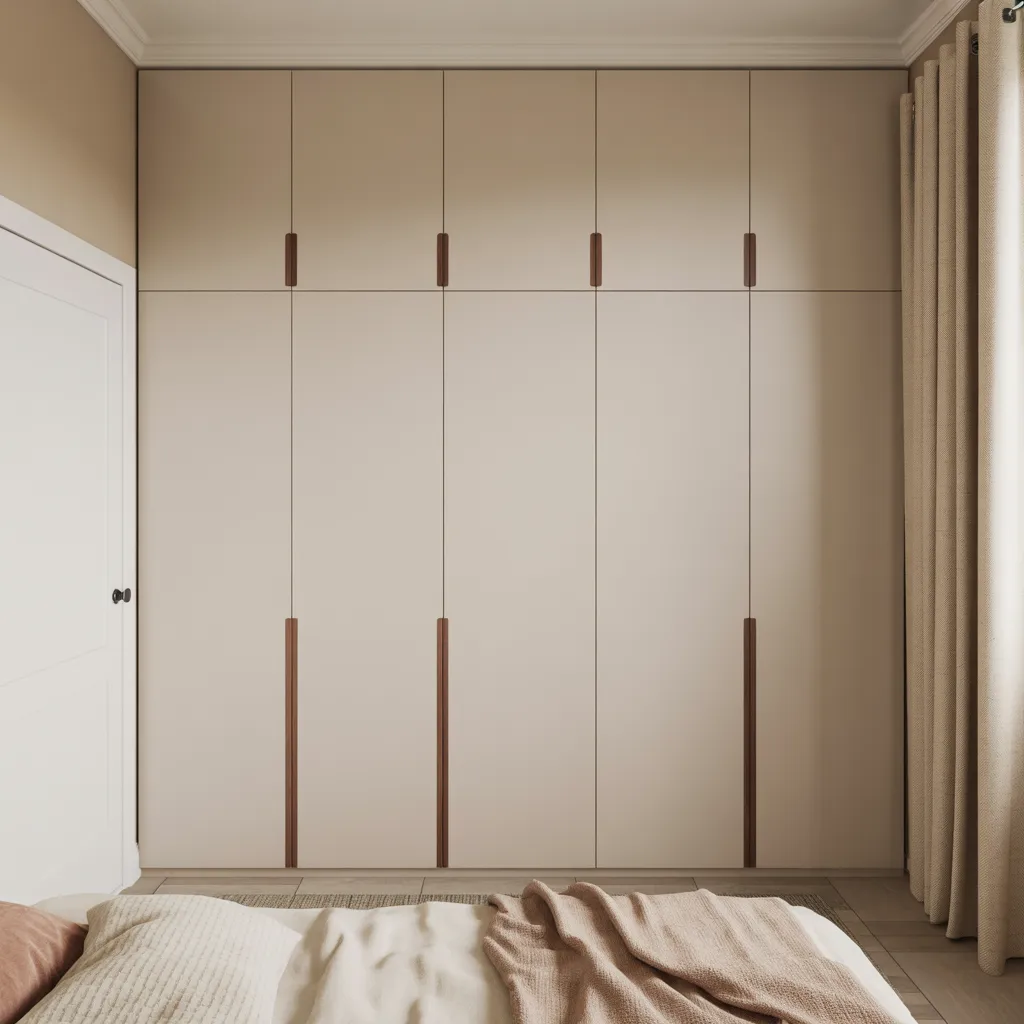
A freestanding wardrobe in a small bedroom takes up meaningful floor space and often looks bulky against the wall. Built-in wardrobe panels that run floor to ceiling — even if they’re just flat-front cabinets painted to match the wall — take the same physical space as a freestanding wardrobe but feel integrated and architectural rather than furniture. They also use the space above, which freestanding wardrobes almost always waste, for additional storage.
IKEA’s Pax wardrobe system is the most accessible built-in-look option — you configure it to your exact wall dimensions, choose your door style, and install it as a single unit that reads as a built-in from across the room. A fully configured Pax system for a standard small bedroom wall runs about $400-800 depending on size and door choice. Paint the doors the same color as the wall for the most seamless built-in effect. It genuinely looks like it cost twice the price.
Loft Bed Idea
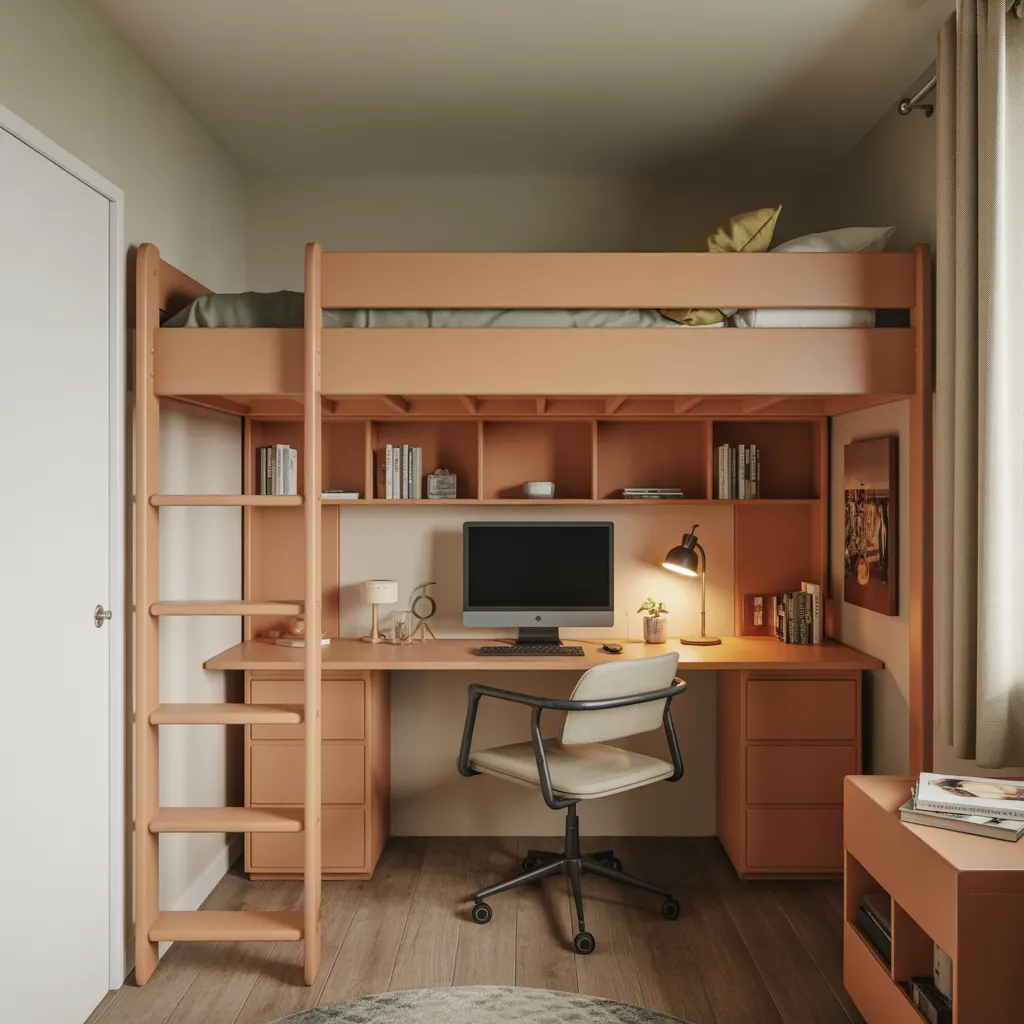
A loft bed raises the sleeping surface to near the ceiling, freeing up the entire floor area below for a desk, a wardrobe, a seating area, or storage. In a very small bedroom, this single change effectively doubles the usable floor space. Loft beds are commonly associated with children’s rooms, but adult loft bed designs — clean-lined, minimal, in natural wood or metal — are increasingly available and look intentional in a studio or small guest bedroom.
A solid wood adult loft bed from a furniture retailer or Etsy custom woodworker runs about $500-1,200 depending on the design and material. IKEA’s Svärta loft bed frame is a more affordable metal option at about $180-220. The minimum ceiling height for an adult loft bed is about 8 feet — you need at least 30-36 inches of clearance above the mattress to sit upright comfortably. If the ceiling allows it, the floor space gained by a loft bed is worth more in a small bedroom than almost any other design decision.
Diagonal Furniture Placement Idea
Most people place bedroom furniture parallel to the walls — bed flat against the main wall, dresser flat against the side wall, nightstands precisely square. This is logical, but it’s also the arrangement that makes a small bedroom look most like a box. Placing the bed at a slight diagonal in a square room, or angling a chair into a corner rather than pushing it flush against the wall, adds a sense of movement and design intention that makes the room feel less confined and more deliberately arranged.
This costs nothing to try. Move the bed 15-20 degrees from the wall and see how the room reads differently. The triangle of space created behind the diagonally-placed bed becomes a natural spot for a floor lamp or a tall plant — filling the corner in a way that a straight placement never allows. Not every room works well with diagonal placement, but it’s worth experimenting with before spending money on anything else.
Recessed Shelving Idea
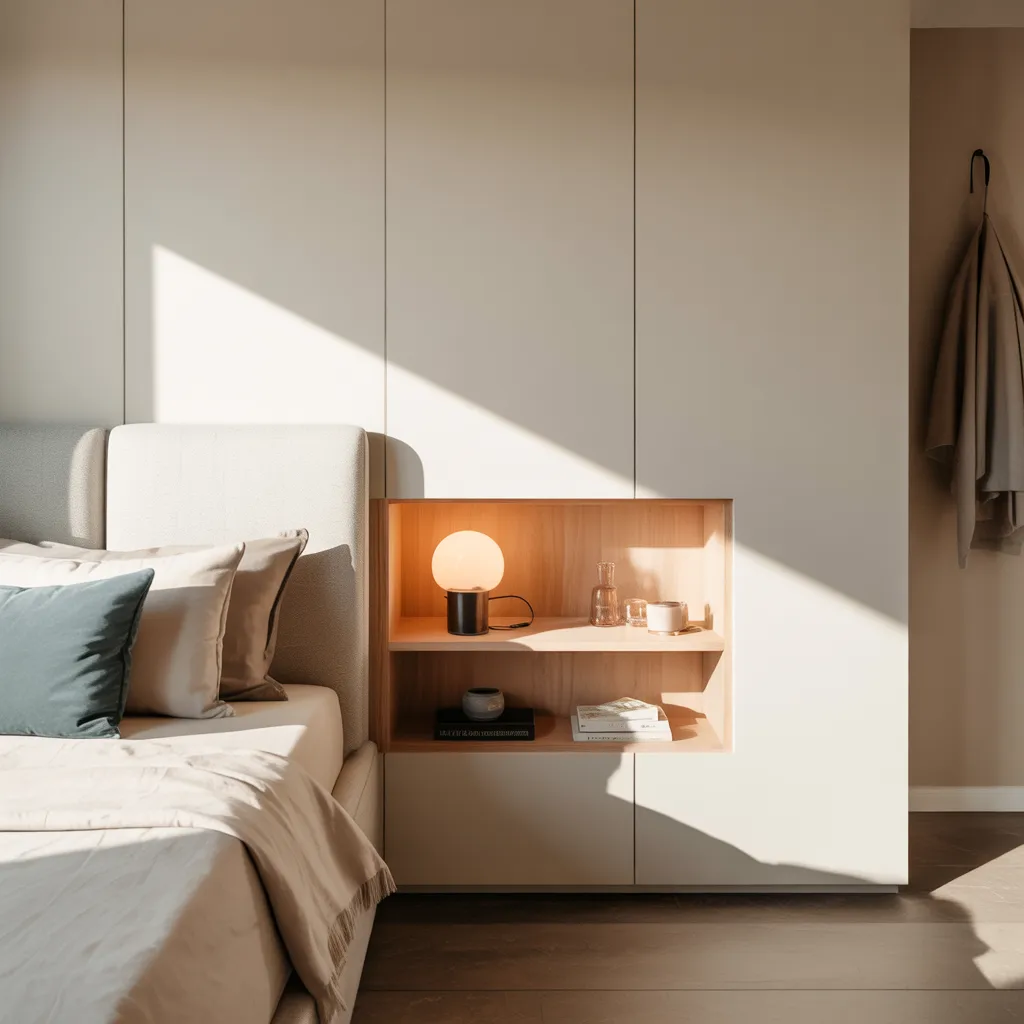
Recessed shelving — built into the wall between studs — provides storage without protruding into the room at all. The storage exists within the wall thickness itself, which in a small bedroom means shelves that add zero visual bulk to the space. A recessed shelf beside the bed serves as a built-in nightstand. A recessed shelf above the bed becomes a display surface. A recessed panel on a closet wall adds organized storage that disappears when the door is closed.
A standard wall cavity between studs is about 3.5 inches deep — enough for books, small decor items, a lamp, and a phone charger. Deeper recesses can be created by building out a box within the existing wall cavity, though this is more complex and requires some carpentry skill. A basic DIY recessed nightstand niche costs about $50-100 in materials. The labor is the investment — if you’re comfortable with basic drywall work, this is one of the highest-impact storage additions available for a small bedroom.
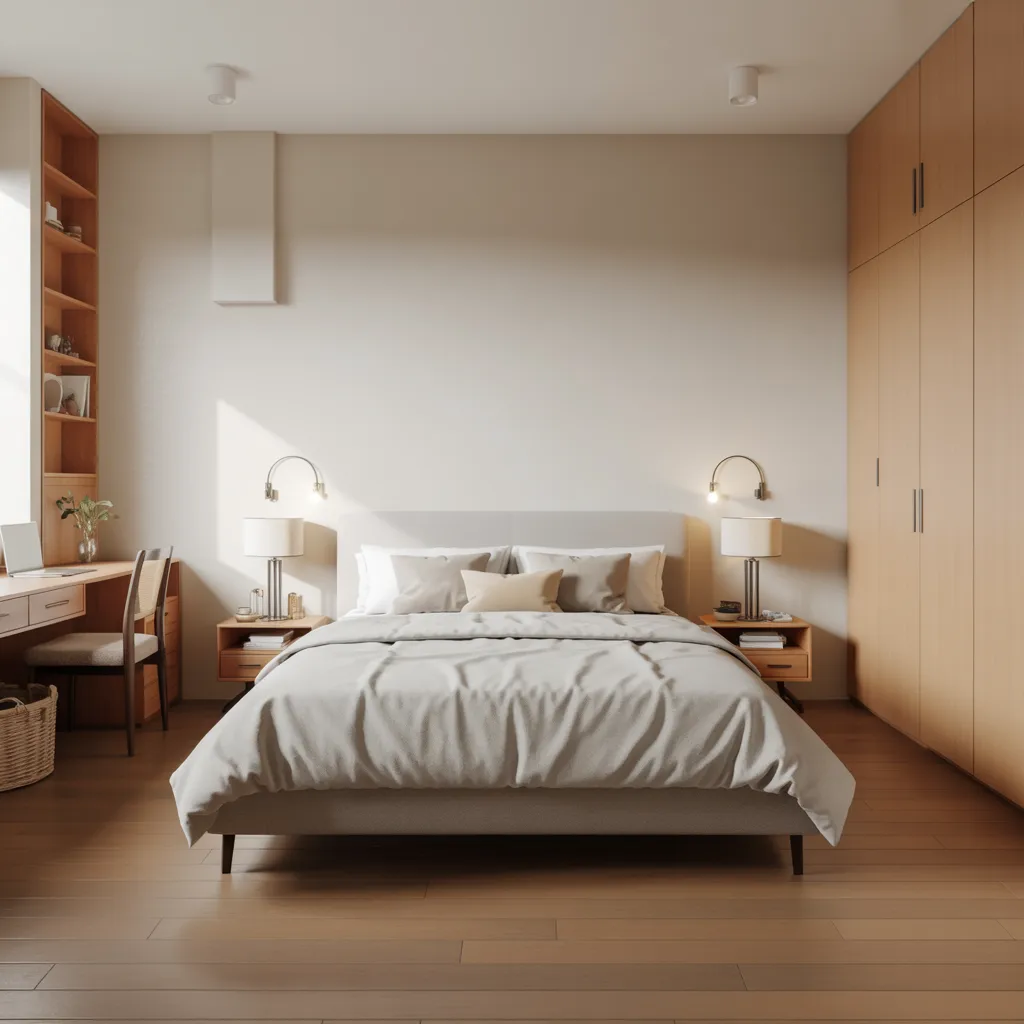
Clear Flooring Idea
Visible floor space makes a small bedroom feel larger. This is one of those principles that seems obvious but that most people undermine constantly by letting bags, shoes, laundry, and random objects accumulate on the floor. The more floor you can see, the bigger the room reads. This is also why furniture with legs — beds, nightstands, dressers on feet — looks better in small rooms than furniture that sits flat on the floor: the visible space beneath the furniture adds to the perceived room size.
The practical application is simple: everything on the floor should have a designated home that isn’t the floor. A small basket for shoes. Hooks on the back of the door for bags. Hooks inside the closet for tomorrow’s outfit. A hamper with a lid so dirty laundry disappears rather than accumulating in a corner. None of these cost much — a set of Command hooks runs about $6-10, a basic hamper runs $15-30. Together they keep the floor clear and the room feeling as large as it actually is.
Curtains Instead of Closet Doors Idea
Closet doors — especially sliding or bi-fold versions — require clearance to open and visually interrupt the room with their frames and tracks. Replacing them with floor-length curtains saves the clearance space the doors previously required, softens the look of the room, and costs almost nothing compared to door replacement. In a small bedroom where every foot of clearance matters, the space saved by removing closet doors can make a genuinely meaningful difference.
Heavy linen curtains in a color that either matches or complements the wall work best — they look intentional rather than like a cheap fix. IKEA’s Sanela velvet curtains or Aina linen curtains in the $20-40 per panel range are excellent options. Mount a curtain rod slightly wider than the closet opening so the panels stack fully outside the closet when open, keeping the full closet width accessible. Adding a second rod inside the closet for hanging storage makes the whole setup even more efficient.
Right-Sized Rug Idea
A rug that’s too small in a small bedroom actually makes the room feel smaller, not larger. When a rug is too small — covering only the area directly under the bed or looking lost in the center of the room — it fragments the visual space into disconnected pieces. The right-sized rug does the opposite: it anchors the bed and the room in a single visual unit, making the whole space feel more composed and more intentional.
For a queen bed in a small bedroom, an 8×10 foot rug is typically the minimum to get the proportions right — the front legs of the bed sit on the rug and at least 18 inches of rug are visible on each exposed side. A jute or wool rug from Rugs USA or Amazon in that size starts around $80-150. Natural fibers look and photograph better than synthetic options and hold up well in a bedroom. If the budget is tight, a 6×9 works in a very small room, but go larger if the space allows.
Daybed or Sofa Bed Idea
For a very small bedroom that also needs to function as a living space — a studio apartment, a guest room that doubles as a home office — a daybed serves as a sofa during the day and a bed at night. It takes the same floor space as a single bed but reads as seating rather than sleeping furniture during daytime hours, which changes how the room functions and feels from morning to evening. A well-styled daybed with cushions and throw pillows looks like intentional seating, not a compromise.
IKEA’s Hemnes daybed is one of the most popular options — it comes with trundle storage underneath and converts from a single to a double bed with the pull of a handle, running about $500-700. A more design-forward option is the Floyd Platform Daybed at about $900-1,200, which looks genuinely like furniture rather than a multifunctional solution. For the most casual setup, a standard twin bed frame styled with large back cushions against the wall reads surprisingly well as a sofa.
Personal Gallery Wall Idea
A gallery wall in a small bedroom does something that larger rooms rarely need — it fills a surface that might otherwise feel bare or afterthought, creating a focal point that makes the room feel genuinely personal and designed. In a small room where floor space is limited, the walls become more important as design surfaces. A thoughtful gallery wall on the main wall makes the bedroom feel rich and inhabited without adding a single item to the floor.
Keep the frames in one consistent color — all black, all white, or all natural wood — to make a mixed-content gallery wall look intentional rather than random. Use paper templates taped to the wall to test the arrangement before making any holes. Command strips handle most frames up to about 16 pounds without wall damage — perfect for renters. A gallery wall assembled from printed personal photographs and affordable art from Society6 or Etsy can cost under $80 total and be entirely unique to the person sleeping in the room.
Bedside Pendant Light Idea
Pendant lights hung from the ceiling on either side of the bed free up the nightstand completely — no lamp base taking up surface space, no cord trailing down the wall. In a small bedroom where nightstand surface area is limited (especially with wall-mounted floating nightstands), removing the lamp from the equation means the entire nightstand surface is available for other things. It also looks genuinely intentional and design-forward in a way that standard table lamps don’t.
Pendant lights for bedside use should hang so the bottom of the shade sits at about eye level when you’re sitting up in bed — roughly 30-40 inches above the mattress. A simple wired pendant from IKEA runs about $15-30. For a more design-forward look, a ceramic or rattan pendant from Amazon or Etsy in the $30-60 range adds personality. Hardwired installation requires an electrician, but plug-in pendant versions from Pottery Barn or CB2 install in minutes with no wiring at all and run about $60-120.
Slim Dresser Idea
A standard five-drawer dresser in a small bedroom takes up more floor space than most people realize — typically 48-60 inches wide and 18-20 inches deep. That’s a significant portion of the available wall space in a small room. A slim dresser — narrower, taller, and with fewer but deeper drawers — holds roughly the same clothing volume in about 60-70 percent of the floor footprint. It’s one of those furniture choices that doesn’t look like a significant change but genuinely improves how the room feels to move around in.
IKEA’s Nordli chest of drawers can be configured in a narrow, tall format — 6 drawers in a 16-inch wide column — that holds a surprising amount of clothing in a minimal footprint. This runs about $180-250. West Elm’s Mid-Century 3-Drawer Dresser is only 28 inches wide at about $600 and looks genuinely beautiful in a small bedroom. Both approaches keep the floor clear while maintaining meaningful storage. Tall and narrow is almost always a better choice than wide and low in a small bedroom.
Monochromatic Color Scheme Idea
A small bedroom decorated in multiple competing colors feels busier and more cramped than the same room in a single cohesive palette. A monochromatic or near-monochromatic scheme — one color carried through the walls, bedding, curtains, and accessories in slightly different tones and textures — creates a room that reads as calm and unified rather than fragmented. The single-palette approach makes the room feel larger because there are fewer visual interruptions to navigate.
Choose one color you genuinely love for the room — warm cream, soft sage, dusty blue, warm greige. Then layer every element of the room in different tones and textures of that same color. Matte walls, linen bedding, velvet cushion, knit throw, woven rug — the variety of surfaces keeps the room interesting while the consistent palette keeps it calm. This costs nothing to plan and only requires thoughtful purchasing rather than expensive materials to execute well.
Built-In Desk Nook Idea
A small bedroom that doubles as a workspace almost always suffers from the desk taking too much visual and physical space. A built-in desk nook — a floating desk mounted to the wall, sized precisely to fit an available alcove or wall section — takes far less space than a freestanding desk and looks intentional rather than improvised. Combined with floating shelves above and good task lighting, it creates a dedicated workspace that functions properly without dominating the room.
A basic floating wall desk can be built from a solid wood slab and two wall-mounted brackets for about $60-100 in materials. IKEA’s Lack shelf at 74 inches wide makes an excellent wall desk surface at about $25. Add an Elloven monitor stand, a simple desk lamp, and a set of wall shelves above it and the total setup runs about $100-200. For small bedrooms where a full desk isn’t practical, a fold-down wall desk from Wayfair at about $80-150 disappears completely when not in use.
Strategic Bedside Lamp Placement Idea
The bedside lamp does more work in a small bedroom than in any other room. It needs to provide enough light for reading, create a warm atmosphere for winding down, and not take up so much nightstand space that the surface becomes unusable. Most people place lamps that are too small (not enough light) or too large (takes up too much space) and live with the inconvenience. Getting the lamp right is one of those small decisions that improves the bedroom noticeably every single evening.
The ideal bedside lamp has a shade that sits at eye level when you’re sitting up in bed — roughly 20-24 inches above the nightstand surface. This puts the light at the right angle for reading without shining into your eyes or illuminating the ceiling uselessly. A slim table lamp with a drum or tapered shade in warm linen or cotton from CB2 or West Elm runs about $60-120 and looks exactly right on a floating nightstand. Choose a bulb no brighter than 40-60 watts equivalent (about 450-800 lumens) for bedside use.
Scented Candle and Diffuser Idea
A small bedroom benefits from scent more than a large one because the space is more contained — a single diffuser or candle fills the room completely without needing to be overpowering. Scent is the most immediate way to shift how a room feels before you’ve consciously registered anything about how it looks. A bedroom that smells like lavender or warm sandalwood feels restful the moment you walk in. That effect is independent of the room’s size, layout, or decor.
A reed diffuser from Vitruvi or Muji in the $25-40 range runs for 2-3 months and provides consistent, subtle scent without any daily effort. Lavender and eucalyptus are the most reliably calming scents for a bedroom. For evenings, a soy wax candle in a glass vessel from a small independent maker (widely available on Etsy for $15-25) burns cleanly and looks beautiful on a nightstand. The scent of a room is the detail that makes people say the bedroom feels nice without being able to say exactly why.
FAQs About Bedroom Ideas for Small Rooms
What bedroom ideas for small rooms make the biggest difference?
Storage beds, ceiling-height curtains, a large mirror, and light wall colors collectively make the most dramatic difference in a small bedroom. The storage bed eliminates the need for a separate dresser. The ceiling-height curtains make the room feel taller. The mirror makes it feel broader. The light wall color makes it feel more open. Together, these four changes transform how a small bedroom feels to be in — and three of them cost under $150 each.
How do I make a small bedroom look bigger?
Hang curtains at ceiling height, use light colors on the walls, add a large mirror to reflect light and space, choose furniture with visible legs so the floor reads as continuous beneath it, and keep the floor as clear as possible. Avoid dark colors on all four walls (a single dark accent wall behind the bed is fine), avoid furniture that’s oversized for the space, and avoid rugs that are too small — both fragments the visual space and makes the room feel more cramped.
What size bed works best in a small bedroom?
A full or queen bed works in most small bedrooms. A queen requires at least 10×10 feet to feel comfortable with adequate clearance on each side. A full bed works in rooms as small as 8×10 feet. A king is generally too large for any room under 12×12 feet and should be avoided in small bedrooms — the clearance you lose around the bed makes the room feel cramped in a way that’s hard to compensate for with any other design decision.
How do I add storage to a small bedroom without making it feel cluttered?
Choose storage that integrates into existing furniture — a storage bed, floating wall shelves, a built-in wardrobe, under-bed boxes. The goal is storage that doesn’t add visual bulk. Every piece of storage furniture should be either built-in, wall-mounted, or multifunctional. Freestanding storage pieces that sit on the floor and serve only one purpose make a small room feel smaller; integrated storage that serves multiple purposes makes it feel smarter.
What furniture should I avoid in a small bedroom?
Avoid oversized beds (king in a room under 12×12), bulky dressers that dominate a wall, large freestanding wardrobes that don’t reach the ceiling, oversized nightstands, and any furniture that serves only one function when a multi-functional alternative exists. Also avoid too many pieces — a small bedroom with five well-chosen pieces of furniture almost always looks better than the same room with eight pieces, regardless of how nice those eight pieces are individually.
Conclusion of Bedroom Ideas for Small Rooms
A small bedroom designed well is often more interesting and more personal than a large bedroom that was never really thought about. The constraints force better decisions — every piece earns its place, every color matters more, every storage choice affects the whole room. That’s not a disadvantage. It’s an invitation to be more deliberate, which almost always produces a better result than unlimited space and unlimited choices.
Start with the decisions that have the most impact for your specific room. If floor space is the problem, a storage bed and clear floors make the biggest difference. If the room feels dark and low, ceiling-height curtains and a light wall color change it immediately. If storage is the issue, go vertical. One good decision in a small bedroom tends to make the next one obvious. And the room that results from those decisions — made carefully, one at a time — is one you’ll actually be glad to spend time in.