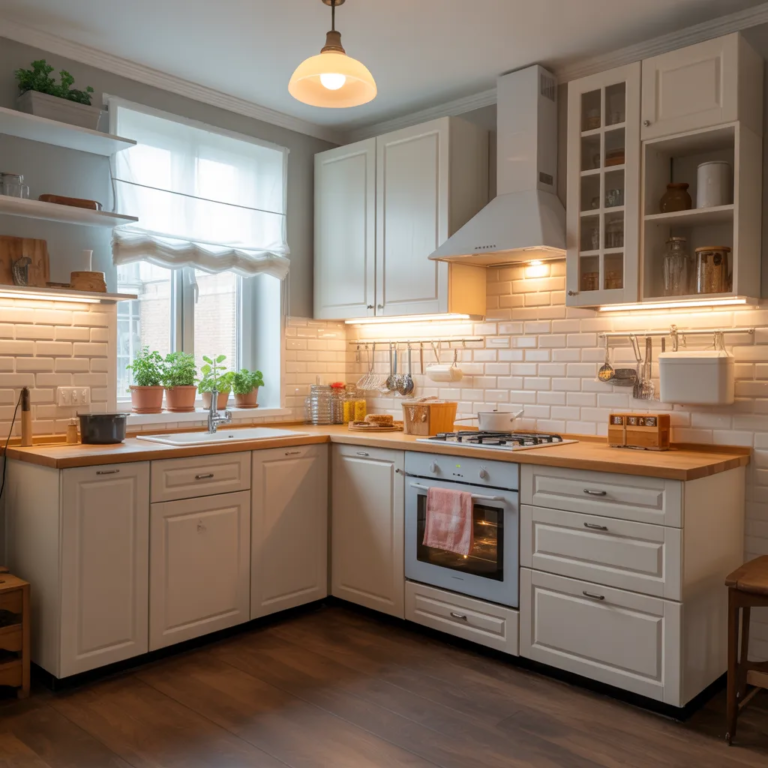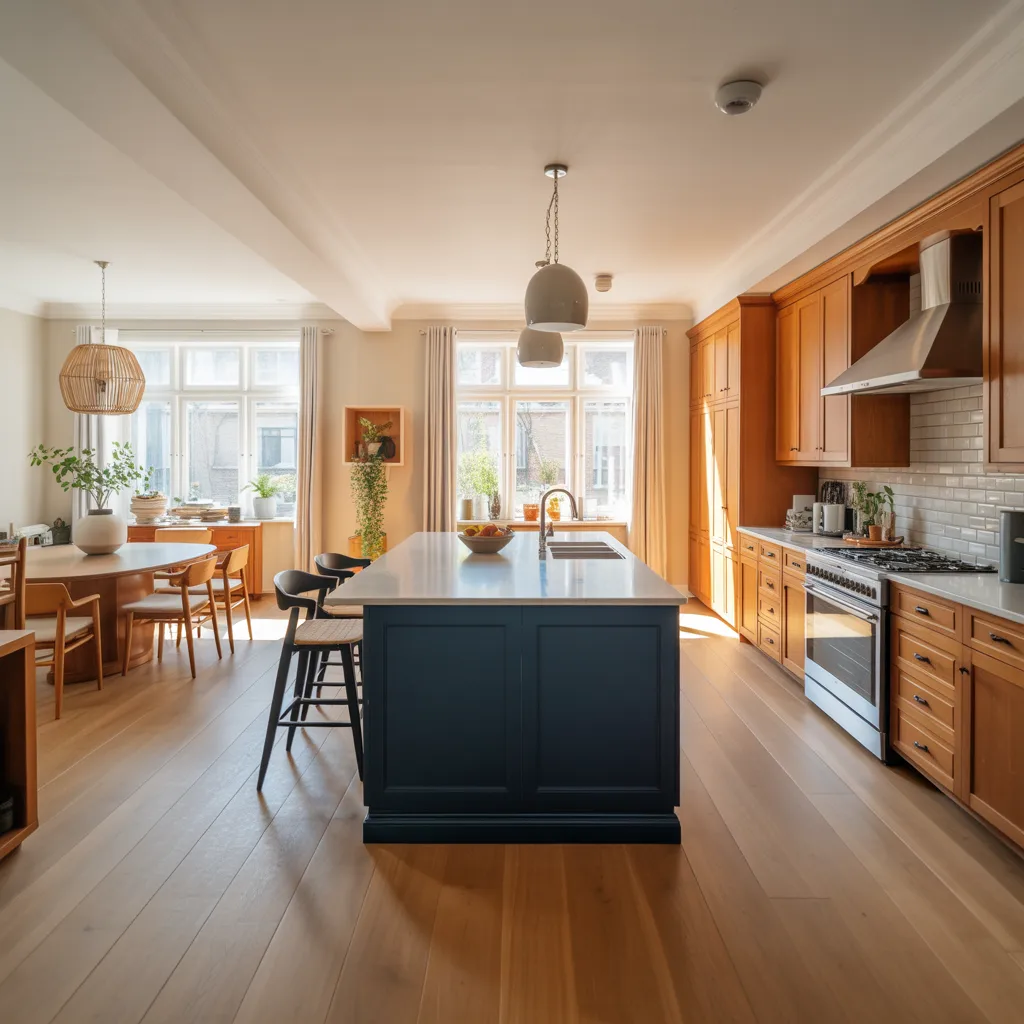
26 Open Kitchen Ideas That Connect Your Home and Make Cooking Worth Doing
The open kitchen changed how people live in their homes. Before walls started coming down, cooking was something that happened out of sight — a private, functional activity separated from wherever the rest of the household was gathering. The open kitchen ended that separation. Now cooking happens in the middle of the house, surrounded by conversation, with children doing homework at the counter and guests naturally drifting toward the kitchen because that’s where the host is. The kitchen stopped being a room and became the room.
But an open kitchen requires more intentional design than a closed one. When the kitchen is visible from every other living space, every decision — the cabinet color, the island size, the lighting — has to work as part of a larger visual whole. This list covers 26 open kitchen ideas that address all of it, from the foundational decisions about layout and zoning to the finishing details that make an open kitchen feel like the genuinely connected, livable space it’s supposed to be.
Best Open Kitchen Ideas to Try in Your Home
The best open kitchens share something that goes beyond looks: they feel like the center of the home rather than just a room you happen to cook in. They draw people toward them naturally. Conversations happen across the counter. Kids drift in while dinner is being made. Guests end up near the kitchen because that’s where the energy is. That quality — a kitchen that functions as a social hub rather than a utility space — is what good open kitchen design actually delivers.
What follows covers the full range of open kitchen ideas, from large decisions about the island and the layout to smaller ones about lighting, storage, and how to keep an open kitchen looking good from every angle. Some of these are renovation-level decisions. Others are refinements you can make to an existing open kitchen without touching the structure. All of them are worth knowing if you want your open kitchen to actually live up to what the concept promises.
Island as Room Divider Idea
In an open kitchen, the island does more work than it does in a closed one. It defines the kitchen zone without a wall, provides a natural gathering point, creates a surface for casual dining and conversation, and acts as the visual anchor of the open-plan space. Getting the island right — the right size, the right height, the right position — is probably the single most important open kitchen design decision available. Get it wrong and the whole layout feels off.
The minimum clearance around an island is 36 inches on working sides and 42 inches on high-traffic sides. For most open kitchen layouts, an island of 4×2 to 6×3 feet is appropriately scaled. A waterfall countertop edge — where the counter material continues down one or both sides to the floor — turns a functional island into a design statement. Budget around $2,000-5,000 for a well-designed island with quartz or stone top; a simpler butcher block top on a painted base runs about $500-1,200 and looks just as good in many kitchens.
Consistent Color Palette Open Kitchen Idea
In a closed kitchen, the color choices exist independently of the rest of the house. In an open kitchen, they don’t. The cabinet color visible from the kitchen is also visible from the sofa. The backsplash tile seen while cooking is seen from the dining table. Everything in the open kitchen is part of the larger visual composition of the home, which means choosing colors in isolation — picking the kitchen palette without considering the adjacent living and dining spaces — produces a result that looks disconnected and unresolved.
Choose a palette that works across all three zones: a neutral base that appears in the kitchen, dining, and living areas with accents that shift subtly from space to space. White or cream cabinetry is the most versatile open kitchen choice because it’s compatible with almost any color in the adjacent spaces. If you want more personality, a contrasting island color — forest green, navy, warm charcoal — adds design interest without requiring the perimeter cabinets to carry bold color that might clash with living room furnishings.
Breakfast Bar Extension Idea
A breakfast bar — an extended countertop overhang on the living-room-facing side of the island — is one of the most functional elements in any open kitchen. It creates a casual dining surface separate from the main dining table, seats two to four people comfortably on bar stools, and acts as the social interface between the kitchen zone and the rest of the open-plan space. When someone’s cooking and others are sitting at the breakfast bar, the conversation happens naturally across the counter in a way that no dining table placement quite replicates.
The overhang needs to be at least 12 inches deep and 15 inches wide per seat to be comfortable — 18 inches per seat is better. Standard counter height is 36 inches with counter-height stools; bar height is 42 inches with bar stools. Counter height is more comfortable for longer sitting sessions; bar height creates a more casual, perch-style feel. A set of four matching bar stools from Article, IKEA, or Target completes the setup for $80-300 depending on material and style.
Open Kitchen Range Hood Focal Point Idea
In an open kitchen, the range hood is one of the most visible elements from across the room — especially where the range is on a wall or a perimeter cabinet run rather than the island. A basic stainless steel box hood is purely functional and visually unremarkable. A custom range hood — a plaster surround, a brick chimney, a wood-clad box, a painted architectural frame — becomes the kitchen’s focal point and one of the strongest design statements in the open-plan space.
A custom plaster or shiplap range hood surround can be built for about $500-1,500 in materials and basic carpentry labor, depending on complexity. Painted the same color as the walls for a seamless built-in look, or in a contrasting color as a deliberate design feature. A statement range hood makes the cooking zone feel architectural rather than appliance-focused — it’s visible from the sofa and the dining table simultaneously, which makes the investment worthwhile in a way it wouldn’t be in a closed kitchen.
Zone Definition Open Kitchen Idea
An open kitchen without defined zones feels like one undifferentiated room rather than a space with distinct purposes. The kitchen bleeds into the dining area which bleeds into the living room, and nothing feels like it quite belongs anywhere. Zone definition — creating visual boundaries without physical walls — is what makes an open plan feel organized and intentional rather than just open. And it’s achievable through multiple tools that don’t require any structural changes.
The most effective zone-defining tools: a change in flooring material at the kitchen perimeter (tile in the kitchen, hardwood in the living area), pendant lights that mark the kitchen zone from above, a kitchen island that acts as a visual boundary, and a change in ceiling height or treatment above the cooking area. Using two or more of these simultaneously creates clear zone definition that reads as designed rather than accidental. The goal isn’t walls — it’s legibility, the sense that each area knows what it’s for.
Open Kitchen Backsplash Statement Idea
In a closed kitchen, the backsplash is seen primarily by the person cooking. In an open kitchen, it’s visible from the dining table, the sofa, and often the hallway. It’s a design element that’s read from across the room, which means it needs to work at distance as well as up close. A backsplash that’s genuinely beautiful — zellige tile, handmade ceramic, book-matched stone slab — becomes a design feature that elevates the whole open-plan space rather than just the kitchen zone.
White subway tile is reliable but increasingly expected in open kitchens. Zellige tile in warm white, sage green, or terracotta adds handmade texture and warmth that reads beautifully from across a room — budget about $15-40 per square foot. A full-height slab backsplash in the same material as the countertop — quartz or marble running from counter to ceiling — creates a dramatic seamless effect for about $80-150 per square foot installed. Either choice makes the kitchen wall worth looking at from anywhere in the open-plan space.
Open Kitchen Unified Flooring Idea
Flooring is one of the most powerful tools for creating cohesion or visual disruption in an open-plan space. When the kitchen flooring is dramatically different from the adjacent areas with no intentional transition, the open plan feels patched together rather than designed. Continuous flooring throughout — hardwood or large-format tile that runs from kitchen through dining and living — creates unity and makes the open-plan space feel larger and more connected.
Wide-plank hardwood flooring (5 inches or wider) running continuously through kitchen and living areas is one of the most popular open kitchen flooring choices because the consistent direction and material unifies the spaces visually. If tile is preferred in the kitchen for practical reasons, a clean threshold transition at the kitchen perimeter in a complementary material reads as intentional rather than inconsistent. Large-format tile (24×24 inches or larger) minimizes grout lines and makes the floor feel more like a continuous surface rather than individual pieces.
Open Kitchen Hidden Appliance Storage Idea
In an open kitchen, every item on the counter is visible from the sofa, the dining table, and the hallway. Appliances that make sense in a closed kitchen — a toaster on the counter, a coffee machine beside the fridge, a blender near the sink — create visual clutter in an open kitchen that’s seen from every other room in the house. An appliance garage (a cabinet section with a roll-up or hinged door that covers counter appliances when not in use) is one of the most practical open kitchen additions available.
An appliance garage can be added to an existing kitchen cabinet run for about $200-600 depending on size and door mechanism, or built in during a renovation. The principle is simple: every appliance that’s not used multiple times daily should be stored behind a door, not left on the counter. The microwave in a drawer rather than above the range. The coffee maker in the garage until morning. The toaster in a cabinet between uses. An open kitchen with clear countertops looks significantly more polished and intentional than one where appliances are in full view at all times.
Open Kitchen Natural Light Optimization Idea
Natural light in an open kitchen is an asset for the whole open-plan space — it brightens not just the kitchen zone but the dining and living areas that share the same floor plan. Most open kitchens are designed without specific attention to how light moves through the space, which means some areas are well-lit and others are dim depending on the time of day. Optimizing for natural light — through window placement, reflective surfaces, and the absence of light-blocking upper cabinets in key locations — makes the whole open plan work better.
Removing upper cabinets from the window wall and replacing them with floating shelves or leaving the wall open creates a light channel that distributes morning or afternoon light deeper into the space. Light-colored countertops and backsplash materials (white quartz, pale marble, light grey tile) reflect rather than absorb natural light. A window above the sink — or an enlarged sink window — brightens the primary work area and the view from it, which affects how enjoyable cooking actually feels day to day.
Open Kitchen Seating Integration Idea
An open kitchen without integrated seating is an opportunity missed. The whole point of an open kitchen is that cooking and socializing happen in the same space — which requires places for the non-cooking members of the household to sit while dinner is being made. Bar stools at the island are the most obvious solution, but built-in seating in the dining zone, a breakfast nook in a corner, or a window bench adjacent to the kitchen all integrate seating in a way that makes the open-plan space feel complete and genuinely multi-functional.
A built-in banquette in the dining corner adjacent to an open kitchen is one of the most efficient seating arrangements available — it seats more people than an equivalent arrangement of freestanding chairs, it looks architectural rather than improvised, and it provides hidden storage in the bench base. A custom banquette with storage beneath costs about $800-1,500 in carpentry and materials; an IKEA hack using Kallax units as the base and a custom cushion top runs about $200-400 and achieves most of the same result.
Open Kitchen Overhead Lighting Plan Idea
Lighting is where open-plan design most commonly fails. The kitchen gets bright task-focused lighting; the living area gets warm ambient lighting; and the two systems fight each other visually in a way that makes the transition between zones jarring rather than seamless. A unified lighting plan treats the open-plan space as a single lighting environment — with different sources at different heights creating a layered effect that works in all areas simultaneously.
Put every light in the open-plan space on dimmers — this allows the kitchen lighting to be bright during cooking and dimmed during dinner or evening relaxation without creating the jarring contrast of full-brightness task lighting against dim ambient lighting. Pendant lights over the island at one intensity, recessed overhead lights on a separate circuit at another, and floor or table lamps in the living zone at a third, all controlled independently, gives you complete flexibility over the atmosphere of the whole open-plan space.
Open Kitchen Open Shelving Strategy Idea
Open shelving in an open kitchen serves double duty — storage and visual display simultaneously. What’s on those shelves is visible from across the room, which means the content matters as much as the shelves themselves. Well-curated open shelves — consistent dishware, organized food jars, minimal clutter, a plant or two — add to the visual quality of the open-plan space. Disorganized open shelves do the opposite and are visible from the sofa every time you look toward the kitchen.
The practical approach: use open shelves for the items you want to display (matching dishes, glass storage jars, cookbooks, plants) and closed cabinets for everything else (plastic containers, cleaning supplies, appliances, anything mismatched or purely functional). A mix of open and closed storage works better for most households than all-open or all-closed. Floating shelves in natural wood or painted to match the wall, from IKEA or Amazon, run about $20-50 per shelf and look intentional when styled consistently.
Open Kitchen Hardware Consistency Idea
Hardware in an open kitchen is visible from a distance, and mixed finishes — chrome faucet, brass cabinet pulls, stainless appliances, black light fixtures — create visual noise that undermines the cohesion of the open-plan space. In a closed kitchen, hardware inconsistency is a detail you notice up close. In an open kitchen, it’s a detail you notice from across the room. Choosing one metal finish and carrying it through every hardware element — cabinet pulls, faucet, pendant lights, pot rack, drawer handles — creates a thread of visual consistency that makes the kitchen read as designed rather than assembled.
Matte black is the most versatile finish for a contemporary open kitchen. Brushed brass adds warmth and works well with white or cream cabinetry. Brushed nickel is clean and neutral. Polished chrome reads as crisp and contemporary. Pick one and commit — mixing two finishes intentionally is a design skill; mixing them accidentally is a visual problem. Cabinet hardware from Rejuvenation or Anthropologie Home in the right finish runs about $5-15 per pull, and replacing all hardware in a kitchen typically costs $100-300 total for a meaningful upgrade.
Open Kitchen Counter Clearance Idea
An open kitchen with cluttered counters is an open kitchen that looks cluttered from every room in the house. This is the discipline that open kitchens require more than closed ones — because everything on the counter is always visible from multiple angles and multiple rooms. The counters in an open kitchen need to be treated as a curated display surface as much as a functional work surface. What’s on them when you’re not actively cooking should be intentional, minimal, and worth seeing.
The principle: keep only what’s used daily on the counter. Everything else goes in a cabinet, an appliance garage, or a drawer. What stays should be genuinely attractive: a wooden cutting board leaned against the backsplash, a simple fruit bowl, a plant near the window, a canister of utensils in a ceramic holder. Three to five intentional objects maximum. An open kitchen counter with clear, curated surfaces looks professional and considered; one covered in random items looks chaotic regardless of how nice the cabinetry and countertop actually are.
Open Kitchen Kitchen Triangle Efficiency Idea
The kitchen work triangle — the path between the refrigerator, sink, and range — determines how efficiently the kitchen works during cooking. In an open kitchen where the layout is often determined by how it connects to other areas, it’s easy to prioritize how the kitchen looks from the living room over how it functions during cooking. But a kitchen that looks beautiful and is inefficient to cook in becomes frustrating to use daily — which defeats the purpose of having a kitchen you actually want to be in.
The ideal kitchen triangle has each leg between 4 and 9 feet, with a total perimeter between 12 and 26 feet. Shorter triangles are more efficient for solo cooking; slightly longer ones work better when multiple people are in the kitchen simultaneously. Before finalizing any open kitchen layout — particularly if you’re doing a renovation — sketch the triangle and walk it physically. Painter’s tape on the floor to simulate the counter positions lets you test the workflow before any cabinets are installed or moved.
Open Kitchen Indoor-Outdoor Connection Idea
An open kitchen that connects to outdoor space — through large sliding doors, folding glass panels, or a pass-through window above the counter — extends the living space further and makes the kitchen feel even more central to the life of the home. Cooking inside while guests are outside becomes easy. The visual connection to outdoor greenery brings natural light and organic color into the kitchen from a direction that standard windows can’t provide. And in warm months, the whole indoor-outdoor space functions as one connected living area.
A simple pass-through window above the kitchen counter that opens to a porch or patio can be added to most homes for about $500-1,500 depending on the wall construction. Large sliding patio doors adjacent to the open kitchen cost more — $3,000-8,000 installed depending on size — but transform how the home functions during warmer months. Even without structural changes, positioning the kitchen island to face an existing glass door creates a visual connection to the outdoor space that makes the kitchen feel more expansive.
Open Kitchen Smart Storage Solutions Idea
An open kitchen with insufficient storage becomes chaotic very quickly — items end up on the counter because there’s nowhere else for them, which undermines the visual quality of the space that’s visible from every other room. Smart storage in an open kitchen isn’t just about having enough cabinets. It’s about having the right storage in the right locations so that items are accessible where they’re used and out of sight when they’re not.
Pull-out pantry cabinets beside the refrigerator, drawer organizers in every drawer, lazy Susans in corner cabinets, deep drawer cabinets rather than shelved lower cabinets for pots and pans, and toe-kick drawers for flat items — these storage solutions collectively keep an open kitchen functional and clear without requiring more cabinet space than the kitchen already has. Most can be retrofitted into existing cabinetry for $50-300 per upgrade rather than requiring new cabinets. Rev-A-Shelf makes excellent pull-out and organizing solutions that fit standard cabinet boxes.
Open Kitchen Rug in the Kitchen Zone Idea
A rug in the kitchen zone of an open-plan space is unexpected, which is exactly why it works so well when done correctly. It defines the kitchen area visually within the open plan, adds warmth and cushioning underfoot during long cooking sessions, and contributes to the layered, considered look that the best open kitchens have. The right rug makes the kitchen zone feel intentional and furnished rather than just a functional area with cabinets and appliances.
Only washable rugs belong in kitchen zones — cotton flatweaves, indoor-outdoor rugs, and Ruggable’s removable machine-washable options all work well. A natural jute runner in front of the sink and island defines the cooking path. An indoor-outdoor rug in a graphic pattern under the island seating creates a distinct zone for the breakfast bar area. Ruggable offers machine-washable rugs in a wide range of styles from $80-200 for a standard 5×8 — the washability is non-negotiable in a space that inevitably sees food and cooking spills.
Open Kitchen Waterfall Countertop Idea
A waterfall countertop — where the counter material continues vertically down one or both sides of the island to the floor — is one of the most visually distinctive open kitchen details available. It transforms the island from a functional cabinet with a top surface into what looks like a solid, sculptural piece of furniture. The effect is dramatic and immediately recognizable as a design choice rather than a default outcome.
Stone, quartz, and marble waterfall countertops are the most popular because the continuous material veining makes the waterfall effect most dramatic. Budget approximately $150-300 per linear foot for the waterfall panel in addition to the standard counter cost — a single side waterfall on an 8-foot island adds roughly $400-800 to the countertop cost depending on material. It’s not a budget upgrade, but for an open kitchen island that’s visible from across the room, the visual payoff is proportional to the investment.
Open Kitchen Plant and Natural Element Idea
Plants in an open kitchen counterbalance what can otherwise be a room of entirely hard surfaces — tile, stone, metal, wood. A large plant beside the island or in an underused corner, herbs on the windowsill, a trailing pothos on a shelf, dried botanicals in a vase on the counter — these organic elements add color, texture, and life to the kitchen in a way that manufactured decor cannot. And in an open-plan space where the kitchen is always visible, plants make it feel warm and inhabited rather than showroom-staged.
A large fiddle leaf fig or monstera in a quality ceramic planter costs about $60-100 total and makes a strong visual statement in a corner that might otherwise feel incomplete. Kitchen windowsill herbs — basil, rosemary, thyme, mint — are both decorative and functional, adding fresh ingredients within reach during cooking. Dried pampas grass in a simple ceramic or terracotta vase requires zero maintenance and looks beautiful on a counter or shelf year-round. Natural elements are the most consistent way to make an open kitchen feel genuinely warm rather than just well-designed.
FAQs About Open Kitchen Ideas
What are the most important open kitchen ideas to get right?
The island size and placement, the counter clearance discipline, the lighting plan, and the color palette coordination with adjacent spaces are the four decisions that have the most impact on how an open kitchen actually functions and looks. Get the island wrong and the whole layout feels off. Let the counters get cluttered and the kitchen looks chaotic from every room. Poor lighting makes the space feel flat and disconnected. Inconsistent color with the living area makes the whole open plan feel unresolved.
How do I keep an open kitchen looking good from the living room?
Clear the counters down to a curated minimum of daily-use and intentional decorative items. Use appliance garages or cabinets to hide anything that’s not beautiful. Keep the island surface clear except for a simple fruit bowl or a plant. Maintain consistent hardware finishes throughout. And style the open shelves deliberately — mismatched clutter on open shelves is visible from the sofa and undermines the kitchen’s appearance more than any other single factor.
What island size works in an open kitchen?
The minimum clearance around an island is 36 inches on working sides and 42 inches on high-traffic sides. For most open kitchens, an island between 4×2 feet (for a modest space) and 8×4 feet (for a generous one) is appropriately scaled. Use painter’s tape on the floor to mark the island dimensions and walk around it before committing — the tape test reveals circulation problems that drawings alone often miss. An island that’s 6 inches too wide can make an open kitchen feel cramped in a way that’s hard to compensate for with any other design decision.
How do I define zones in an open kitchen without walls?
Use a combination of two or more zone-defining tools: flooring transitions at the kitchen perimeter, pendant lights that mark the kitchen zone from above, the island as a visual boundary, and ceiling treatments above specific zones. A rug in the dining area that’s clearly separate from the kitchen floor material is one of the clearest zone definitions available without any structural change. The goal is legibility — each zone should feel like it knows what it’s for, even without physical boundaries.
Can an open kitchen work in a small home?
Yes — in fact, opening a closed kitchen into the living space often makes a small home feel significantly larger by eliminating the wall that was dividing already limited square footage. The key is proportional design: an island sized correctly for the available clearance, a peninsula rather than a full island if space is very tight, and continuous flooring throughout to unify the space. In small open kitchens, storage discipline is particularly important — limited space means limited counter clearance is even more critical to maintain.
Conclusion of Open Kitchen
An open kitchen done well is one of the most significant things you can do for how a home feels to live in. It changes the rhythm of daily life — cooking becomes a social activity, the kitchen becomes the natural gathering point, and the household moves through the day in a more connected way than a closed-off kitchen ever allows. That’s the real value of an open kitchen: not the square footage or the island or the pendant lights, but the way it makes the whole house feel more alive.
Start with whatever’s most wrong about your open kitchen right now. If the counters are cluttered, clear them first. If the lighting is flat, plan a layered lighting upgrade. If the island is the wrong size, that’s worth addressing before anything else. One good decision in an open kitchen tends to make the next one clearer, and the kitchen that results from that process is one that genuinely earns the openness it was designed for.