25 Laundry Room Ideas That Make the Most Ignored Room in Your Home Actually Work
Nobody fantasizes about their laundry room. It’s the room you walk into under obligation, do what you came to do, and leave as quickly as possible. Most laundry rooms reflect exactly that attitude — a bare bulb, a plastic shelf, a pile of things that don’t belong anywhere else, and a sense that nobody ever really thought about this space at all. And yet you’re in there multiple times a week, every single week, for years. A room you use that often deserves better than an afterthought.
The good news is that laundry rooms are small. That means transformations are fast, affordable, and genuinely satisfying. A weekend and a few hundred dollars can take a laundry room from a place you avoid to a space that actually functions well and doesn’t make you dread the task every time. This list covers 25 laundry room ideas that work — for every budget, every size, and every level of design commitment.
Best Laundry Room Ideas to Try in Your Home
The best laundry rooms share one quality that most people never think to aim for — they make the task easier. Not just prettier, though that matters too. Actually easier. When supplies are within reach, sorting is built into the system, folding has a dedicated surface, and the lighting is good enough to catch stains before they set, laundry stops feeling like a chore and starts feeling like something you can just get through without friction. That’s the real goal here.
What follows covers everything from big structural changes like adding a folding counter or a utility sink to small wins like decanting your detergent into glass jars and labeling everything. Some of these cost almost nothing. Others are worth investing in because the payoff is daily. All of them are rooted in the same idea: a laundry room that works for the people using it, not against them.
Folding Counter Idea
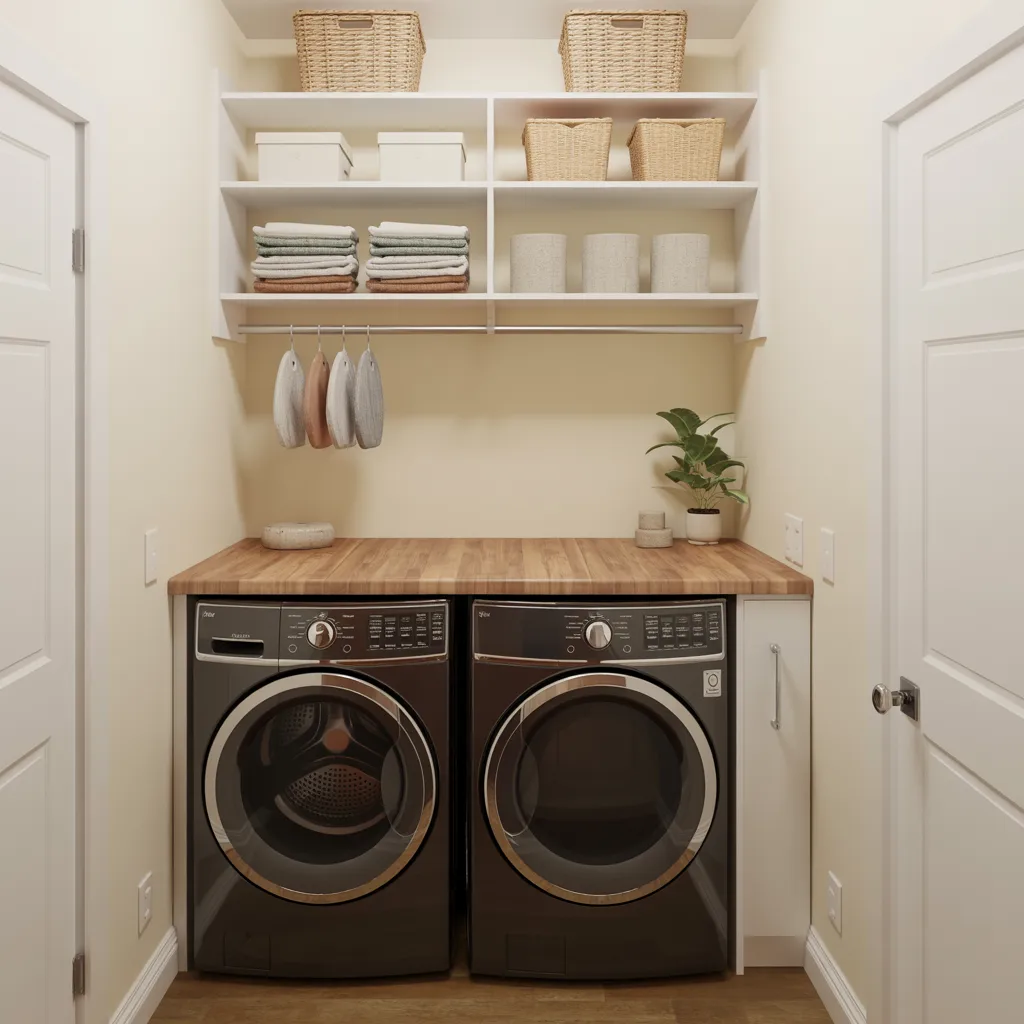
The single most impactful upgrade in any laundry room is a dedicated folding surface. Without one, clothes get folded on the dryer lid, the floor, or the bed down the hall — none of which is efficient or comfortable. A counter mounted above side-by-side machines changes the entire workflow of laundry day. You pull something out of the dryer and fold it immediately, right there. That one change alone makes laundry genuinely faster.
A butcher block counter from IKEA — the Badelunda in particular — fits perfectly above most standard machines and runs about $80-120 depending on size. Mounted on simple brackets screwed into wall studs, it’s a weekend project that costs under $150 total. For stacked machines, a fold-down wall-mounted counter from Amazon or Wayfair in the $60-100 range gives you the same surface without permanently taking up floor space.
Open Shelving Idea
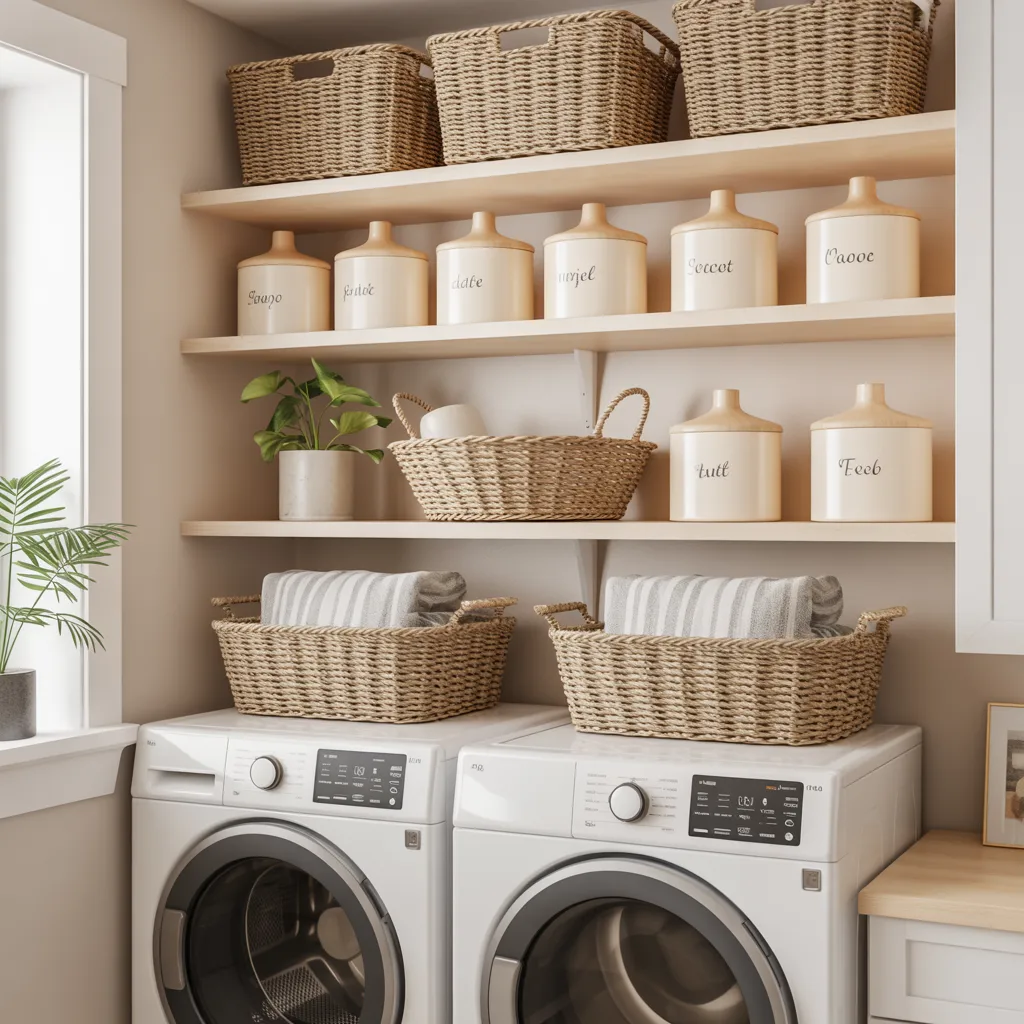
Dead wall space above your washer and dryer is storage waiting to happen. Most laundry rooms have a full wall of unused vertical space that gets ignored completely, which means detergent ends up on top of the machines, supplies pile up on the floor, and nothing has a proper home. Adding open shelves changes all of that without touching the machines or reorganizing the room’s layout.
Floating shelves from IKEA’s Lack line start at about $10 each and are strong enough for laundry supplies when properly anchored into studs. Use the middle shelf for daily-use items like detergent and dryer sheets, the upper shelf for things you reach for weekly, and the top shelf for seasonal or rarely used items. Matching baskets in natural seagrass or white wire — about $8-15 each from Target or The Container Store — make it look organized even when it isn’t perfectly tidy.
Laundry Sorting System Idea
Sorting laundry before laundry day is one of those habits that sounds obvious but that almost nobody actually does — because there’s nowhere logical to sort into. If you have to pull things out of one hamper and sort them on the floor before you can start a load, the friction alone is enough to make you put it off. A proper sorting system removes that step entirely. You sort as you go, and on laundry day, each load is already ready.
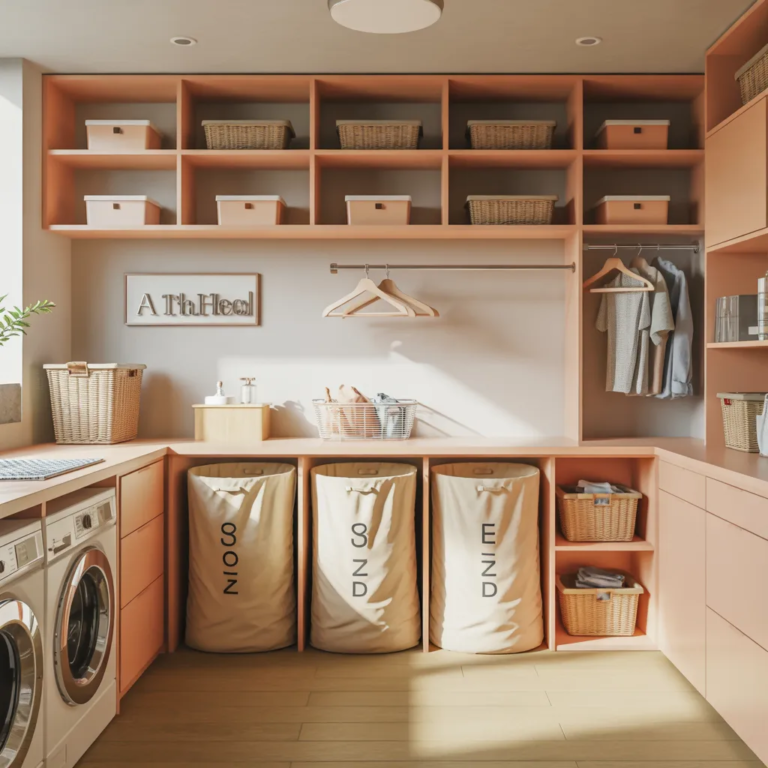
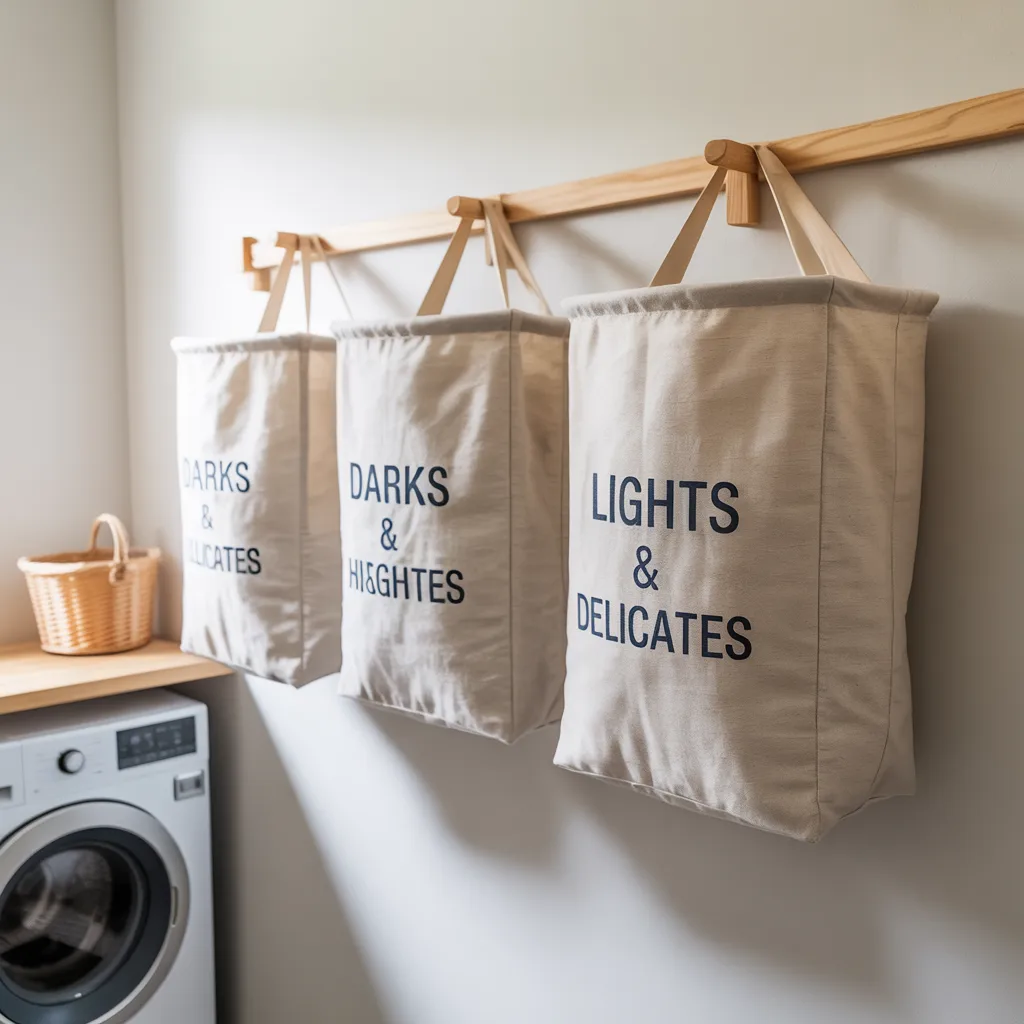
A three-compartment rolling sorter — one bin each for darks, lights, and delicates — is the most practical option for most households. A good one from Amazon or Wayfair runs about $40-70 and rolls beside or behind the machines when not in use. For smaller laundry rooms, three wall-mounted fabric bags in a row labeled with a label maker do the same job and take up zero floor space. Either way, the system pays for itself in time saved within the first month.
Bold Wall Color Idea
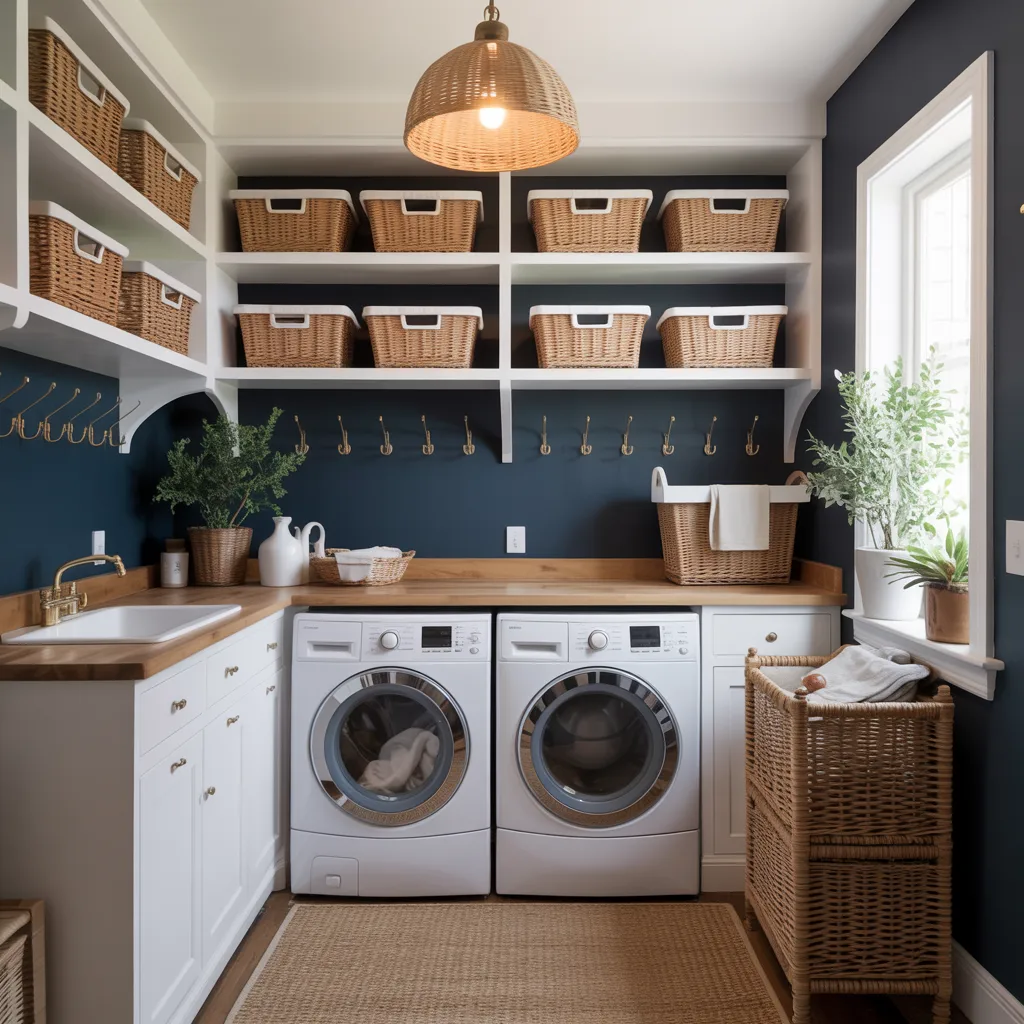
Laundry rooms get away with bolder color choices than almost any other room in the house, and for good reason — they’re small, you’re in and out quickly, and a strong color makes the space feel intentional rather than neglected. A deep navy, a warm sage green, a rich terracotta on the walls behind and above the machines transforms the room from a utility closet into an actual designed space. It sounds dramatic. It costs one can of paint.
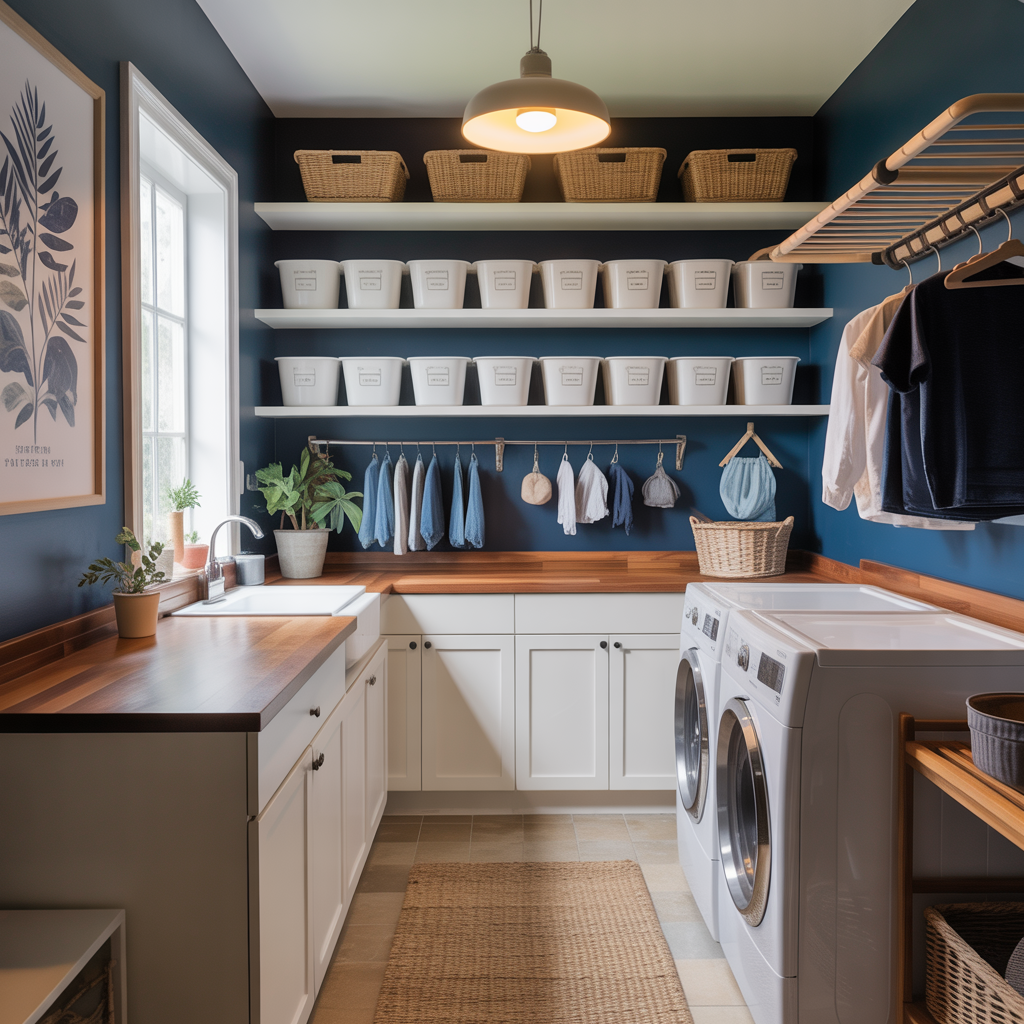
One quart of Sherwin-Williams or Benjamin Moore paint covers a standard laundry room with two coats and runs about $20-30. That’s genuinely one of the best returns on any home improvement investment. Navy walls with white shelving and brass hardware is one of the most popular combinations right now — and for good reason. Warm sage green with natural wood and cream accessories reads as calm and considered. Pick a color that makes you smile when you walk in. It matters more than you’d think.
Decanted Supply Containers Idea
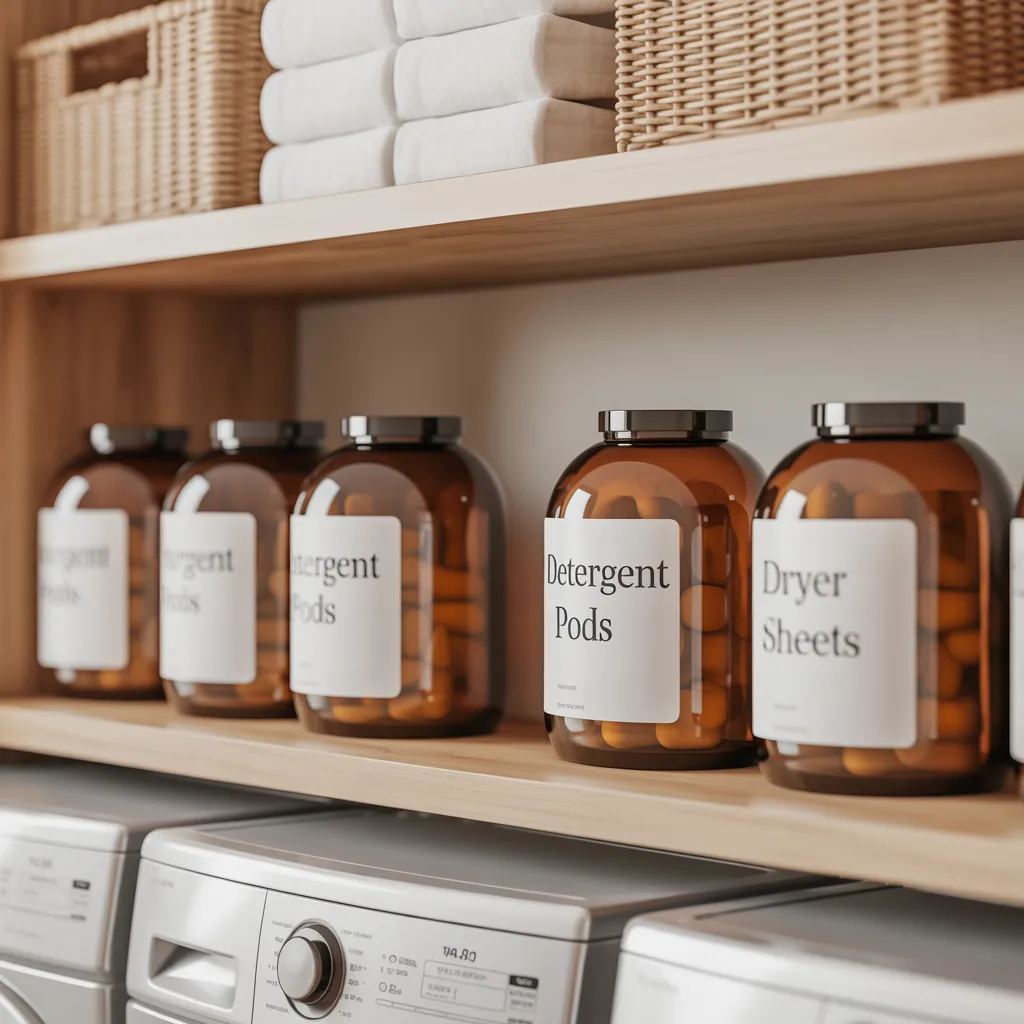
Laundry supplies come in packaging designed for store shelves — loud, branded, visually competing with everything around them. In a laundry room, a row of differently branded plastic jugs on a shelf creates visual chaos that makes the whole space feel messier than it actually is. Decanting everything into matching containers takes about 20 minutes and immediately makes the shelves look organized, calm, and intentional.
Clear glass containers or amber glass jars work best — you can see how much is left without opening them. OXO makes excellent airtight canisters for powder detergent and dryer sheet storage; a set of three runs about $30-40 on Amazon. Use a label maker or chalk labels to mark each one. Detergent pods transfer easily into a glass jar with a wood lid, which looks significantly better than the original plastic tub and keeps them dry and accessible.
Wall-Mounted Drying Rack Idea
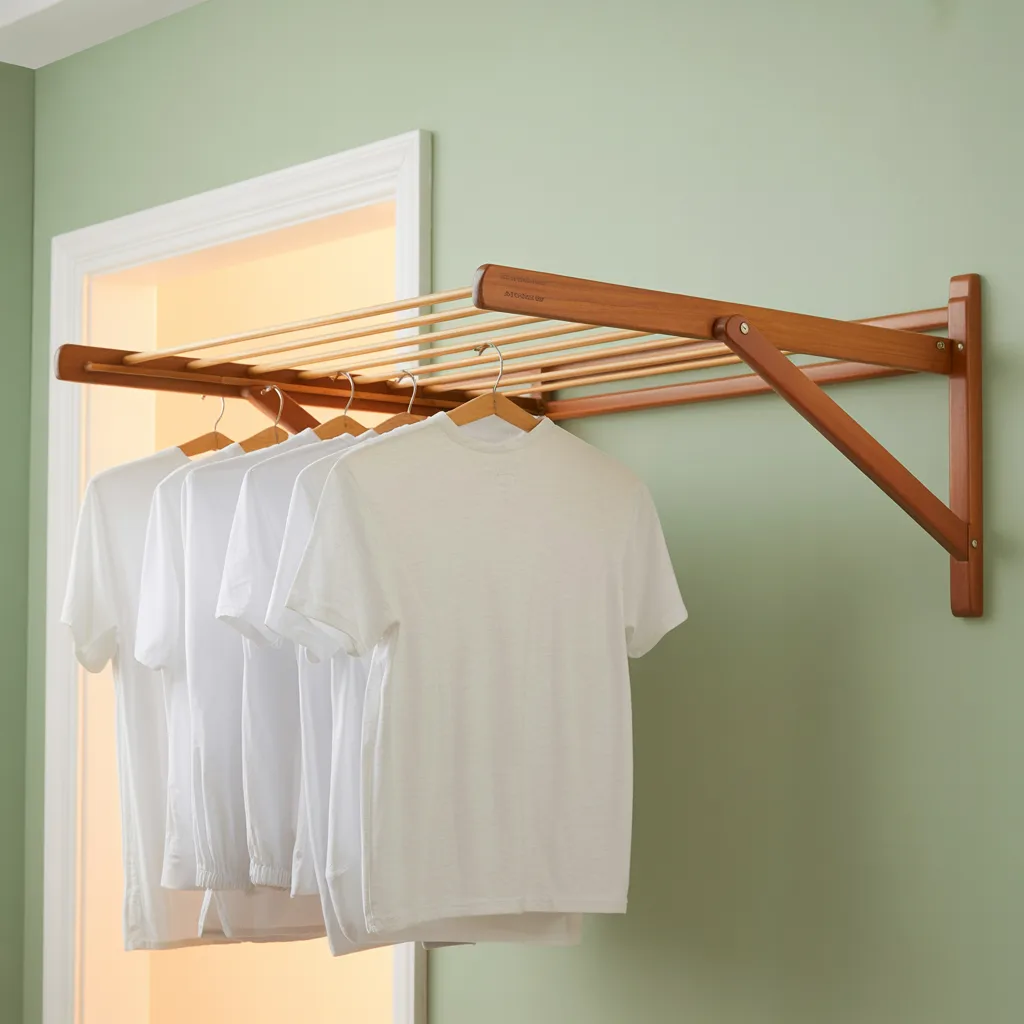
A retractable wall-mounted drying rack solves one of the most persistent laundry room problems — where do air-dry items actually go? Without a dedicated spot, they end up draped over doors, shower rods, and chair backs all over the house, which defeats the purpose of having a laundry room. A wall-mounted rack that folds flat when not in use gives you air-dry space exactly where you need it, and takes up essentially no room when it’s folded away.
Teak wood folding drying racks that mount to the wall run about $60-100 on Amazon or from specialty laundry retailers. They look far better than the metal versions and hold up well in a humid environment. Mount it on the wall beside or above the machines rather than directly opposite them, so it doesn’t block the machine doors when fully extended. One of these holds a surprising amount — easily a full load of delicates — and folds to about 4 inches thick against the wall.
Hanging Rod Idea
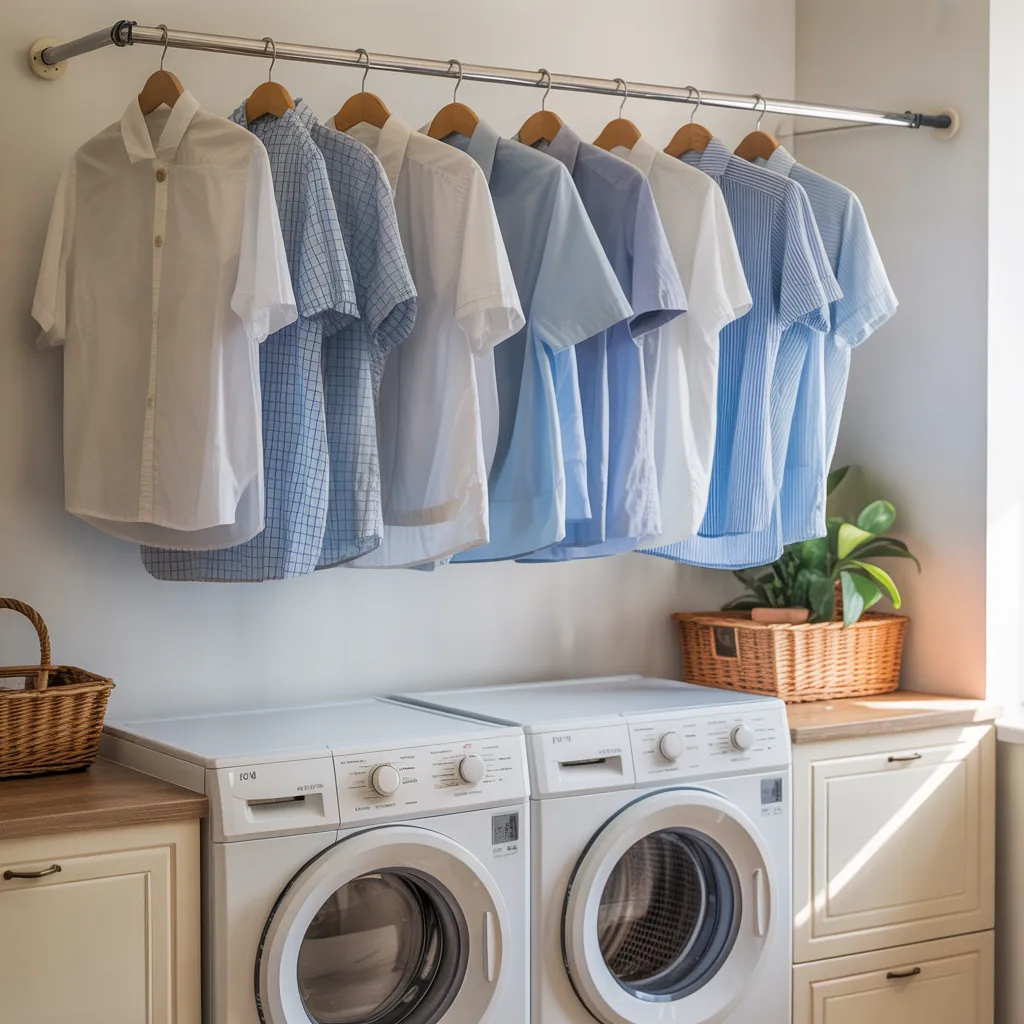
Every laundry room needs a hanging rod. It doesn’t have to be complicated — just a rod mounted above the machines or along one wall where freshly dried shirts, blouses, and anything that needs to hang immediately can go before it wrinkles. Without this, freshly dried items that need hanging end up draped everywhere else in the house, which means extra ironing and extra steps. A hanging rod removes all of that.
A retractable hanging rod — one that extends when you need it and retracts against the wall when you don’t — is the most space-efficient option for smaller laundry rooms. These run about $25-40 on Amazon and install in about ten minutes. A fixed tension rod between two walls costs even less and works perfectly in a laundry closet setup. If space allows, mount two rods at different heights — one for shirts, one for longer items like dresses and trousers.
Laundry Room Lighting Idea
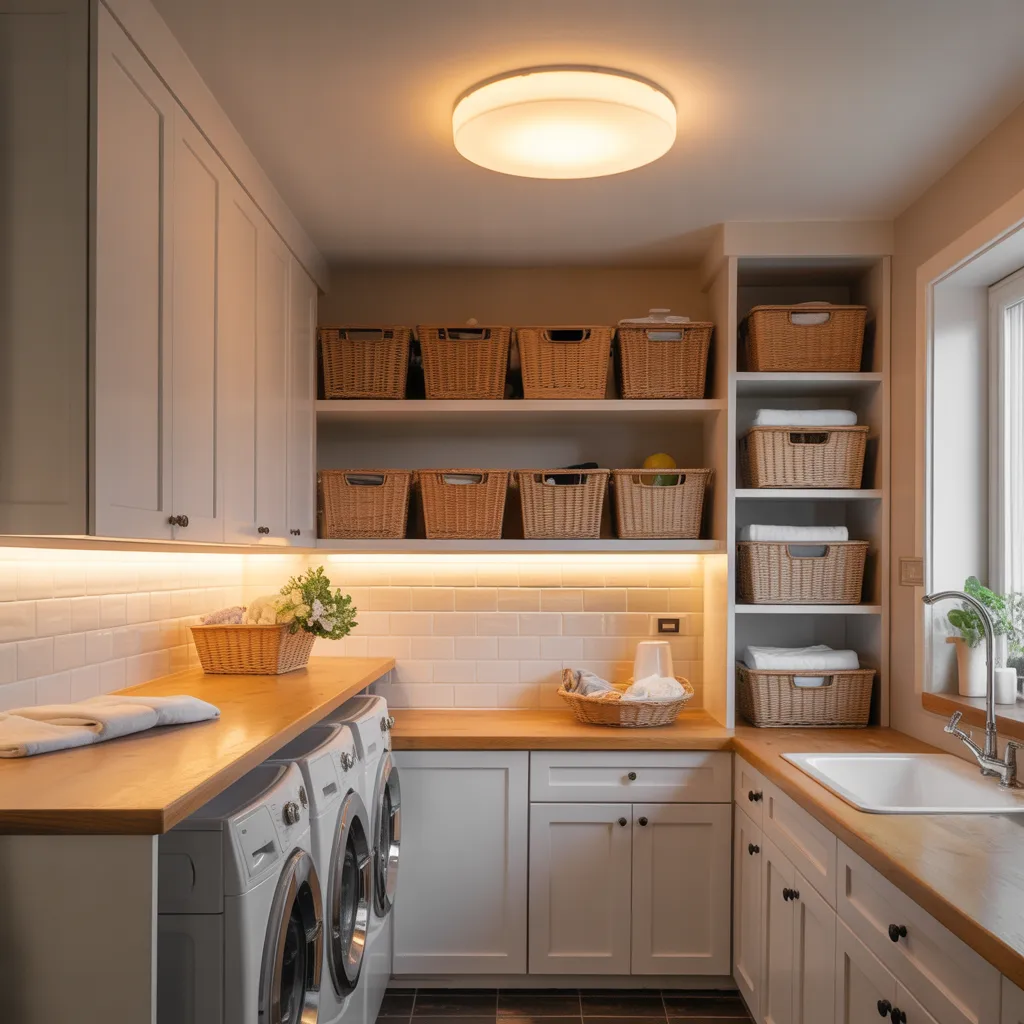
Most laundry rooms are lit by a single overhead fixture that casts flat, unflattering light and creates shadows exactly where you need to see most clearly — at the machines and on the counter. Good lighting in a laundry room isn’t a luxury. It’s functional. Catching a stain before it goes in the dryer, color-matching socks, reading care labels — all of these require decent light. One bad lighting choice affects every single load of laundry you do.
Swap the overhead fixture for a bright LED flush mount — something in the 3000-4000K range for clean, functional light. These run about $20-50 on Amazon. Then add under-shelf lighting below the open shelves to illuminate the counter surface directly. LED puck lights or strip lights with peel-and-stick backing run about $15-25 for a set. If you can only do one thing from this list, honestly, fix the lighting first. Everything else in the room looks better with good light.
Stain Treatment Station Idea
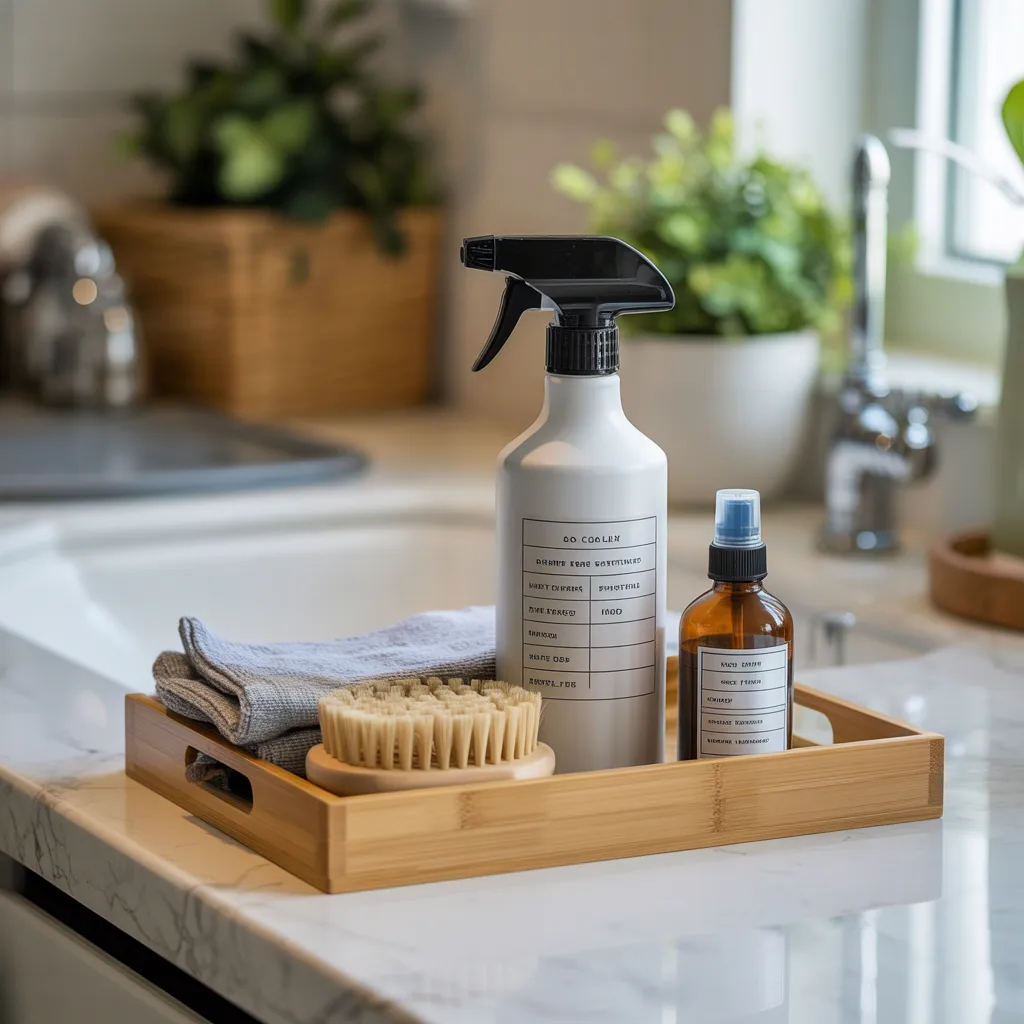
A dedicated stain treatment station is one of those ideas that sounds like overkill until you’ve set one up and realized how often you actually use it. Right now, stain treatment probably involves hunting for a spray bottle somewhere under the sink while the stain sets. A small tray or wall-mounted holder beside the machines with your stain remover, a soft brush, and a spray bottle of diluted dish soap means stains get treated immediately — before they have a chance to become permanent.
All you need is a small ceramic or wood tray, about $10-15 from Target or HomeGoods, and three items: a Spray ‘n Wash or OxiClean spray, a soft-bristle brush, and a small glass spray bottle filled with a mix of dish soap and hydrogen peroxide for fresh stains. Keep it on the shelf closest to the machines. The moment you pull something out and spot a stain, you treat it on the spot. It genuinely reduces ruined clothing, which pays for itself fast.
Label Everything Idea
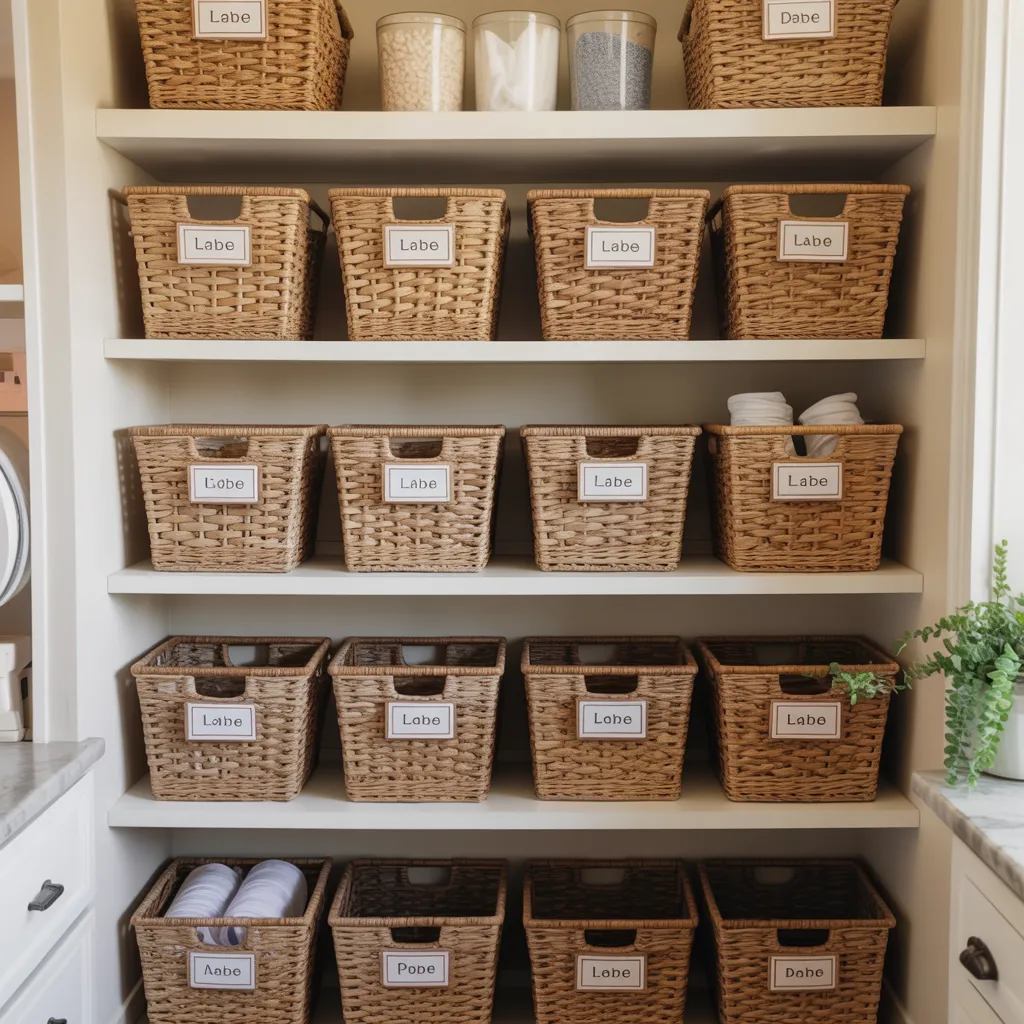
Labels transform a laundry room from a collection of things into an actual system. Labeled sorting bins mean anyone in the household can sort correctly without asking. Labeled supply containers mean you can see at a glance when something’s running low. Labeled shelves mean items return to their correct spot after use rather than slowly migrating across every surface. Labels cost almost nothing. The organizational benefit is significant and ongoing.
A basic label maker from Dymo runs about $25-30 and pays for itself within the first week of use across the whole house. For a softer look, chalkboard labels with a chalk pen — about $8 for a set from Amazon — look beautiful on glass jars and natural baskets. Apply labels at the same height and in the same location across all similar containers for a cohesive look. A consistent label style across the whole room makes it feel professionally organized.
Utility Sink Idea
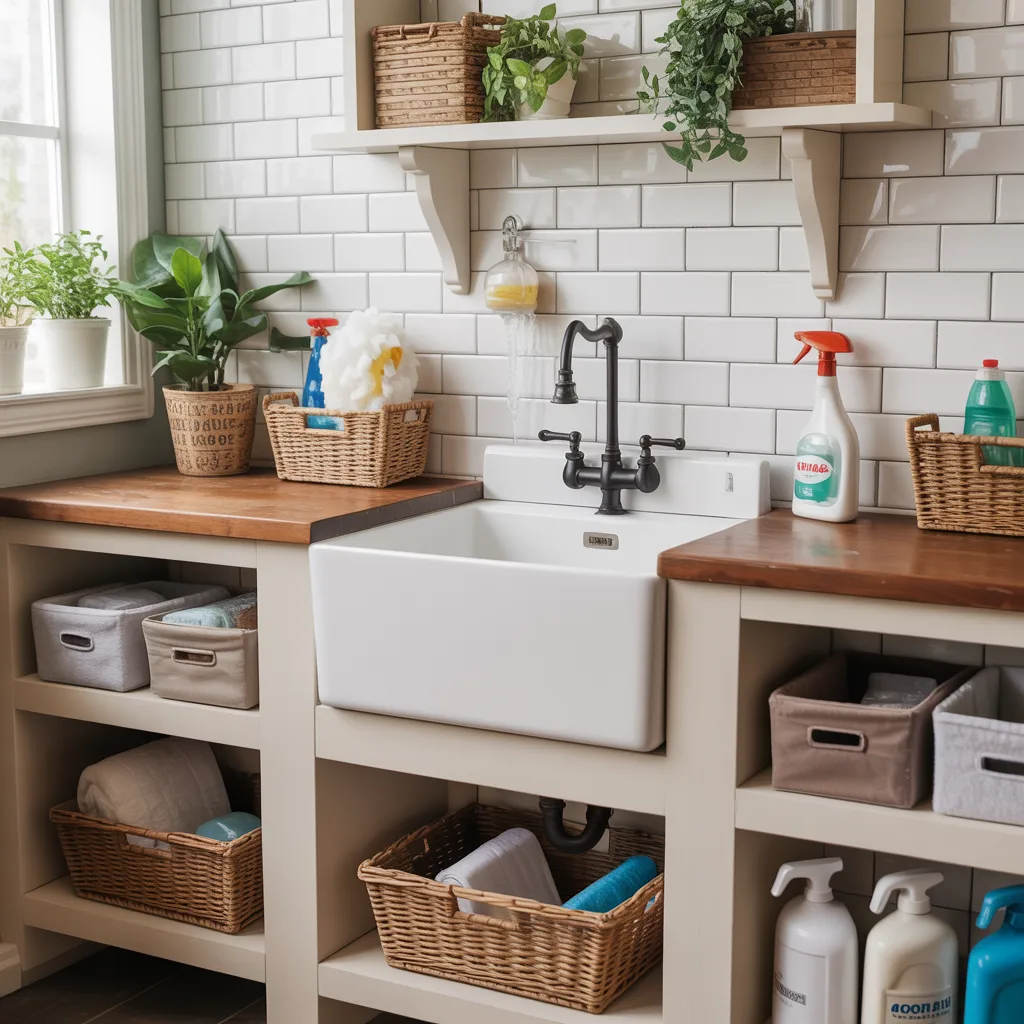
A utility sink in a laundry room is one of those additions that seems optional until you have one — then it becomes one of the most-used fixtures in the house. Hand-washing delicates, pre-soaking stained items, rinsing cleaning supplies, washing muddy shoes, filling a mop bucket — all of these tasks become significantly easier when there’s a sink right there rather than having to go to the kitchen or bathroom.
A basic utility sink and faucet setup from a hardware store runs about $150-300 installed, depending on whether existing plumbing is nearby. A farmhouse-style utility sink from Amazon in white or stainless — around $80-150 — with a wall-mounted faucet looks intentional and clean rather than purely functional. If you’re adding open storage below rather than a cabinet, the space under the sink becomes accessible storage for cleaning supplies, and the whole setup reads as designed rather than improvised.
Wallpaper Accent Idea
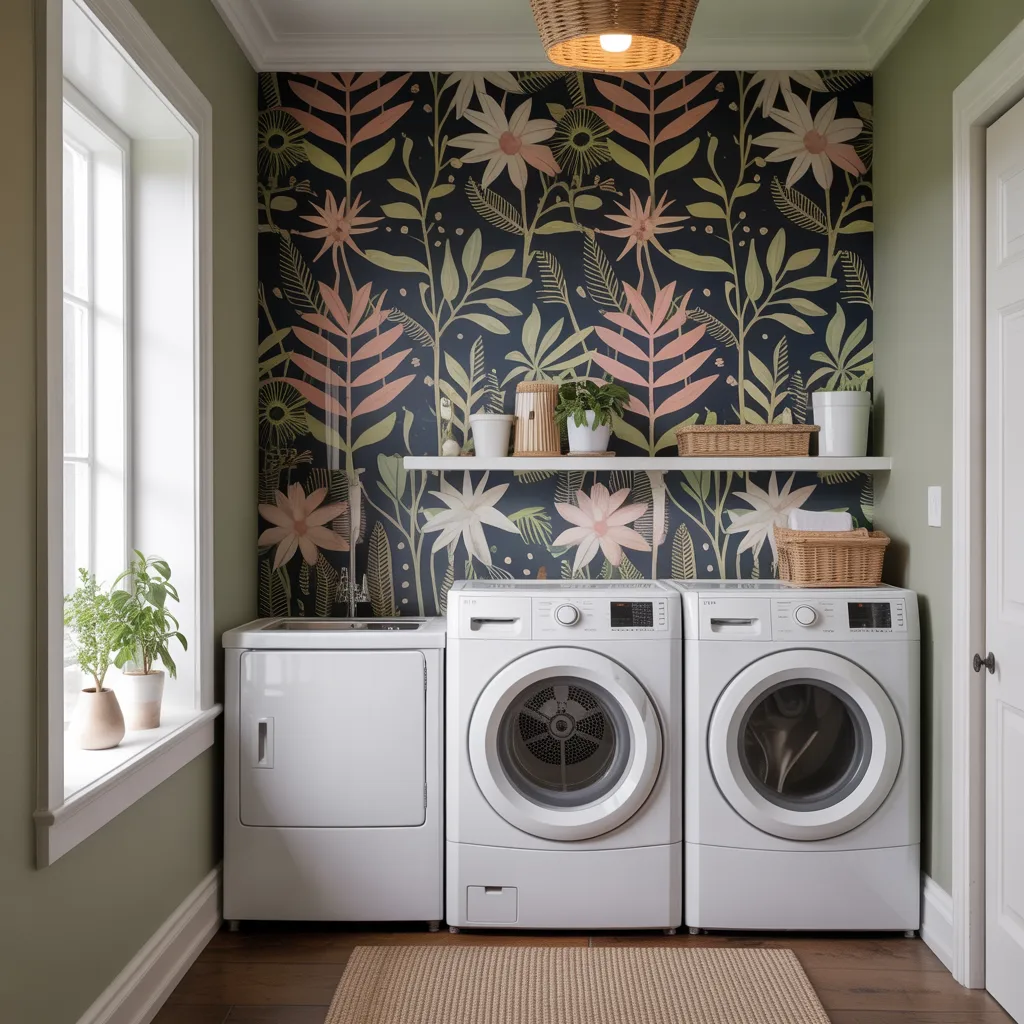
Wallpaper in a laundry room sounds like extra effort for a room nobody visits. But that’s exactly the wrong way to think about it. A laundry room with great wallpaper is a room you actually enjoy walking into, which makes the task you’re there to do feel less like a chore and more like just a thing that happens in a nice space. And because it’s a small room, a single roll or two covers the whole thing. The commitment is low. The visual payoff is disproportionately high.
Peel-and-stick wallpaper from Chasing Paper or Spoonflower is entirely renter-friendly and runs about $30-50 per roll. A bold botanical print, a classic stripe, or even a graphic geometric on the wall behind the machines turns that surface from dead drywall into a genuine design feature. The ceiling is an especially unexpected — and effective — place for wallpaper in a small laundry room. It’s the one surface nobody else ever wallpapers, which makes it immediately memorable.
Matching Basket Storage Idea
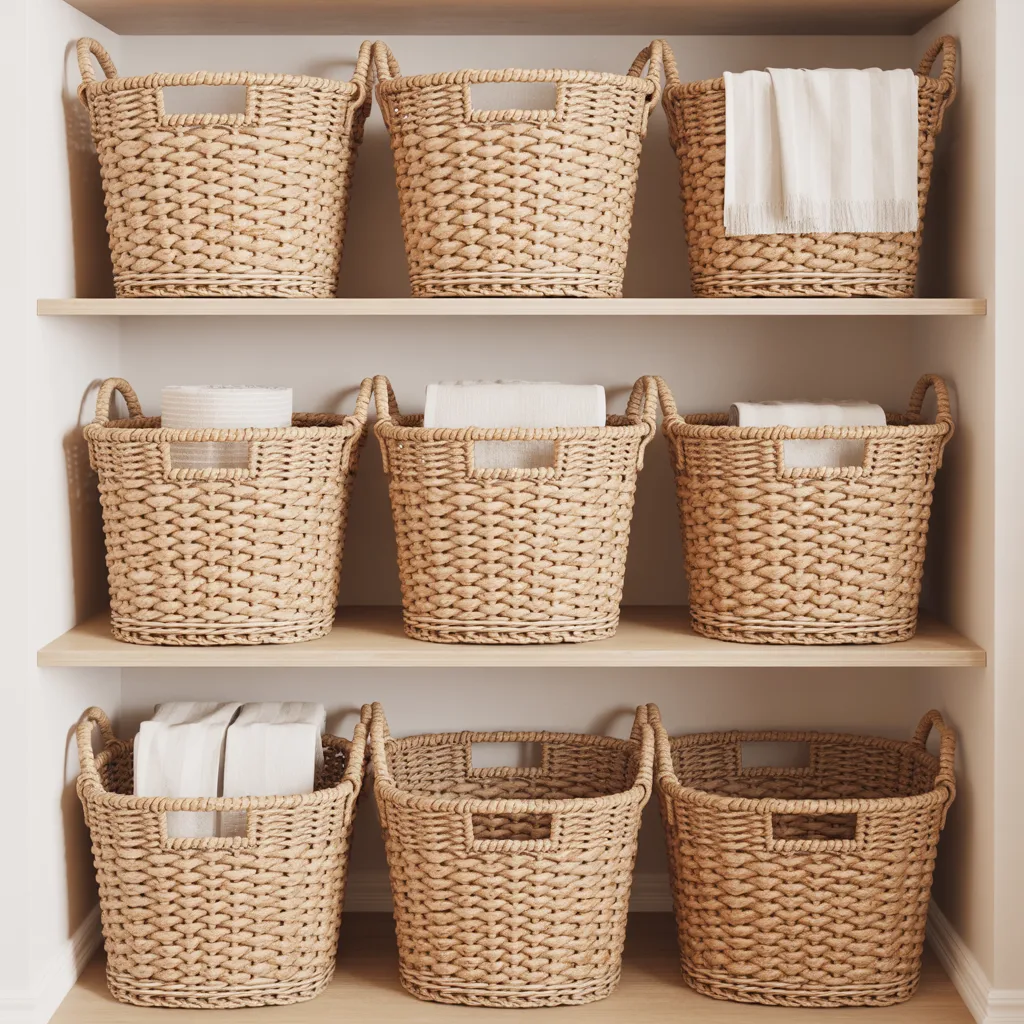
Mismatched storage is one of the main reasons laundry rooms look chaotic even when they’re reasonably organized. When every basket is a different size, material, and color, the visual noise alone makes the room feel messy. Switching to a uniform set of matching baskets — same material, same color, same size — does more for the appearance of the laundry room than most people expect. It’s not about aesthetics for their own sake. It’s about visual calm.
Natural seagrass baskets from Target or IKEA run about $8-20 each depending on size, and they look warm and natural against both white and colored walls. White wire baskets read as more modern and industrial. Grey fabric bins are neutral and versatile. Buy at least four at once — for sorting, for clean folded items waiting to be put away, for cleaning supplies, and for miscellaneous. Having spares of the same style means the system stays consistent as your storage needs change.
Ironing Station Idea
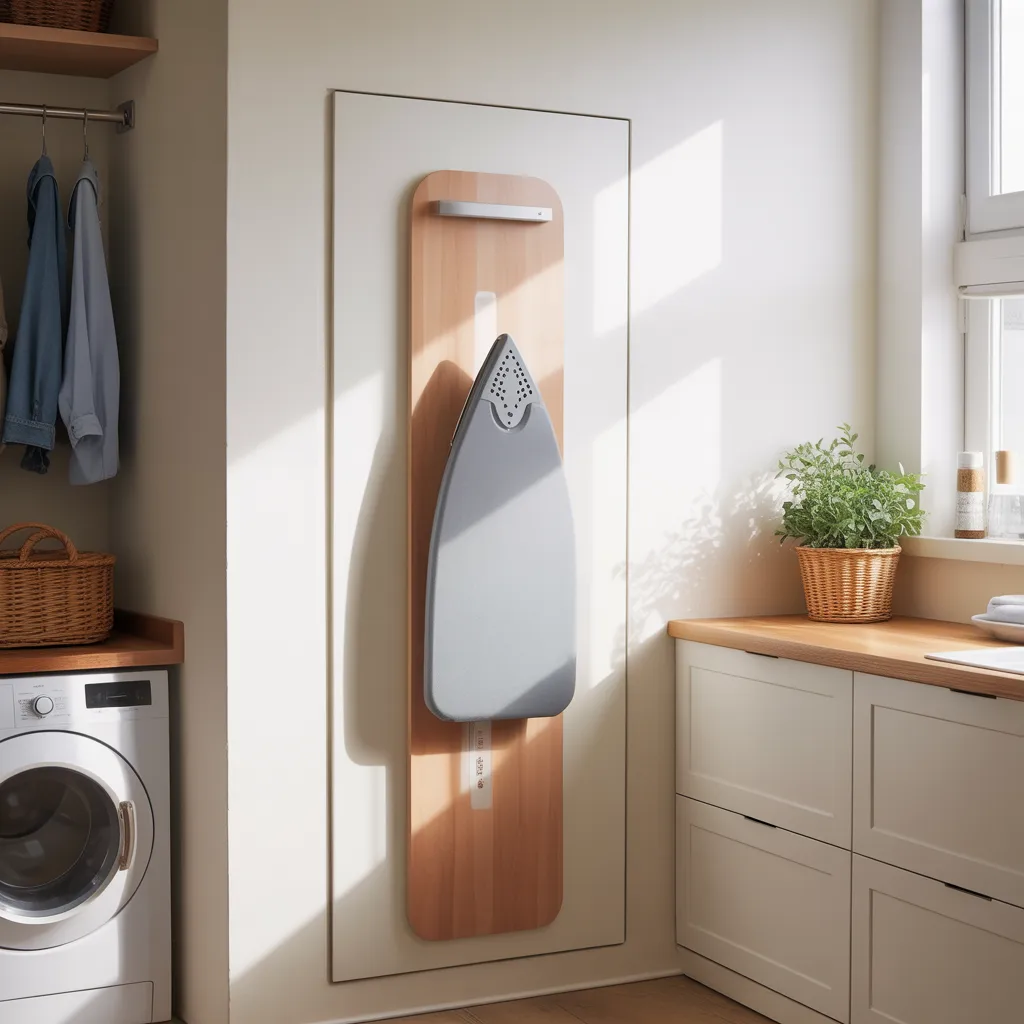
A wall-mounted fold-down ironing board is one of the best space-saving inventions available for a laundry room, and almost nobody uses one. It folds completely flat against the wall — looking like a narrow cabinet door — and pulls out to a full-size ironing surface in seconds. In a laundry room where ironing is a regular task, this single addition saves the time and floor space of dragging out a freestanding board, setting it up, using it, and putting it away every single time.
Wall-mounted ironing board cabinets from Rev-A-Shelf or similar brands run about $150-250 and install directly into the wall between studs. They fold completely flat and are essentially invisible when closed. A simpler option: a basic wall-mounted ironing board bracket from Amazon for about $40, which holds a standard board against the wall when not in use. Either way, the time saved over months and years of ironing makes this one of the more practical investments on this list.
Lost Sock Station Idea
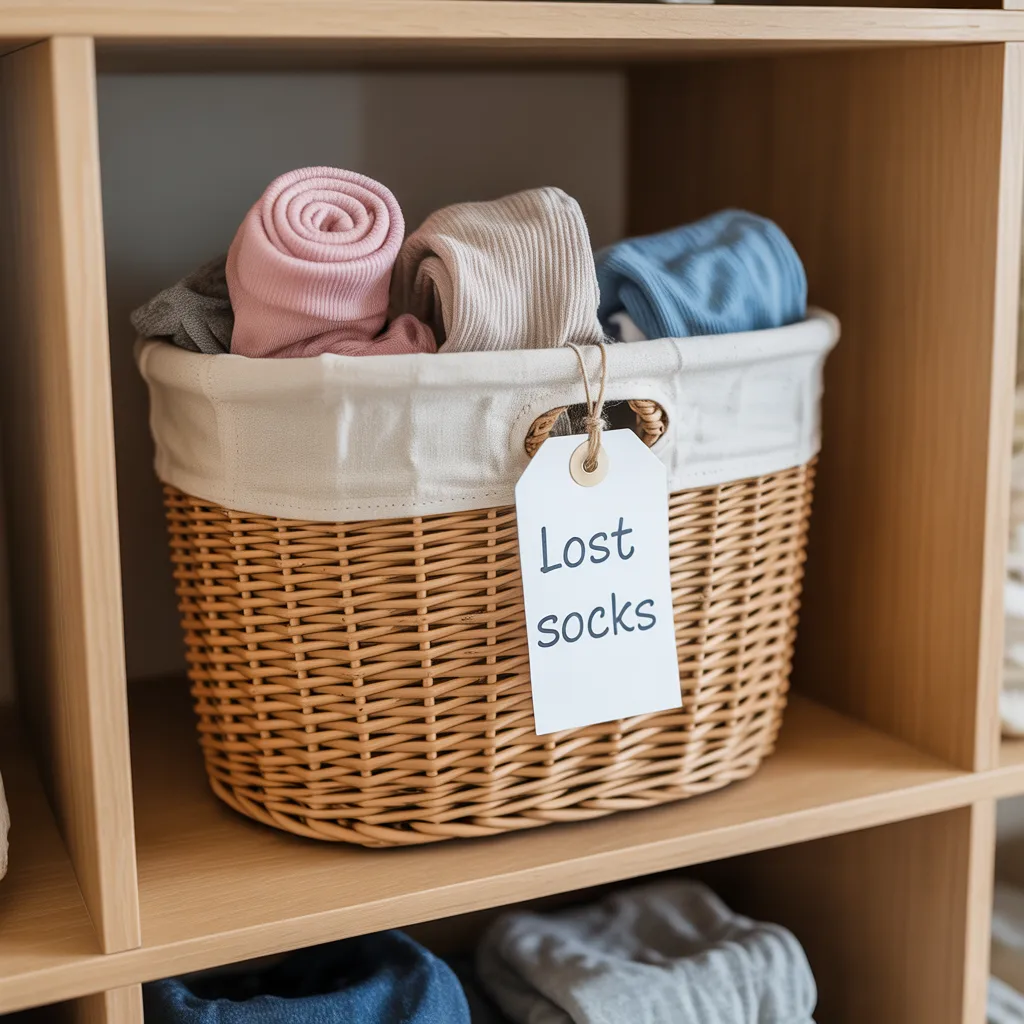
Every household has the sock problem. A single sock comes out of the dryer without its match. It sits on top of the dryer for a few days, then migrates to a drawer, then disappears entirely. Or it gets thrown away in frustration three weeks before the match turns up at the bottom of a laundry basket. A designated lost sock station — a small basket or a corkboard with clips, clearly labeled — gives orphaned socks a home while they wait for their match to surface.
A small woven basket on the shelf specifically labeled ‘lost socks’ costs about $5-10 and completely solves the problem. Set a monthly rule: any sock that’s been waiting longer than 30 days gets discarded. This prevents the station from becoming a permanent archive of unmatched socks while giving you a real window to reunite pairs before giving up on them. It’s a tiny system that removes a surprisingly persistent source of laundry room friction.
Pegboard Storage Idea
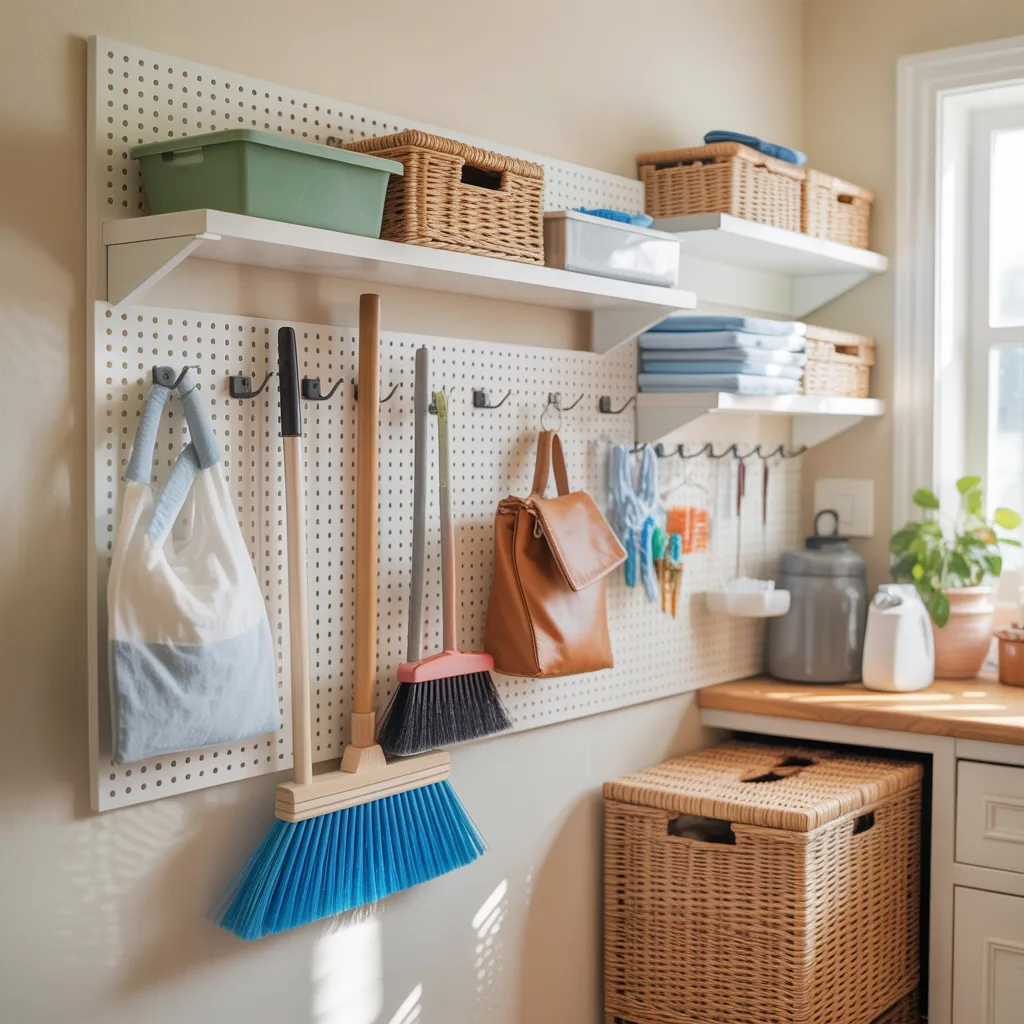
A painted pegboard on one laundry room wall is one of the most flexible storage systems available — and one of the most underused outside of garages and workshops. In a laundry room, pegboard holds brooms, mops, brushes, hanging bags, clothespins, spray bottles, and small tools on configurable hooks that can be rearranged any time your needs change. Unlike fixed shelving, pegboard evolves with you. Add a hook, move a bracket, swap a shelf — no new holes, no new damage.
A 2×4 foot sheet of pegboard from a hardware store runs about $15-20. Paint it in the wall color so it disappears visually, or in a contrasting color to make it a feature. A complete pegboard hook kit from Amazon — about $15-20 — includes more variety than you’d expect and provides the right mix for a laundry room. Mount it on the wall with a 1-inch spacer behind it to allow room for the hook tabs to fit properly. Total cost for the whole setup: under $50.
Laundry Room Cabinet Idea
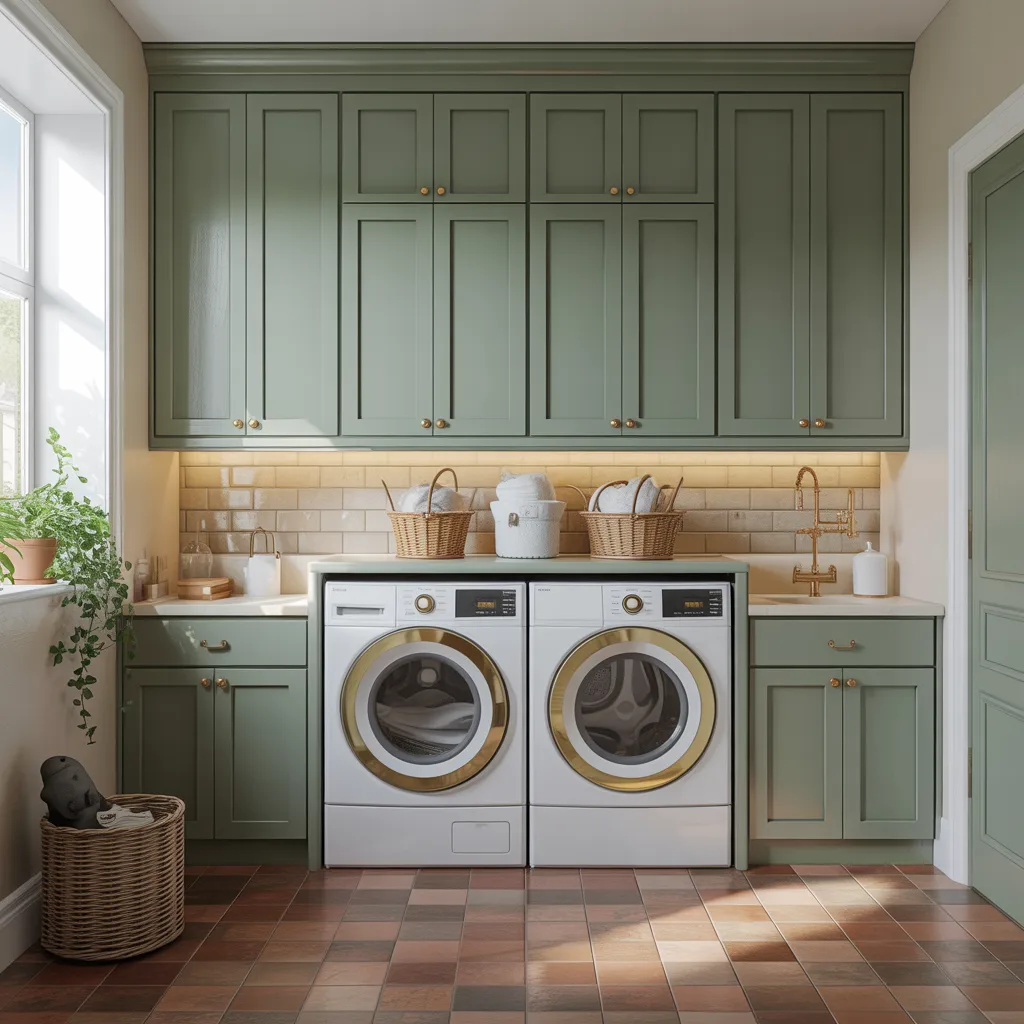
Open storage looks great in photos and in theory. In practice, a laundry room with all open storage means every item is always visible — including the ones you’d rather not see. Closed cabinets solve this completely. Even simple flat-front cabinets painted in a contrasting or complementary color give a laundry room a polished, built-in quality that makes the whole room feel more finished and more intentional.
IKEA’s Sektion kitchen cabinet system works perfectly for laundry rooms — the cabinets are the right scale, deeply functional, and significantly cheaper than custom cabinetry. A basic setup of upper and lower cabinets for a standard laundry room runs about $300-600 depending on configuration. Paint them in a color that complements the walls rather than the standard white for a custom look that doesn’t cost custom prices. Sage green cabinets with brass hardware is one of the most popular current combinations.
Scent Management Idea
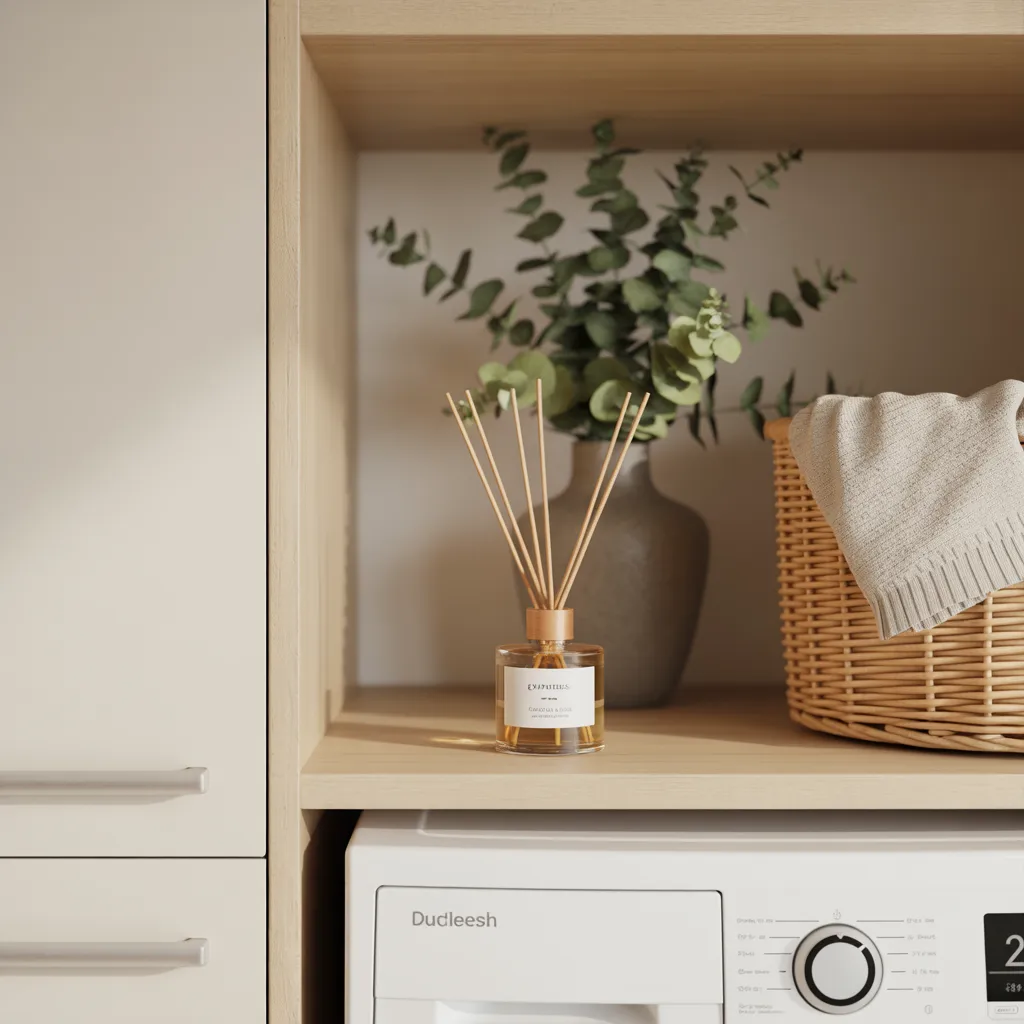
A laundry room that smells fresh makes the whole experience of being in it slightly better. This sounds obvious, but most laundry rooms have a baseline smell that ranges from neutral to vaguely musty — damp clothes sitting too long, a machine that hasn’t been cleaned recently, a room without enough ventilation. Addressing the scent of the laundry room is worth doing before any decorative changes, because no amount of styling fixes a room that smells off.
Clean the washing machine drum monthly — a cleaning tablet from Affresh runs about $8 for a pack of three and prevents the mildew buildup that causes musty smells. Leave the machine door open between uses to let it dry out. Then add a subtle positive scent: a reed diffuser in clean linen or eucalyptus on the shelf costs about $20-30 and runs for two to three months. The laundry room should smell like a clean, functional space — not like anything specific, just fresh and neutral.
Laundry Room Art Idea
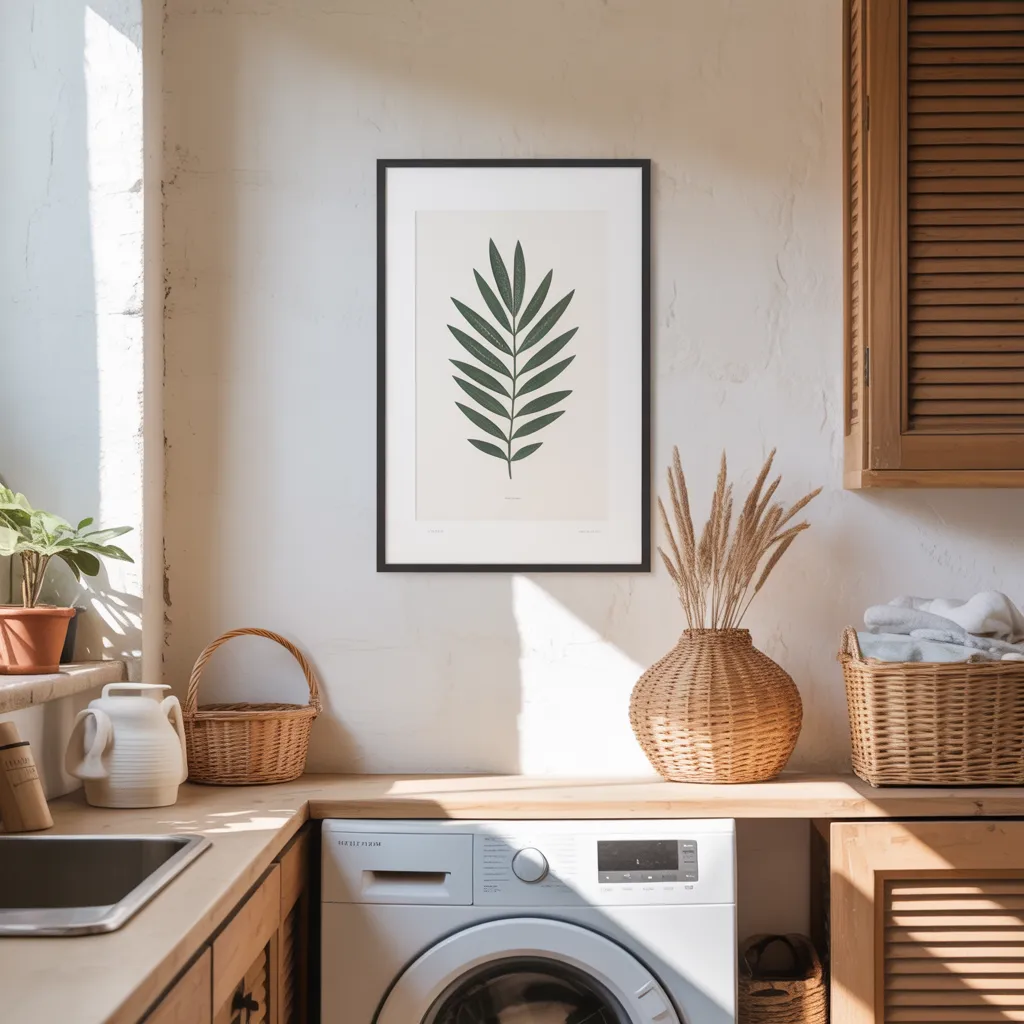
Nobody puts art in the laundry room. That’s exactly why you should. A framed print — something with a sense of humor, something botanical, something typographic — adds personality and signals that someone thought about this room intentionally. It’s the detail that guests notice and comment on, partly because it’s unexpected and partly because it makes the whole room feel like it was cared for rather than just maintained.
A moisture-resistant print behind glass in a sealed frame holds up well in a room with steam and humidity. A funny laundry-themed print from Etsy runs about $5-15 for a digital download you can print at home. A botanical illustration in a simple white frame costs about $15-20 printed and framed. Either works. The point isn’t the specific art — it’s that there’s art at all. That single detail changes how the room feels to be in.
Command Center Wall Idea
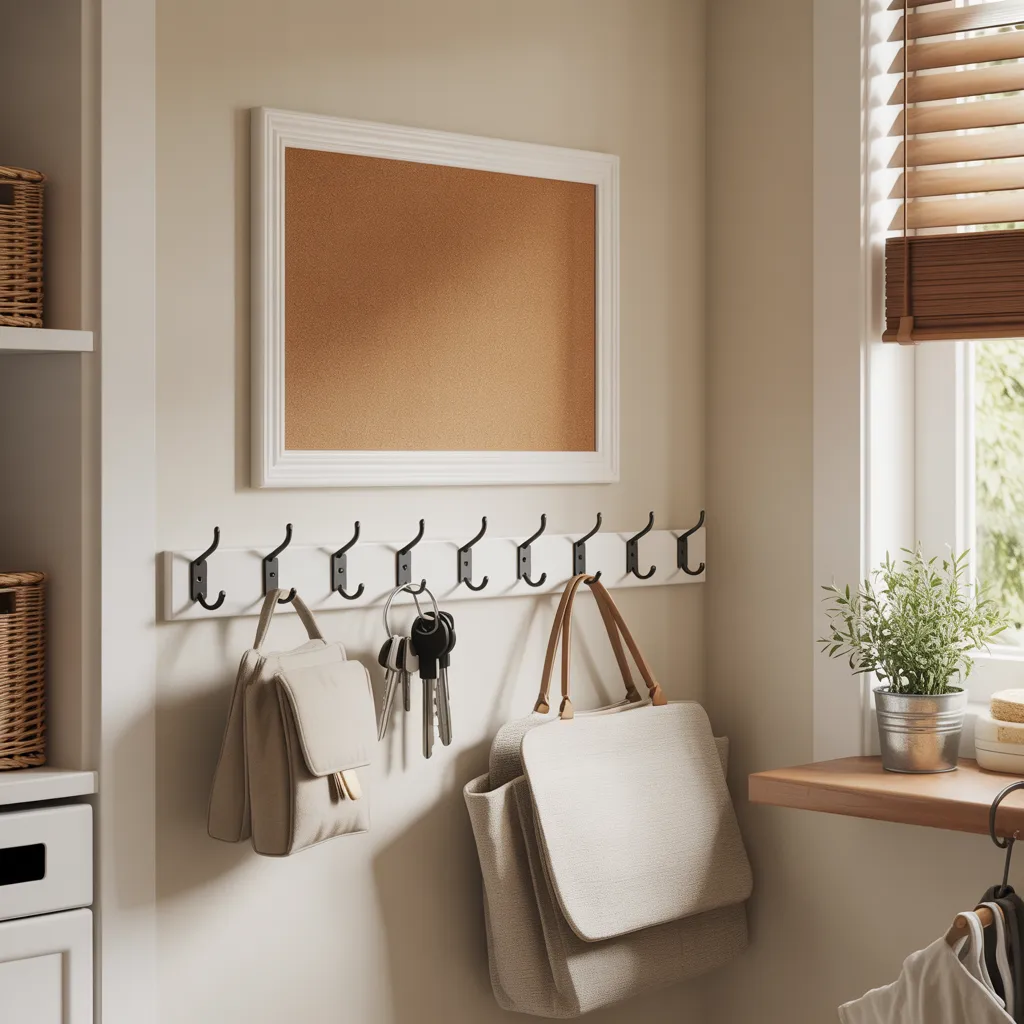
If the laundry room is near a back door, a mudroom, or the main household entrance, it’s in a perfect position to serve as a command center — the place where the house gets organized, not just where clothes get cleaned. A small calendar, a corkboard for notes and receipts, hooks for keys and bags, and a shelf for daily essentials turns an underused room into a functioning household hub. The laundry gets done, and so does the rest of the day.
A simple corkboard from a hardware store runs about $15-20 and can be framed cheaply with trim from the same store for a built-in look. Add a row of Shaker-style hooks below it — about $3-5 each at IKEA — and a small basket or tray for keys and mail on a narrow shelf below. Keep everything in the same color palette as the laundry room so the command center feels integrated rather than tacked on. The whole setup costs under $60.
Countertop Material Upgrade Idea
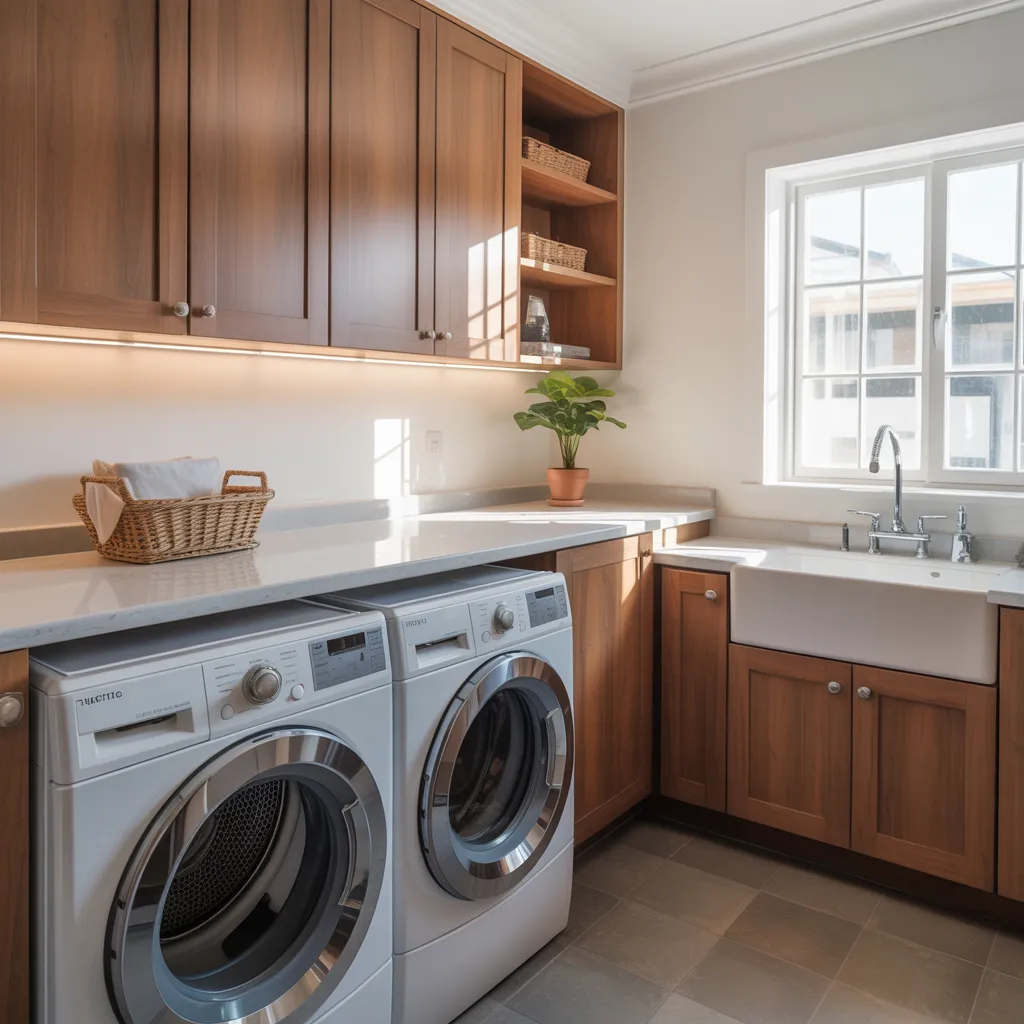
If your laundry room has an existing counter that’s in rough shape — stained laminate, cracked surfaces, faded finish — replacing it is one of the fastest ways to make the whole room look newer and more put-together. The counter is a surface you look at and touch every time you fold, sort, or treat a stain. A nice counter makes the task feel slightly less unglamorous. It genuinely matters more than most people expect.
Butcher block is the warmest and most affordable option — a standard laundry room counter in butcher block costs about $80-150 installed. Quartz remnants from a stone yard often go for $50-100 for a piece the right size for a laundry counter. White laminate is the most affordable option at about $30-50 and looks clean and fresh when it’s new. Whatever material you choose, seal it properly for water resistance — laundry rooms are wet environments and the counter will take a lot of splashing.
Laundry Room Flooring Idea
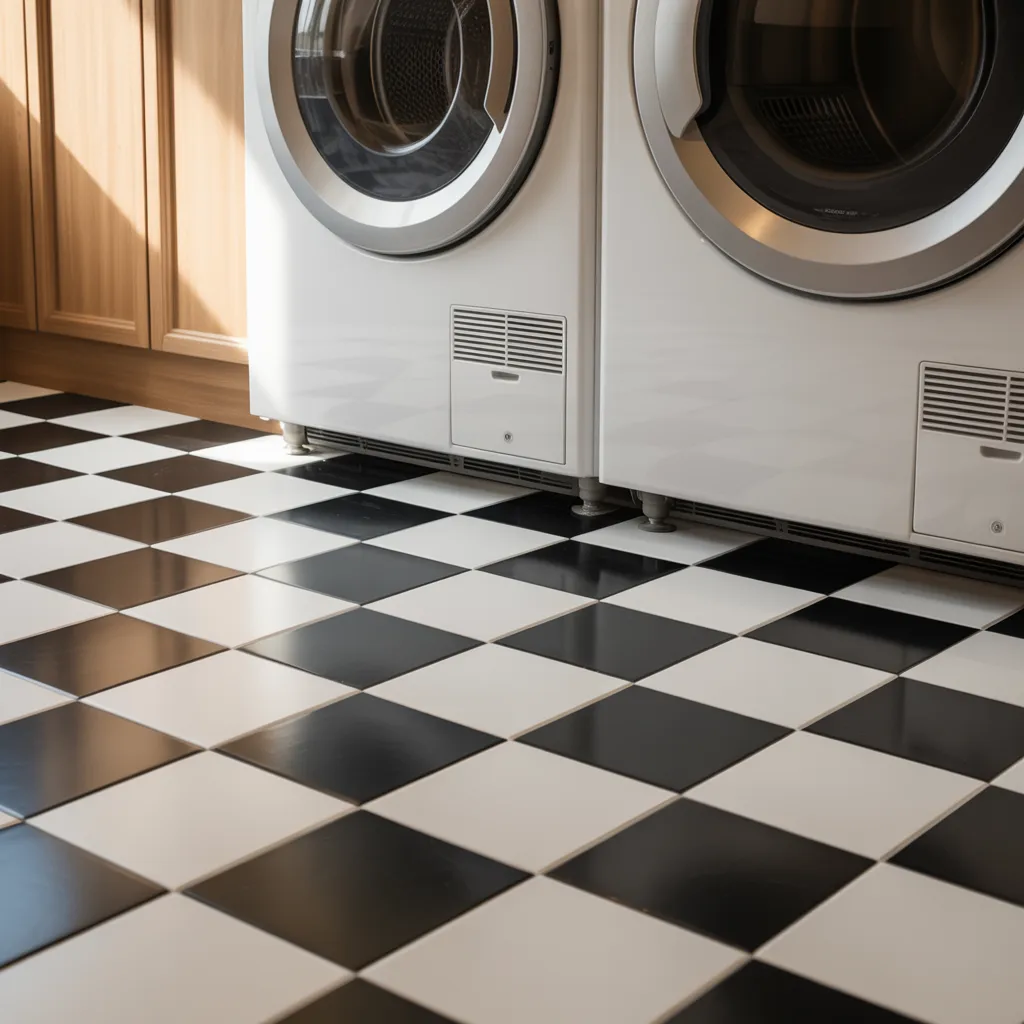
Laundry room floors take the worst abuse of any floor in the house — water, detergent spills, dropped wet clothes, constant foot traffic. Most laundry rooms have whatever flooring was cheapest to install, which means worn vinyl or bare concrete in many older homes. Upgrading the flooring changes the feel of the entire room and makes it significantly easier to keep clean.
Peel-and-stick vinyl tile from Amazon or a hardware store runs about $1-2 per square foot and installs directly over most existing floors in an afternoon. Black and white checkered tile is the most classic laundry room pattern — it’s graphic, timeless, and hides minor dirt between cleanings far better than solid colors. A standard laundry room floor runs about 40-60 square feet, so the total material cost for a peel-and-stick floor upgrade is typically $50-100.
Natural Element Idea
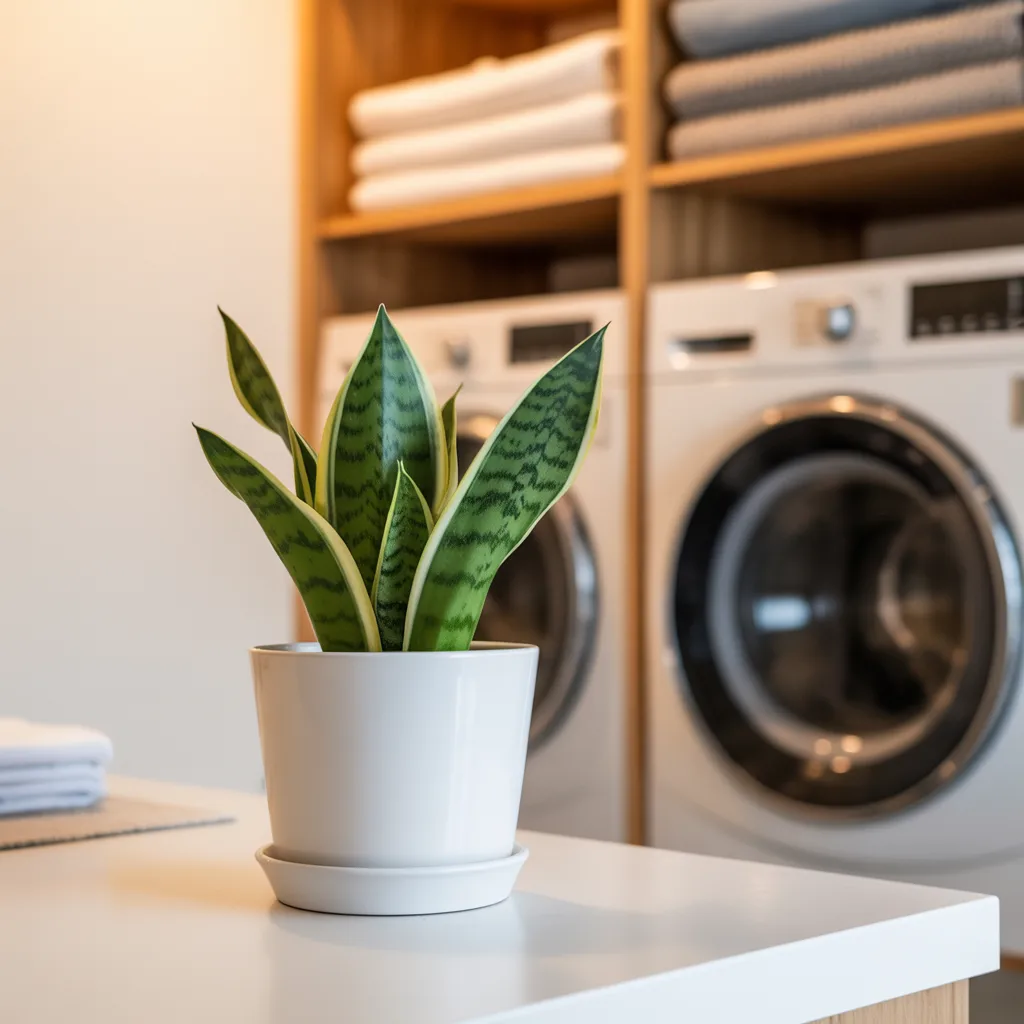
A small plant in a laundry room does something interesting — it makes the room feel alive in a way that manufactured decor can’t replicate. Even one plant on a shelf signals that this room was thought about, that someone took the time to bring something living into a space that’s purely functional. It’s a small thing that has an outsized effect on how the room feels to be in, especially during the long standing sessions that laundry involves.
For a laundry room with limited natural light, a pothos, snake plant, or ZZ plant thrives with almost no attention and very little light. A small one in a simple terracotta or white ceramic pot costs about $10-20 from a local nursery or IKEA’s plant section. If there’s truly no natural light at all, a bundle of dried eucalyptus hung from the hanging rod adds color and scent without needing any light or water. Dried eucalyptus from Amazon or a florist runs about $8-15 and lasts for months.
FAQs About Laundry Room Ideas
What laundry room ideas make the biggest difference for the least money?
A folding counter, better lighting, and a consistent labeling system are the three changes that make laundry genuinely easier and faster without spending much. A butcher block counter above the machines costs about $80-150 and changes the whole workflow. LED lighting under the shelves runs about $15. A label maker is $25. Together, these three changes cost under $200 and affect every single laundry session.
How do I make a small laundry room feel bigger?
Go vertical with storage rather than wide. Floating shelves to the ceiling, wall-mounted drying racks, and over-door organizers all add storage without taking floor space. Use a light wall color to reflect more light. A large mirror on one wall doubles the perceived depth of the space. Keeping the floor as clear as possible — no freestanding bins, no overflow — makes even a very small laundry room feel more open and functional.
What’s the best way to organize laundry supplies in a small space?
Decant everything into matching clear containers on a single dedicated shelf. This removes the visual chaos of mixed packaging and makes it immediately clear when something is running low. A three-container set for detergent, dryer sheets, and pods runs about $30-40. Add a lazy Susan on the shelf so you can access items at the back without moving everything in front. Wall-mounted magnetic strips hold small metal items like safety pins and hem tape completely out of the way.
How much should I budget for a laundry room makeover?
A basic refresh — better lighting, open shelving, matching baskets, and a fresh coat of paint — typically runs $200-400. A more complete renovation including a folding counter, cabinet installation, a utility sink, and new flooring can run $1,000-3,000 depending on whether you DIY or hire help. The folding counter and lighting are always the best places to invest first, because they have the most direct effect on how functional the room is day to day.
What are the best laundry room ideas for renters?
Peel-and-stick wallpaper, removable adhesive hooks, over-door organizers, freestanding shelving, and rolling carts all make significant improvements without any permanent changes. A folding counter can be built to sit on top of the machines without being attached to anything. Wall-mounted hooks that use Command strips handle surprisingly heavy loads and remove cleanly. Renters have more options than most people realize — the key is choosing products specifically designed for removable installation.
Conclusion of Laundry Room Ideas
A laundry room that works well is one of the small, quiet victories of home life. You don’t think about it consciously — you just notice, over time, that laundry feels less like a chore and more like something that simply gets done without drama. That shift comes from a room that was designed to support the task rather than fight against it. It comes from a folding surface at the right height, supplies within reach, a system that keeps things sorted, and a space that’s pleasant enough to be in that you don’t avoid it.
Pick one thing from this list and start there. The lighting if it’s currently bad. A folding counter if there isn’t one. A set of matching baskets if the shelves look chaotic. One good change makes the next one easier to see and to make. And the laundry room that results from those decisions — made one at a time, with intention — is one that actually works for the life you’re living in it.