27 Bedroom Decor Ideas That Make Any Room Feel Like Your Own Private Retreat
There’s a specific kind of exhaustion that comes from sleeping in a room that doesn’t feel like yours. You wake up, look around, and nothing quite fits — not the colors, not the furniture arrangement, not the way the light hits the walls in the morning. It’s not dramatic. It’s just quietly draining. And the truth is, most people live like this for years without realizing that the problem isn’t the room itself. It’s that the room was never really designed for them. Good bedroom decor isn’t about following trends or buying the most expensive pieces. It’s about making deliberate choices that finally make the space feel like home.
This article covers 27 bedroom decor ideas that actually work — for different budgets, different room sizes, and different personal styles. Some of these changes cost almost nothing. Others are genuine investments worth making. All of them are rooted in the same goal: turning your bedroom into a place you genuinely love being in, from the moment you wake up to the moment you fall asleep.
Best Bedroom Decor Ideas to Try in Your Home
The best bedroom decor ideas share one quality that’s easy to overlook — every detail feels chosen, not defaulted to. The furniture fits the room. The colors make sense together. The lighting shifts from bright and energizing in the morning to warm and calm at night. Nothing in a well-decorated bedroom looks like it landed there by accident. And that sense of intentionality is something every bedroom can have, regardless of size or budget.
What you’ll find ahead covers everything from the big moves — a statement headboard, an accent wall, a quality rug — to the small details that most people skip but that make the biggest difference in how a room actually feels. There are ideas here for renters and homeowners, for minimalists and maximalists, for people starting from scratch and people who just want to refresh what they already have. Pick what fits. Start with one thing. The room builds from there.
Layered Bedding Idea
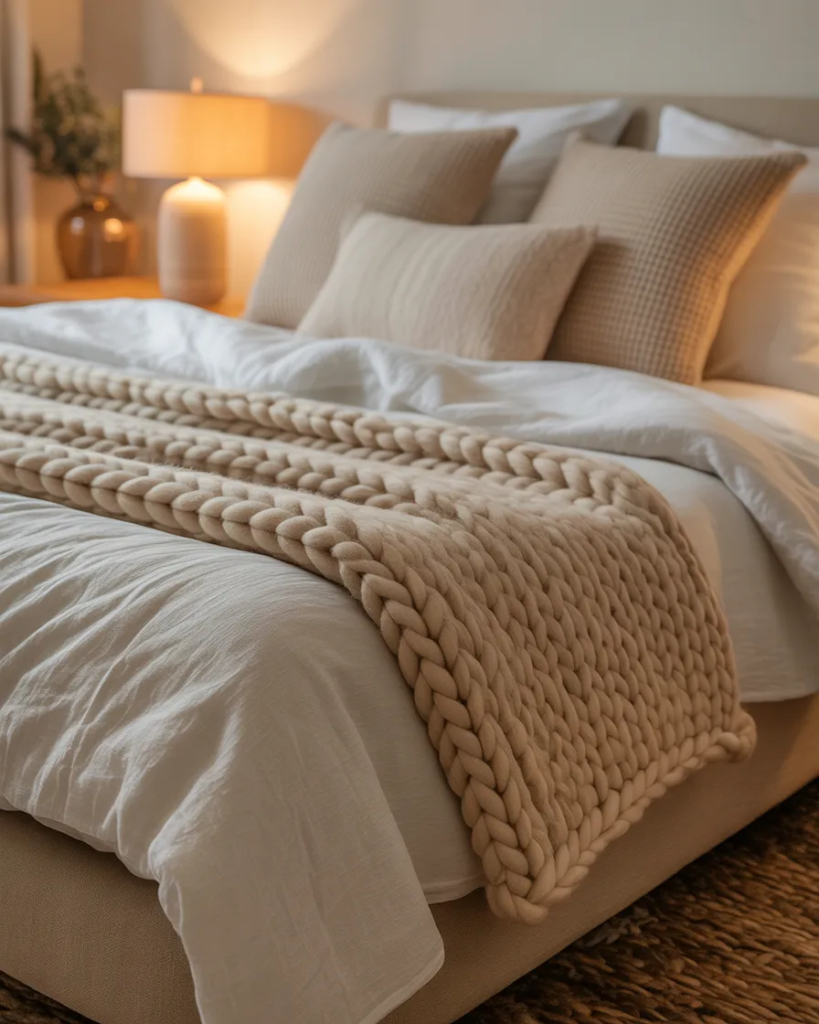
The bed is the first thing anyone sees when they walk into a bedroom, and it takes up more visual space than any other piece of furniture. So if the bed looks thrown-together — a flat duvet, one flat pillow, no texture — the whole room feels unfinished no matter what else you’ve done. Layered bedding changes that completely. It’s the single fastest way to make a bedroom look intentional and expensive, even when it isn’t.
Start with a fitted sheet in a quality cotton — something with at least a 400 thread count, or try linen if you run warm. Add a duvet, then fold a chunky knit throw across the foot. Layer three to four pillows in two different sizes. West Elm has great options in the $40-120 range, but honestly IKEA’s Ofelia collection gives you most of the same look for a fraction of the price. The goal is depth and texture, not matching sets.
Statement Headboard Idea
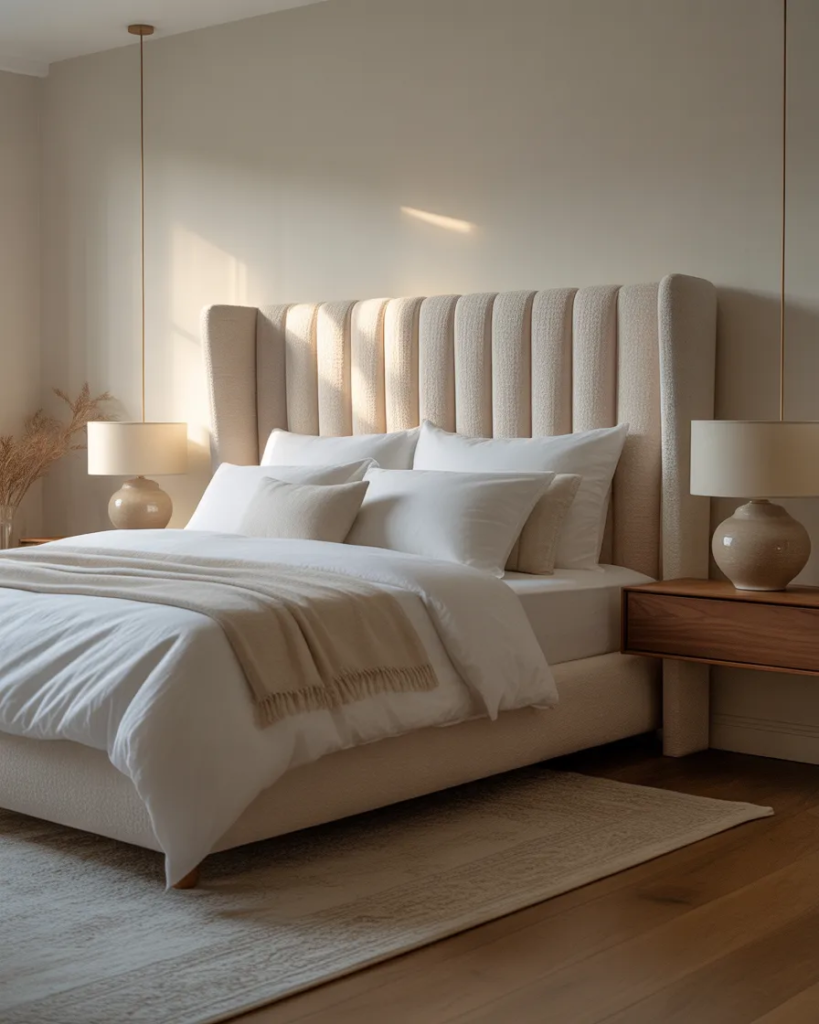
A headboard anchors the entire bedroom. Without one — or with a cheap, flimsy one — even a beautiful room feels incomplete. It’s one of those things you don’t notice until it’s right, and then you can’t unsee how much better everything looks. A tall upholstered headboard in particular creates a sense of softness and grandeur that makes the bed feel like the destination it should be.
You don’t need to spend a fortune here. A linen or boucle headboard from Wayfair starts around $150-200 for a queen size, and the visual payoff is immediate. If you’re renting and can’t mount anything, a freestanding headboard works just as well. Go for something that reaches at least 48 inches tall. Taller is almost always better. Pair it with crisp white bedding and the room looks completely transformed.
Accent Wall Bedroom Idea
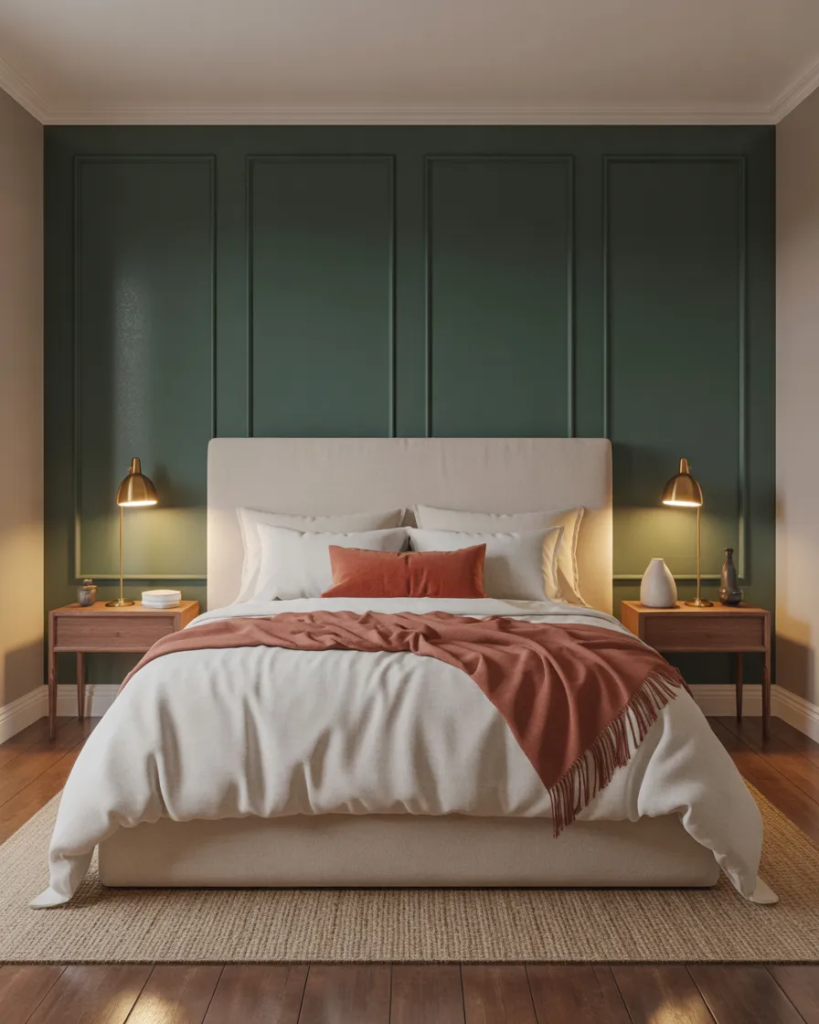
Here’s the thing about accent walls — most people overthink them. They worry about the wrong color, the wrong wall, the wrong execution. But an accent wall behind the bed is one of the most forgiving design choices you can make, because the bed itself frames it and draws the eye exactly where you want it. A deep color on that one wall changes the personality of the entire room overnight.
Forest green, dusty navy, warm terracotta, moody charcoal — any of these work. One can of Sherwin-Williams or Benjamin Moore paint runs about $50-70 and covers a standard wall with two coats. That’s genuinely one of the best returns on investment in home decor. If you’re renting, peel-and-stick wallpaper from Chasing Paper or Tempaper gets you the same effect without a single nail or brush stroke.
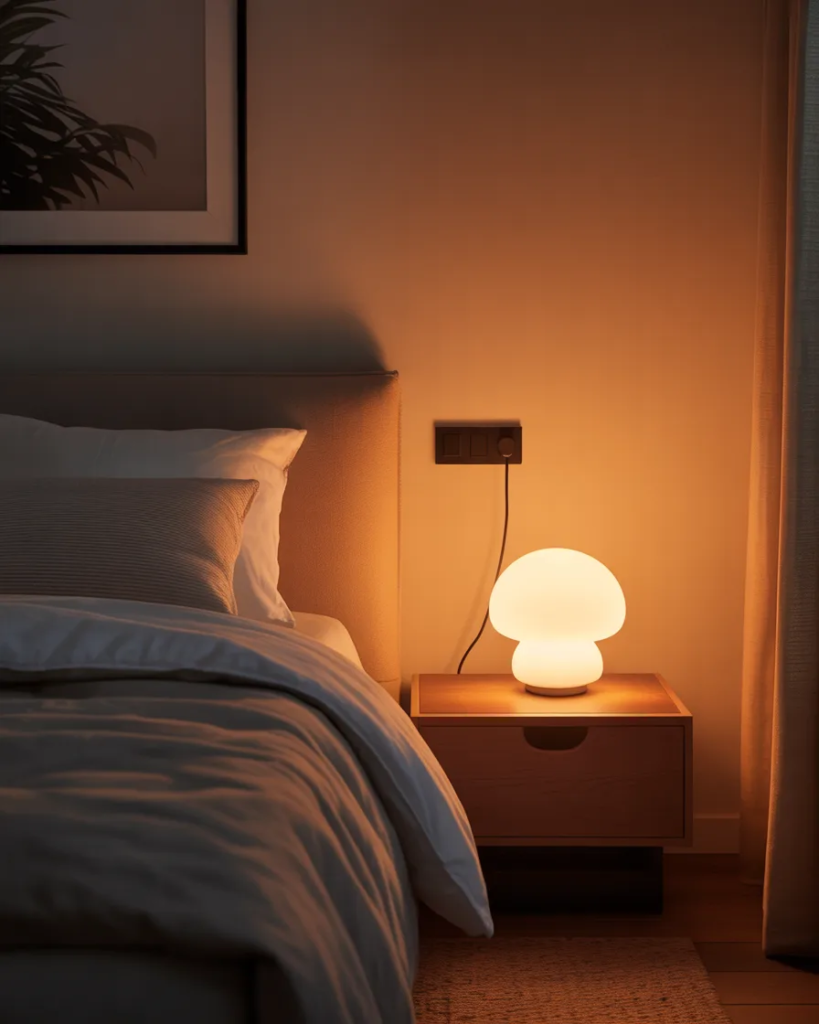
Warm Layered Lighting Idea
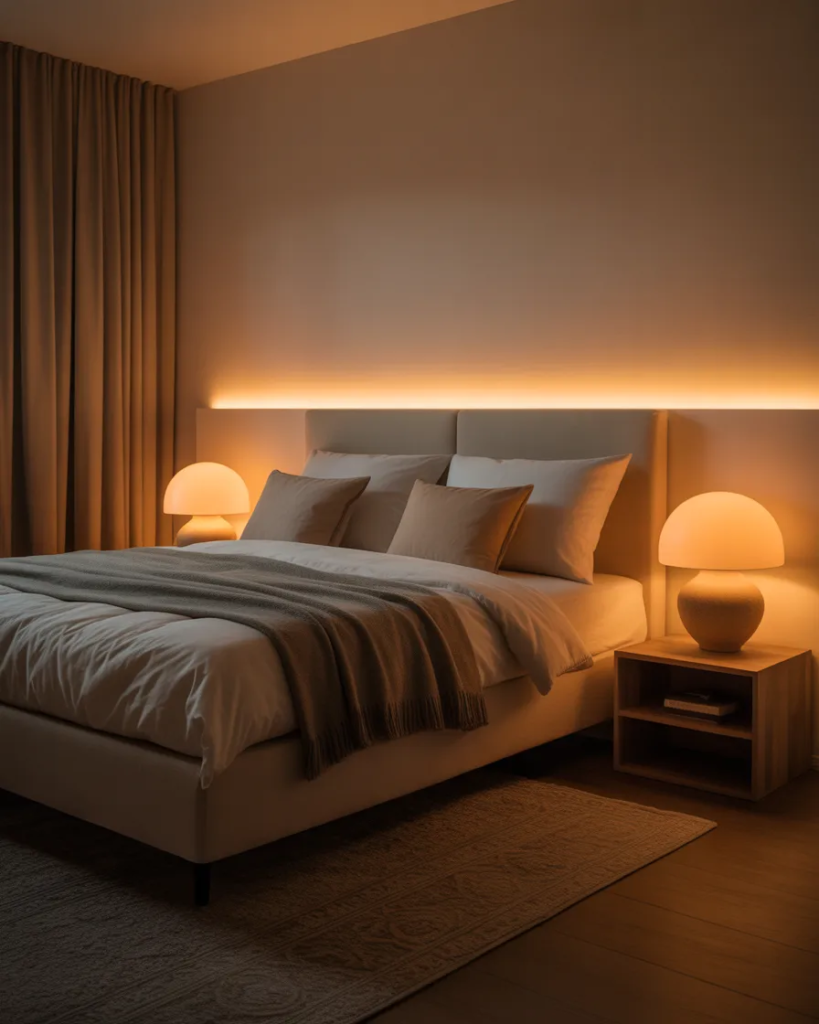
Overhead lighting alone kills a bedroom. It’s flat, unflattering, and makes the room feel like a waiting room rather than a retreat. The fix isn’t complicated — it’s just adding warm light at multiple heights so the room has depth and mood instead of one harsh pool of light from above. This single change does more for the atmosphere of a bedroom than almost anything else on this list.
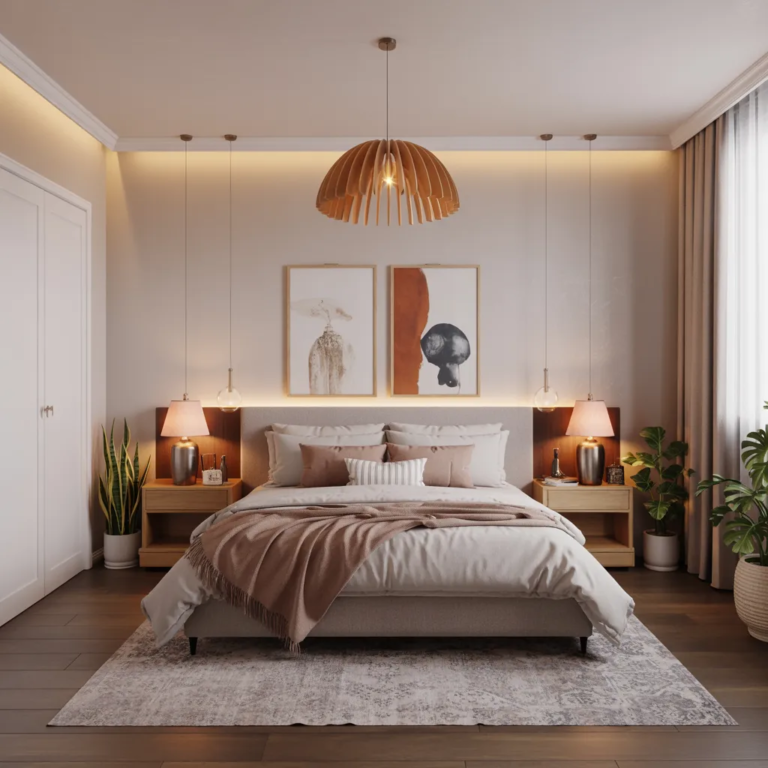
Add a bedside lamp on each side of the bed — something with a warm bulb, 2700K or lower. Then add a floor lamp in a corner, or fairy lights behind the headboard if you want something softer. Put the overhead light on a dimmer if possible (a smart plug from Amazon does this for about $15 without any wiring). The goal is to never need the overhead light in the evening. Warm, layered light makes every bedroom feel calmer.
Quality Rug Idea
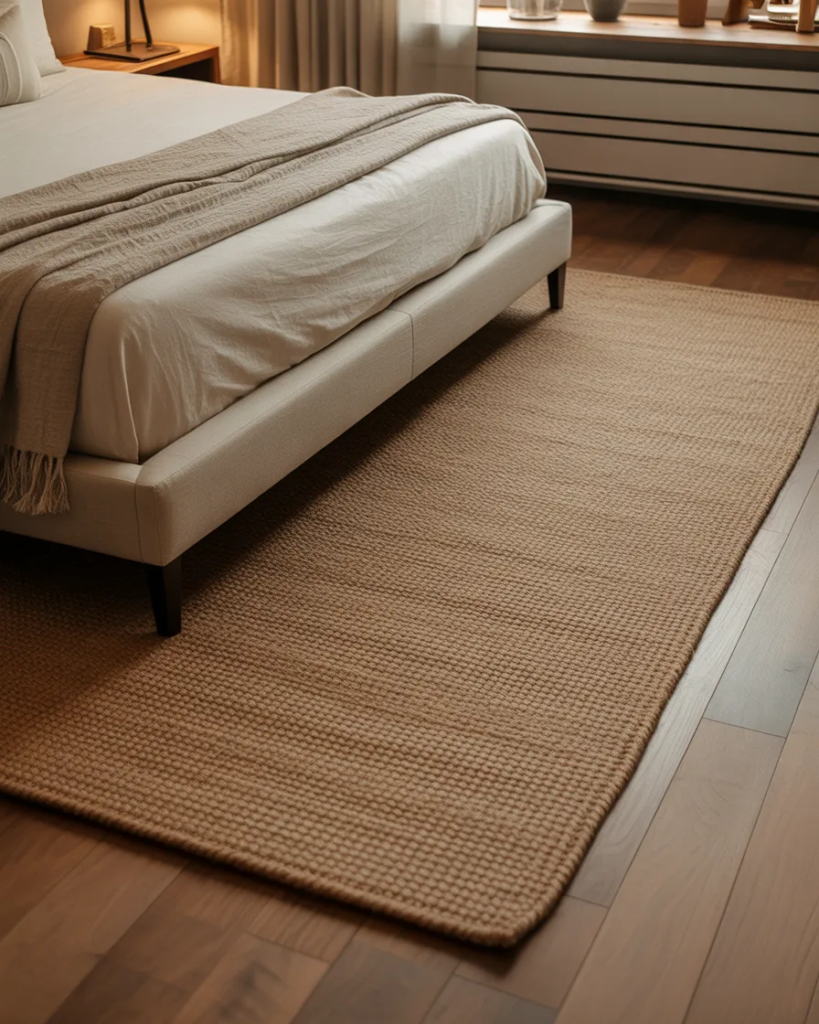
A bedroom without a rug feels cold — literally and visually. The floor is one of the largest surfaces in the room, and when it’s bare hardwood or tile, the space never quite feels finished or cozy. A rug fixes both problems at once. It adds warmth underfoot, defines the sleeping zone, and pulls the whole room together in a way that’s hard to achieve any other way.
The most common mistake is buying a rug that’s too small. For a queen bed, you want at least an 8×10 foot rug, with the front legs of the bed sitting on it and at least 18 inches of rug visible on each exposed side. A jute or wool rug from Rugs USA or Amazon starts around $80-150 in that size and holds up well. Natural fibers — jute, wool, cotton — always photograph better and feel better than synthetic options.
Nightstand Vignette Idea
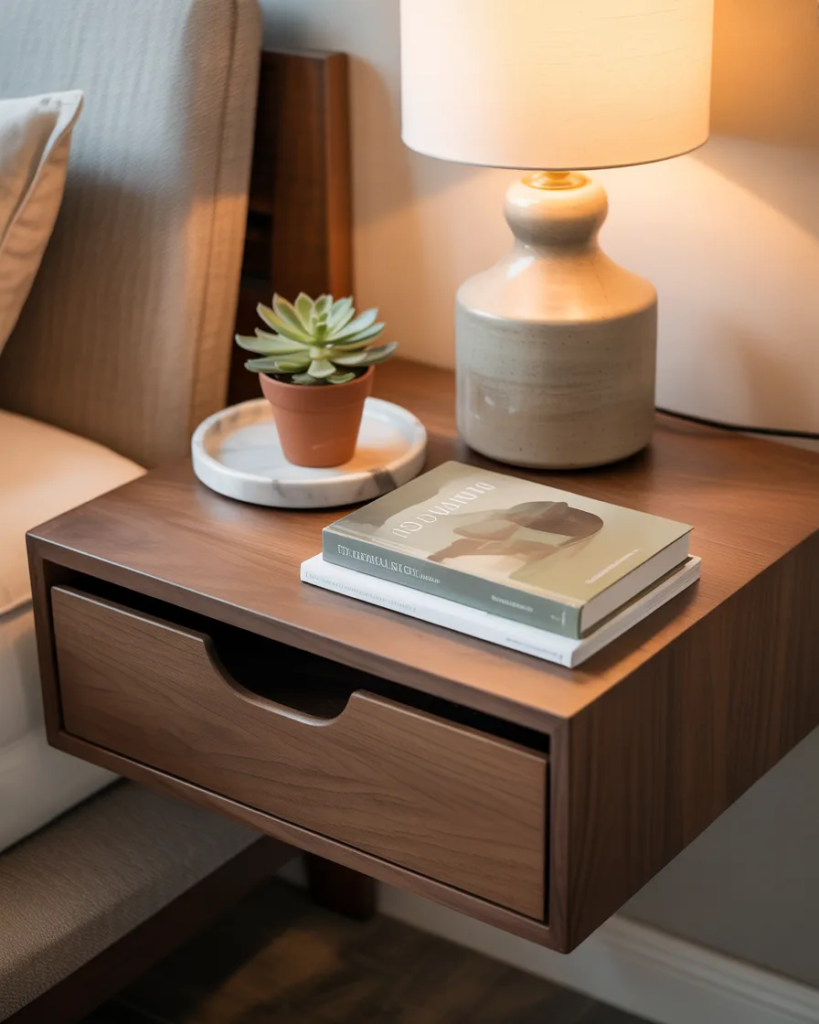
The nightstand is one of the most-seen surfaces in a bedroom, and one of the most consistently neglected. Most people pile whatever’s nearby on it — phone chargers, random books, half-empty glasses of water — and call it done. But a styled nightstand takes about five minutes to set up and immediately makes the bedroom feel more considered and personal.
The formula is simple: one lamp (tall enough that the shade sits at eye level when you’re sitting in bed), one plant or small vase, one book stacked horizontally, and a small tray to corral the daily items. That’s it. Everything in a tray reads as organized; everything scattered reads as clutter. A ceramic tray from Target costs about $12 and does the job perfectly.
Bedroom Mirror Idea
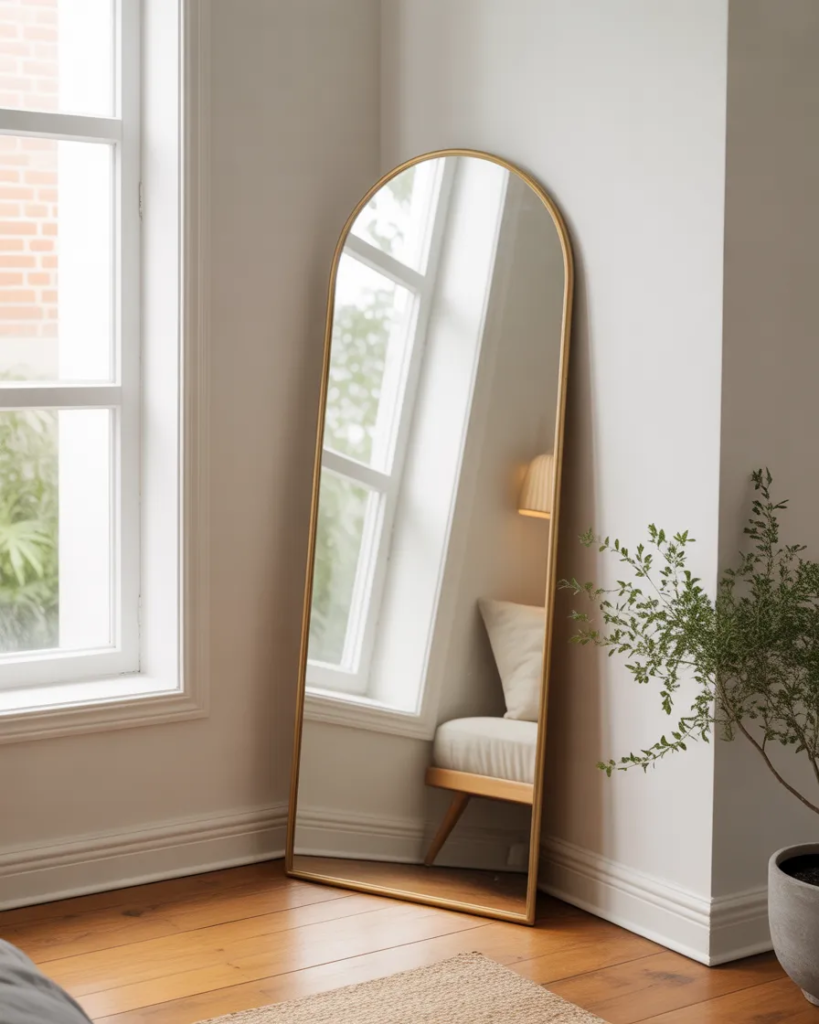
Every bedroom needs at least one well-placed mirror, and most bedrooms either have none or have one in the wrong spot. A large mirror reflects light, makes the room feel bigger, and provides a practical surface for getting dressed — all at once. It’s one of those pieces that earns its place in multiple ways simultaneously, which makes it one of the best investments in bedroom decor.
A full-length leaning mirror is the easiest option — no mounting required, instantly movable, and works in any room size. An arched mirror in warm brass or black is having a serious moment right now, and for good reason. You can find good options on Amazon or at HomeGoods for $60-150. Position it to reflect either a window or the best-lit corner of the room for maximum effect.
Gallery Wall Bedroom Idea
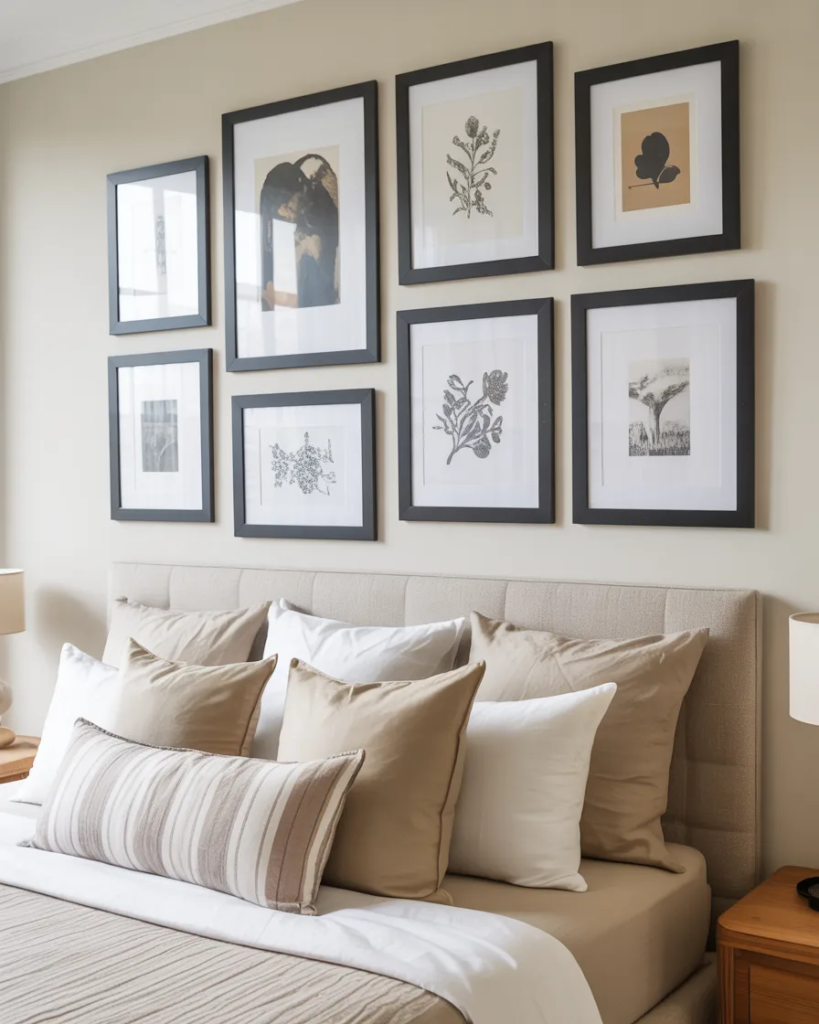
A gallery wall behind the bed does what a single piece of art almost never can — it fills the wall completely, adds personal meaning through the mix of images, and creates a focal point that makes the bed feel intentional and framed. The key word is personal. A gallery wall with photographs, prints, and objects that actually mean something to you reads completely differently from a generic set of prints bought together as a bundle.
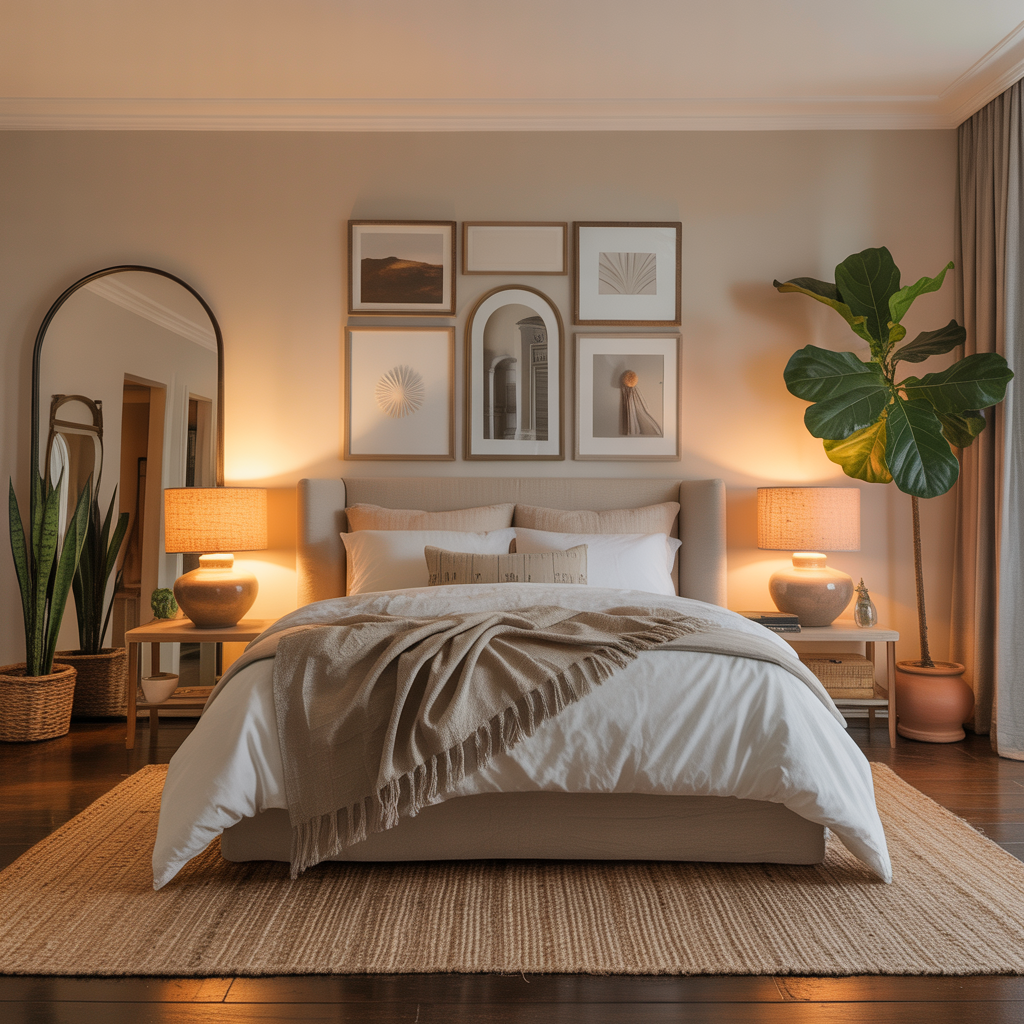
Mix frame sizes — some 5×7, some 8×10, some 11×14. Keep the frames the same color (all black, all natural wood, or all white) for cohesion. Arrange everything on the floor first, photograph it, then transfer it to the wall using paper templates taped up with painter’s tape. Command strips handle most frames up to about 16 pounds without damaging walls — perfect for renters.
Bedroom Plant Idea
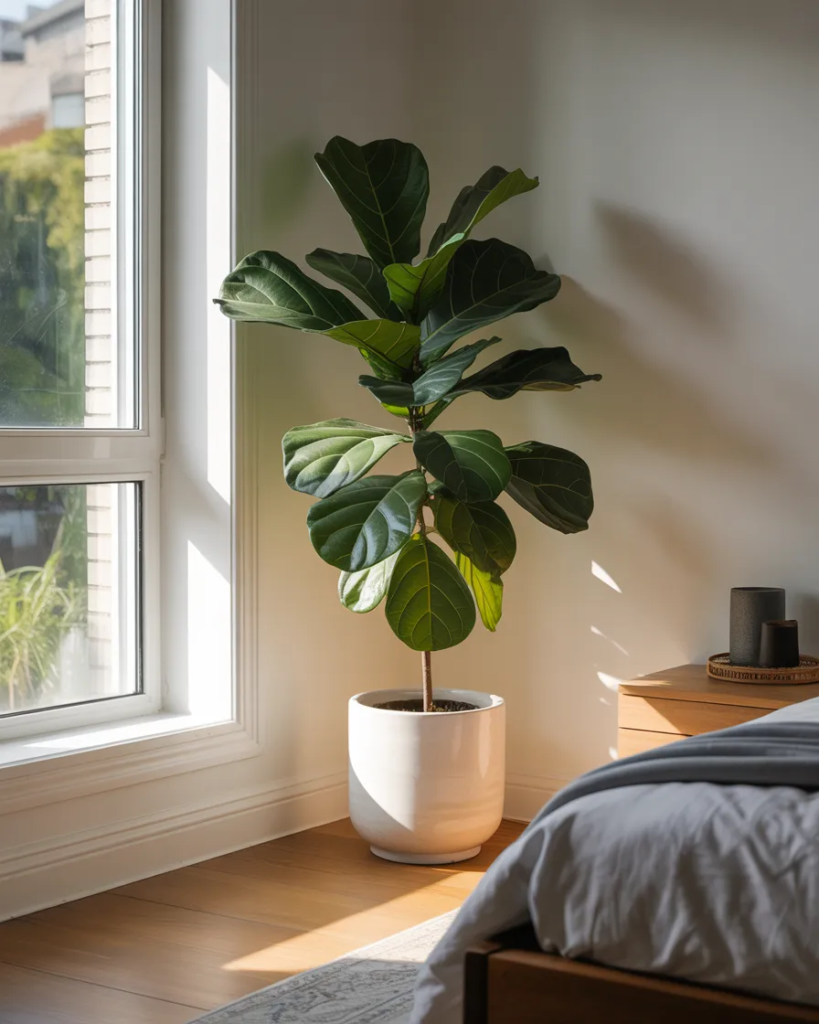
Plants in a bedroom do something that no piece of furniture or decor can replicate — they bring actual life into the room. Not a metaphor. A living, growing thing that changes slightly every week, that responds to light, that makes the air feel different. Even one well-placed plant shifts the energy of a bedroom in a way that’s genuinely hard to explain until you’ve experienced it.
For bedrooms with decent natural light, a fiddle leaf fig or a monstera in a large ceramic planter makes a strong visual statement in a corner that would otherwise feel empty. For low-light rooms, a snake plant or ZZ plant thrives with almost no attention. A good quality plant and a nice planter from IKEA or a local nursery typically runs $20-60 total. Worth every dollar.
Bedroom Curtain Idea
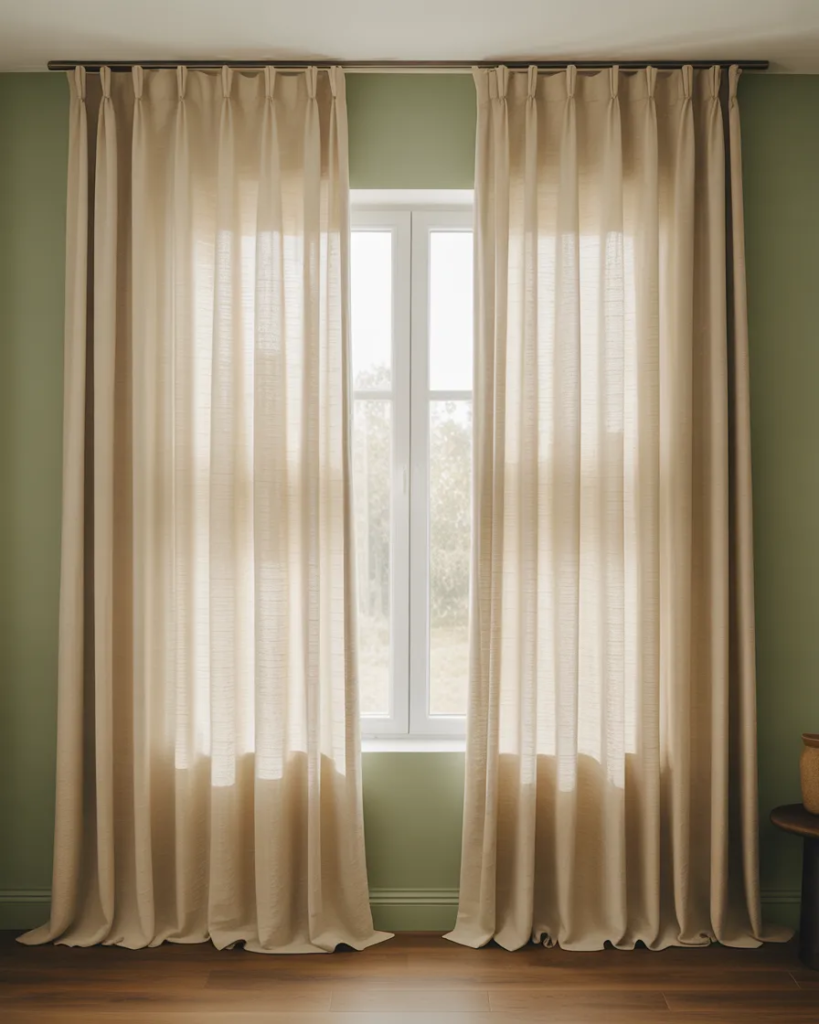
Curtains hung just above the window frame are one of the most common bedroom mistakes out there. They make the ceiling feel lower, the windows feel smaller, and the room feel less finished. The fix is just moving the curtain rod — up to the ceiling, or as close to it as possible — and letting the panels fall all the way to the floor. Same curtains, completely different room.
For bedrooms, linen curtains in warm white or cream work in almost every style direction. They let light filter in softly during the day and create a sense of softness and privacy at night. IKEA’s Majgull blackout curtains are a genuinely excellent budget option at around $40 per panel. If you want better light control, pair them with a sheer underlayer. Floor-to-ceiling curtains make even a modest bedroom feel genuinely grown-up.
Bedroom Color Palette Idea
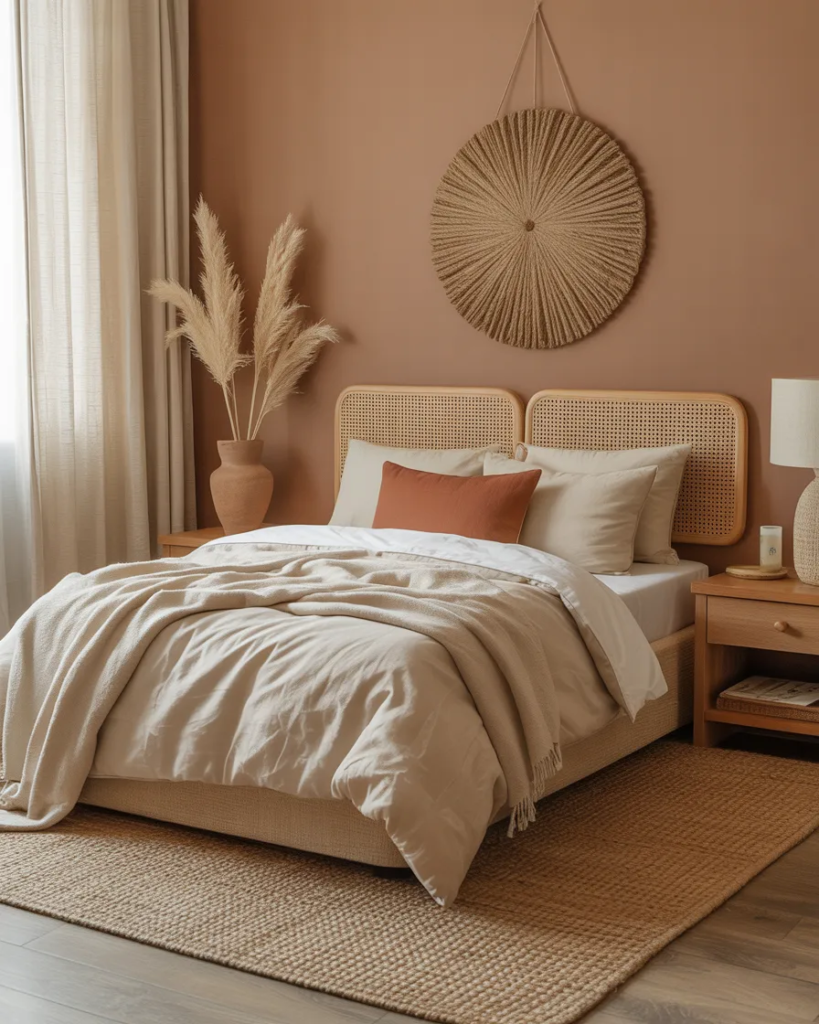
Most bedrooms have colors that happened rather than colors that were chosen. The walls were whatever shade came with the apartment. The bedding was what was on sale. The furniture was inherited or bought in a hurry. And the result is a room where nothing quite goes together but nothing is obviously wrong either — just a vague sense that the space never quite landed. Choosing an actual color palette fixes this completely.
Pick one dominant color — the one that’ll appear most in the room — and build from there. Warm white, soft sage, dusty blue, warm greige. Then choose one accent color in a textile or plant. That’s really all you need. The simpler the palette, the more considered it looks. Benjamin Moore’s Color Stories tool lets you preview combinations on a virtual room for free, which saves a lot of expensive trial and error.
Bedroom Dresser Decor Idea
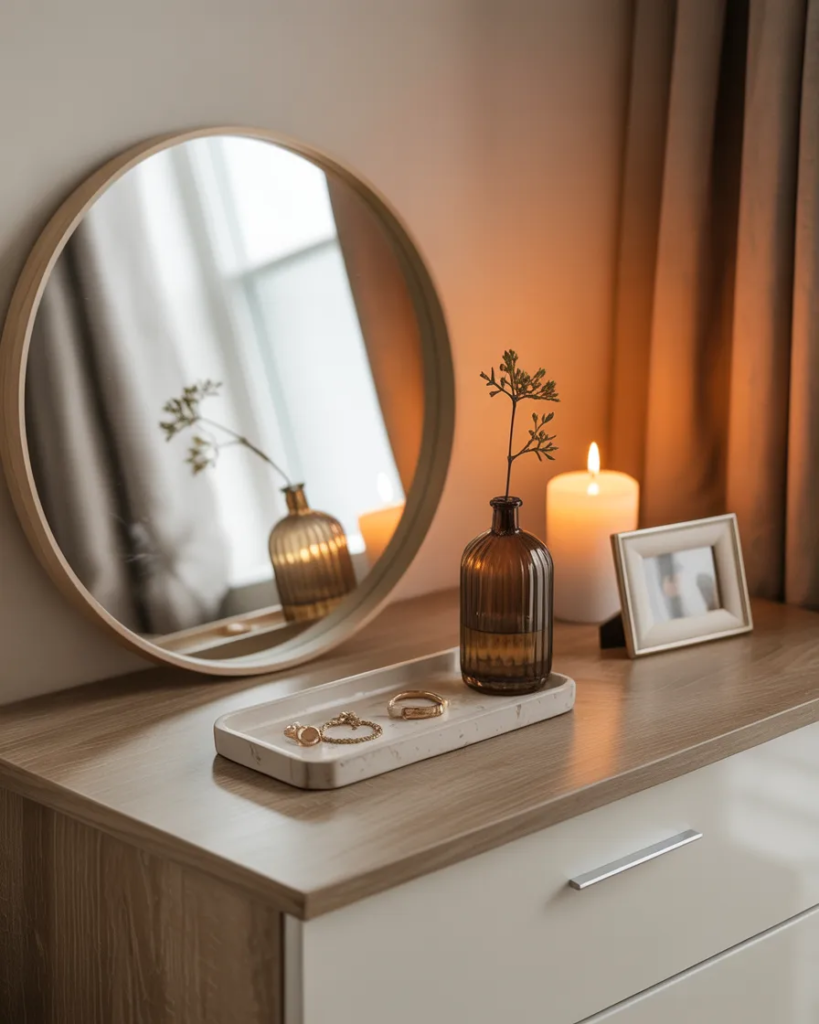
The dresser top is one of the highest-visibility surfaces in a bedroom and one of the most consistently covered in clutter — old receipts, random jewelry, chargers that belong somewhere else. Clearing it off and styling it intentionally takes about 20 minutes and changes how the entire room reads. A cluttered dresser makes even a beautiful bedroom feel messy; a styled one pulls the whole room together.
The approach is simple: remove everything, put back only what you choose to display. A small tray for daily items like keys and jewelry. A plant or vase. One decorative object — a candle, a small sculpture, something that means something. Lean a mirror against the wall behind it if space allows. That’s a complete dresser vignette. Keep it edited. Two or three things look intentional; eight things look like junk.
Bedroom Storage Idea
Bedroom decor falls apart fast when there’s nowhere for things to go. You can style a nightstand beautifully on Monday and by Thursday it’s buried under books, chargers, and things that should be somewhere else. The real problem isn’t the styling — it’s the storage. When everything has a designated place, the room stays looking good with almost no effort.
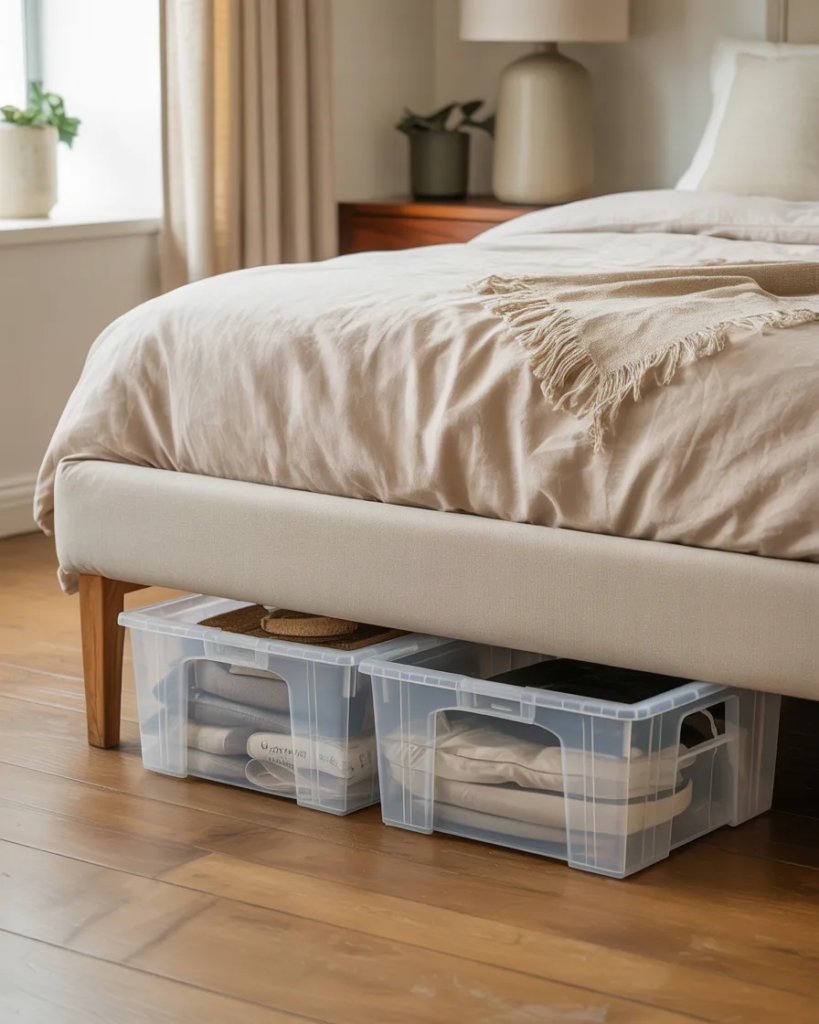
Under-bed storage is the most underused bedroom resource. Flat rolling bins from IKEA or The Container Store hold seasonal clothing, extra bedding, or shoes without taking up a single inch of visible floor space. A bed skirt or a low platform bed frame hides them completely. For smaller items, a floating shelf above the nightstand adds surface space without floor footprint. Storage built into the design keeps the room looking calm.
Bedroom Scent Idea
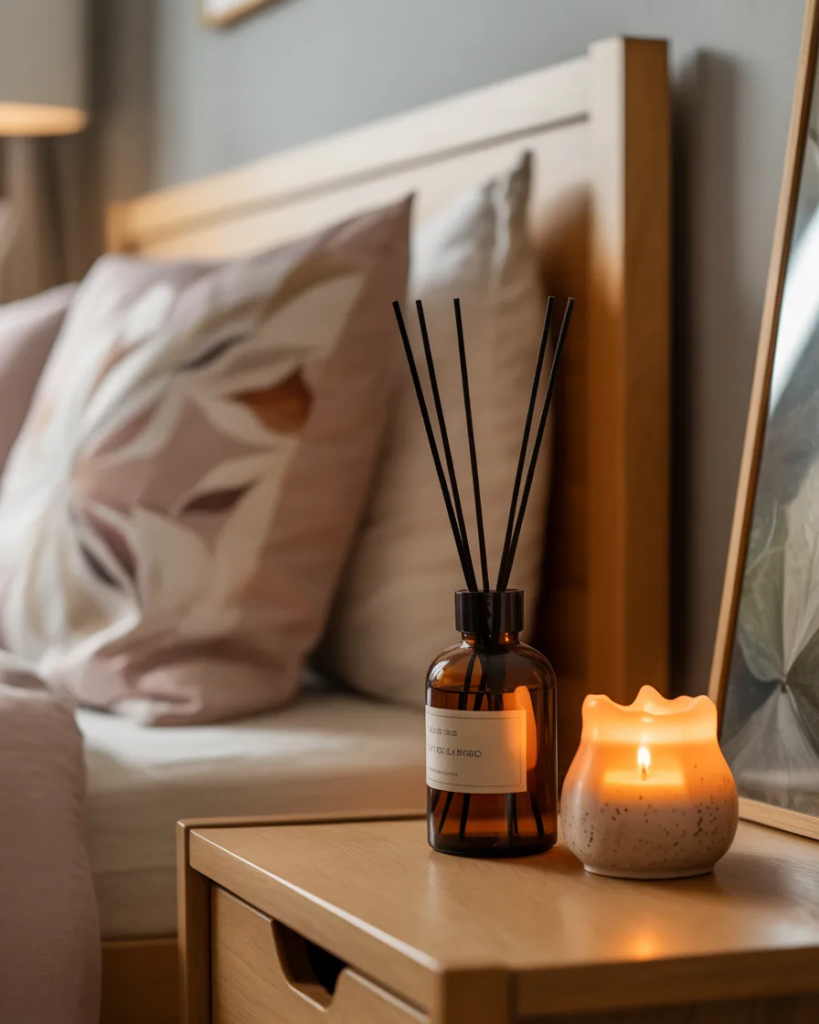
Scent is the most underrated element in bedroom decor. Nobody talks about it, but it’s one of the first things your body registers when you walk into a room. A bedroom that smells like lavender, cedar, or clean linen feels calm and welcoming before you’ve consciously noticed anything else. A bedroom that smells like nothing in particular — or worse, like stale air — feels flat no matter how beautifully it’s decorated.
A reed diffuser is the most consistent option — it works continuously without any effort on your part. Vitruvi and Muji both make excellent options in the $30-60 range. For evenings, a soy wax candle in a glass vessel burns cleanly and looks beautiful on a nightstand. Lavender, eucalyptus, sandalwood, and white tea are all great bedroom scents. Pick one and stick with it — consistency is what turns a scent into something your brain associates with rest.
Bedroom Texture Idea
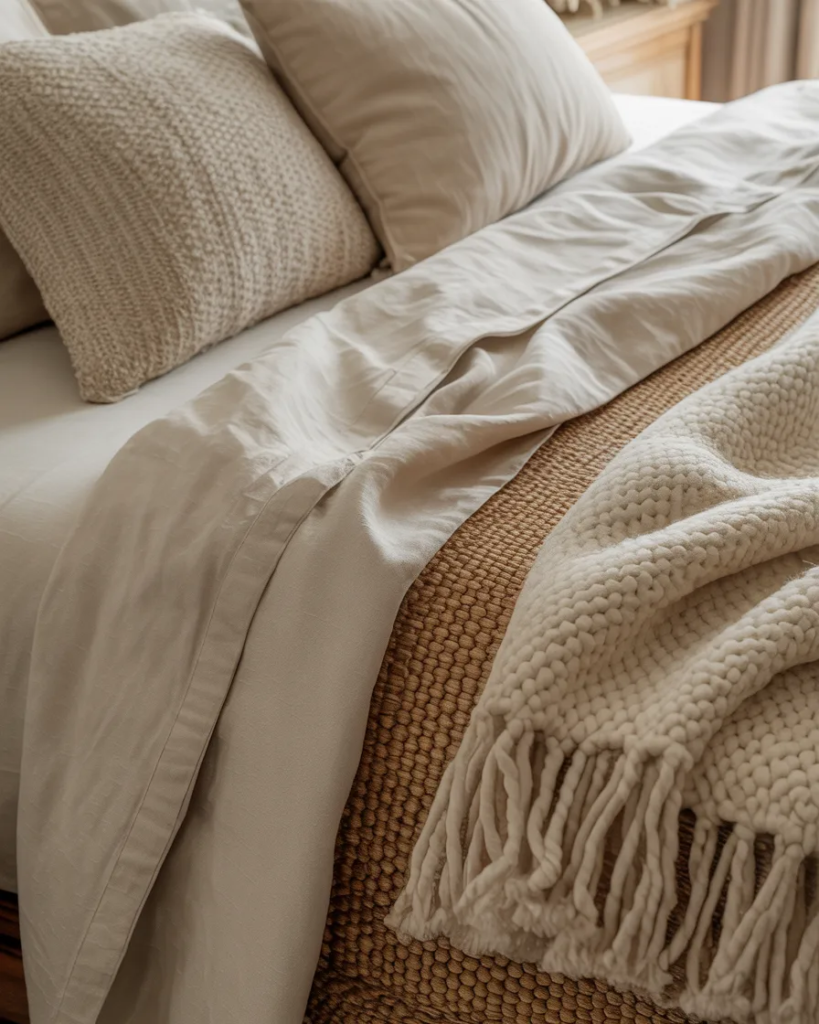
Rooms that look flat almost always have a texture problem. Everything’s smooth. Everything’s the same material weight. The walls, the bedding, the furniture — they all sit at the same visual level, which means nothing stands out and nothing feels rich. Adding texture is the fix, and it’s one of the easiest changes to make because most of it happens through textiles you can swap any time.
Mix at least three different textures in every bedroom: something smooth (linen or cotton bedding), something nubby or chunky (a boucle cushion or knit throw), and something natural (a jute rug or rattan basket). You don’t need to spend much — H&M Home and Zara Home both do excellent textural textiles for under $30 per piece. The combination of different surfaces is what makes a room feel layered and genuinely considered.
Bedroom Ceiling Idea
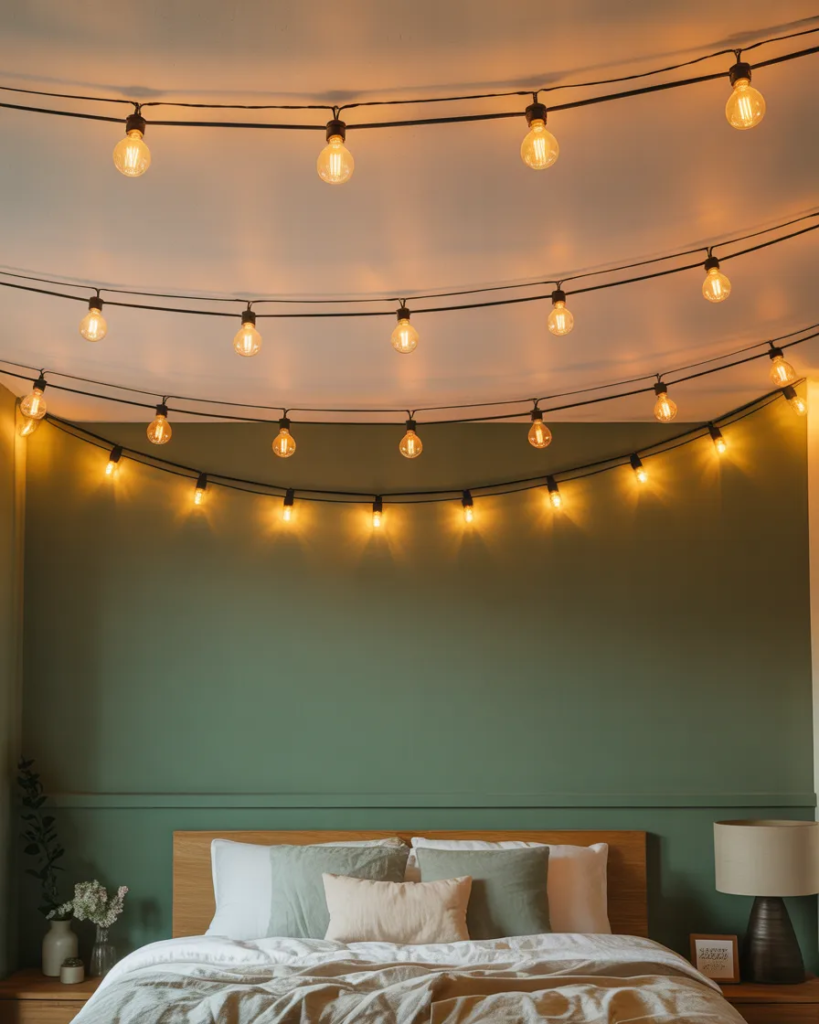
The ceiling is the one surface in a bedroom that most people completely ignore. It’s just there — white, flat, forgotten. But it’s also the surface you stare at when you’re lying in bed, which means it has more impact on how the room feels at rest than almost anything else. A thoughtful ceiling treatment — even a simple one — changes the bedroom in a way that surprises almost everyone who tries it.
The simplest option is a ceiling color — take the wall color and go two shades deeper, or paint it in a rich contrasting tone like deep navy or terracotta. A string of warm Edison bulbs hung in a loose grid across the ceiling costs about $25 on Amazon and creates incredible ambiance. Exposed wooden beams (real or faux) add warmth and architectural character that makes a room feel genuinely custom.
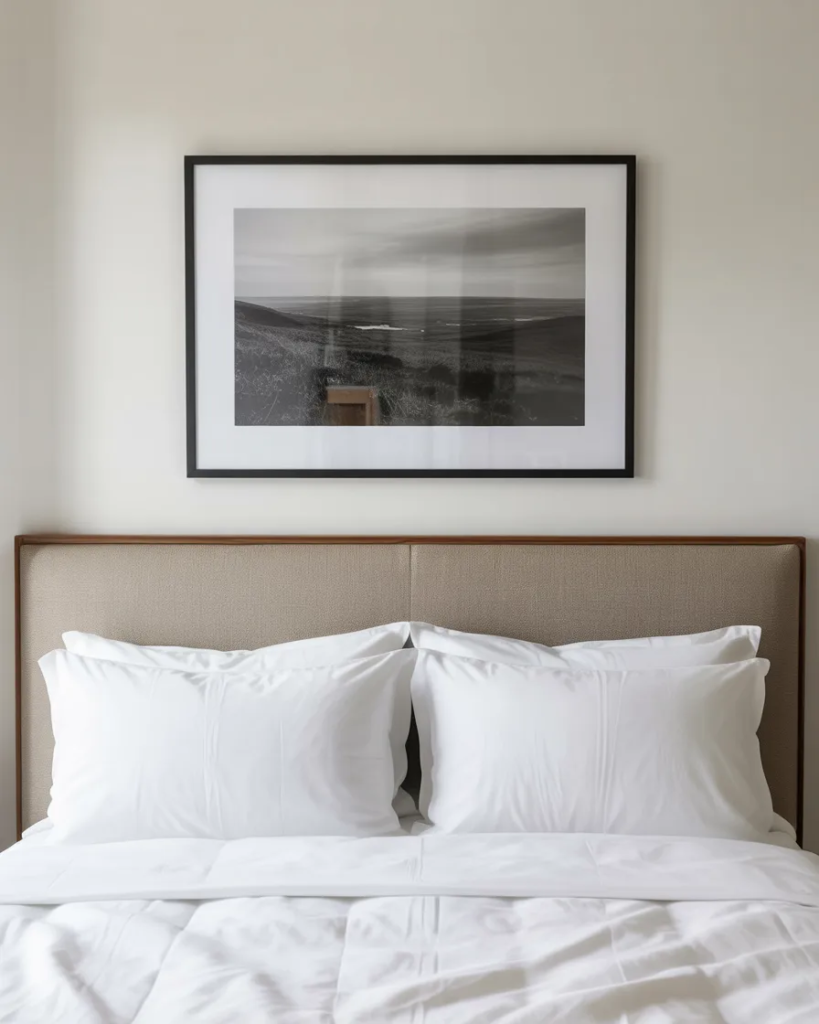
Bedroom Art Idea
Art in a bedroom personalizes the space in a way that nothing else quite does. It tells you something about who lives there before a single word is spoken. Generic mass-market prints do the opposite — they signal that nobody made a choice, which makes even a well-furnished room feel anonymous. Good bedroom art doesn’t have to be expensive. It just has to be chosen rather than defaulted to.
One large piece above the bed makes more impact than three small ones. Print your own travel photography at a local print shop for $15-30 and frame it — that’s original art nobody else has. Society6 and Etsy both have affordable prints from independent artists that feel genuinely personal. A single framed piece in a clean, simple frame reads more maturely and more confidently than a matching set of three bought together.
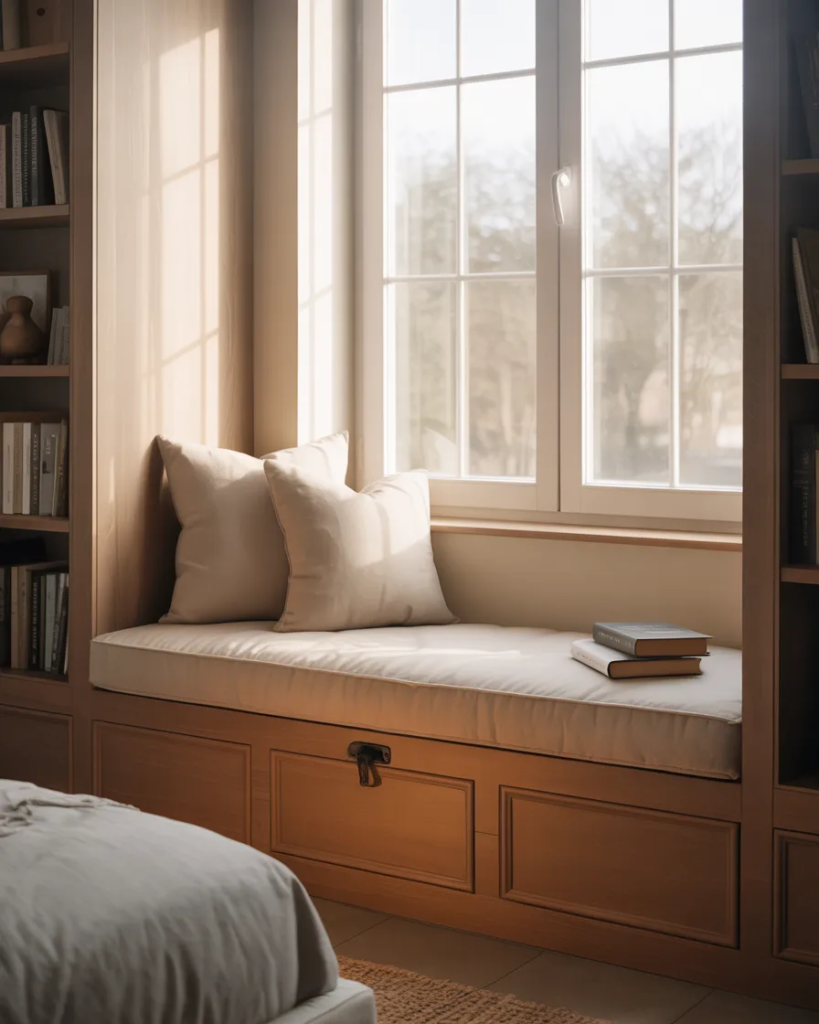
Bedroom Window Seat Idea
If your bedroom has a window with any depth to the sill — or a bay window, or even just an underused corner near natural light — a window seat turns dead space into one of the most inviting spots in the home. It’s the kind of addition that immediately makes a bedroom feel richer and more thought-through, like the room was designed rather than just furnished.
A simple wooden bench with a hinged lid for storage, covered in a cushion in a durable fabric like Sunbrella or performance velvet, does the job beautifully. Add two throw pillows and a small side table and it becomes a reading nook. Built-in versions start around $500-800 if you hire a carpenter, but a freestanding storage bench from IKEA achieves most of the same effect for under $150.
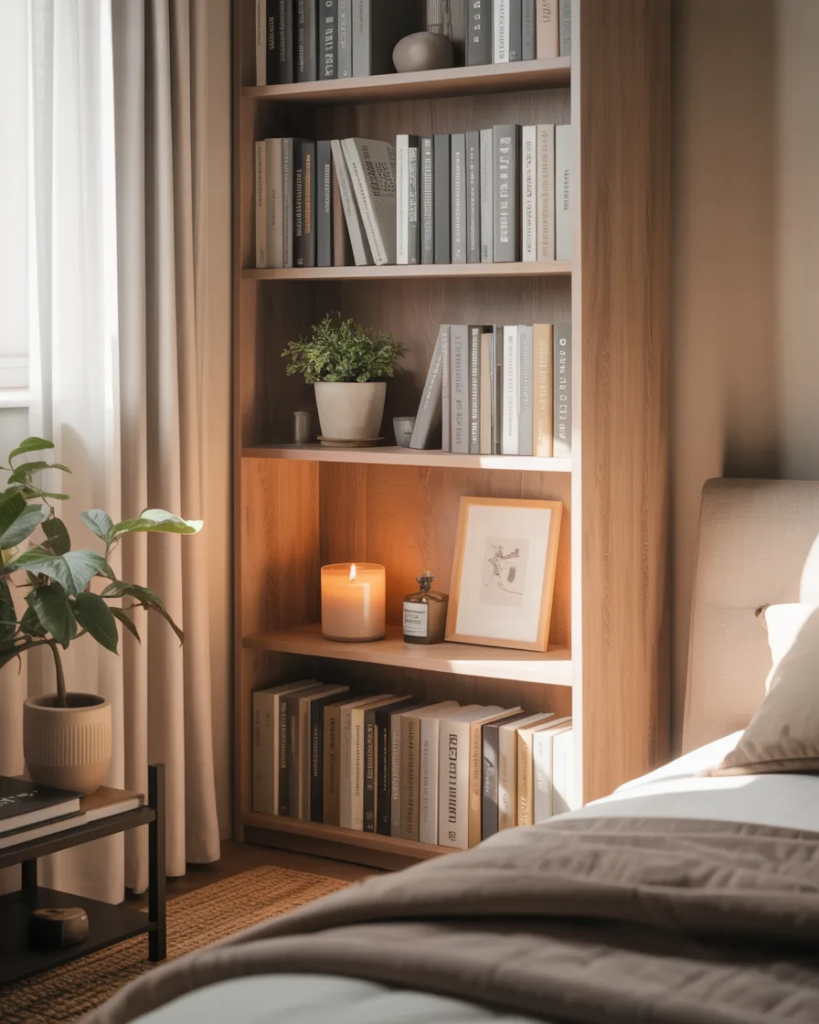
Bedroom Bookshelf Idea
A bookshelf in a bedroom does something a bookshelf in a living room doesn’t — it makes the room feel personal and lived-in rather than staged. Books are inherently human. They signal interests, history, obsessions. A styled bookshelf beside the bed or in a bedroom corner adds warmth, character, and practical storage simultaneously, which makes it one of the hardest-working pieces of furniture in any bedroom.
Style the shelves intentionally — books with spines facing out in a cohesive color family, a small plant at one end, a candle or two, a few decorative objects that mean something. Not every shelf needs to be full. Empty space reads as intentional in a bookshelf just like it does everywhere else. IKEA’s Billy bookcase is genuinely hard to beat for the price — around $60-100 depending on size — and it fits most bedroom aesthetics with the right styling.
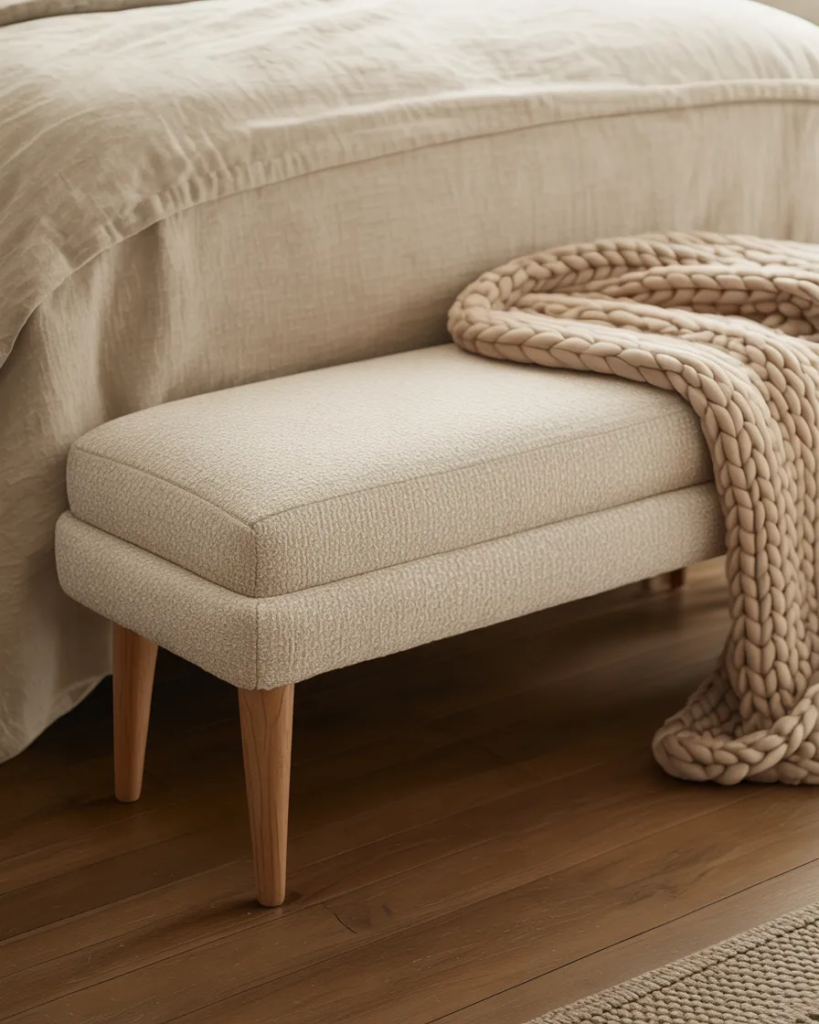
Bedroom Bench Idea
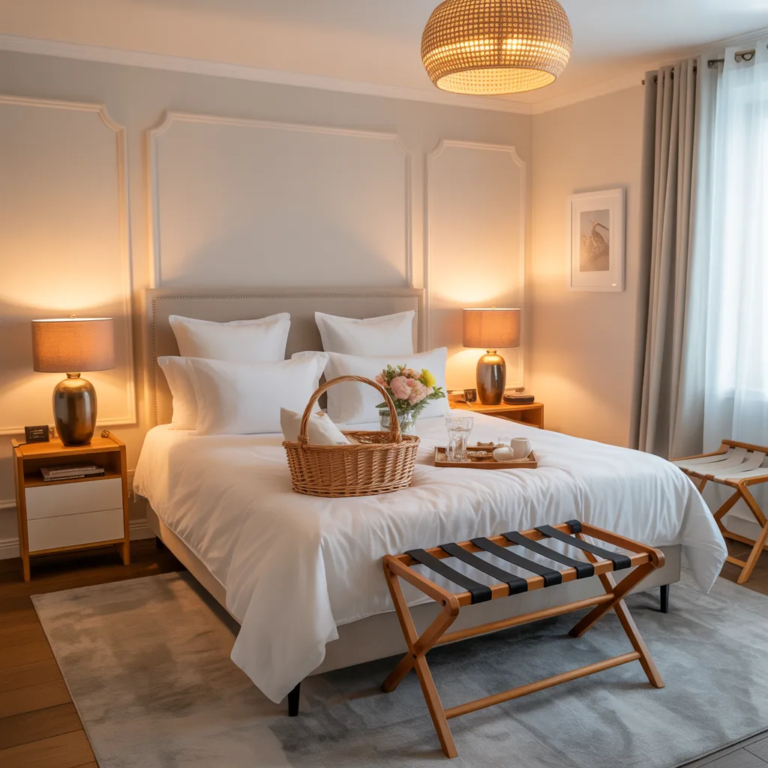
A bench at the foot of the bed is one of those additions that seems unnecessary until you have one. Then you wonder how you ever lived without it. It’s where you sit to put on shoes. It’s where the throw blanket lives when it’s not on the bed. It’s the piece that makes the bed feel like a complete unit rather than just a mattress floating in the room. And visually, it anchors the foot of the bed and makes the whole sleeping area feel more composed.
An upholstered bench in velvet or boucle adds softness and color — Pottery Barn and CB2 both have excellent options in the $200-400 range. But honestly, a vintage bench found at a thrift store and reupholstered for $20-30 in fabric from a fabric store often looks just as good and more interesting. Keep it proportional — the bench should be roughly two-thirds the width of the bed for the best visual balance.
Bedroom Canopy Idea
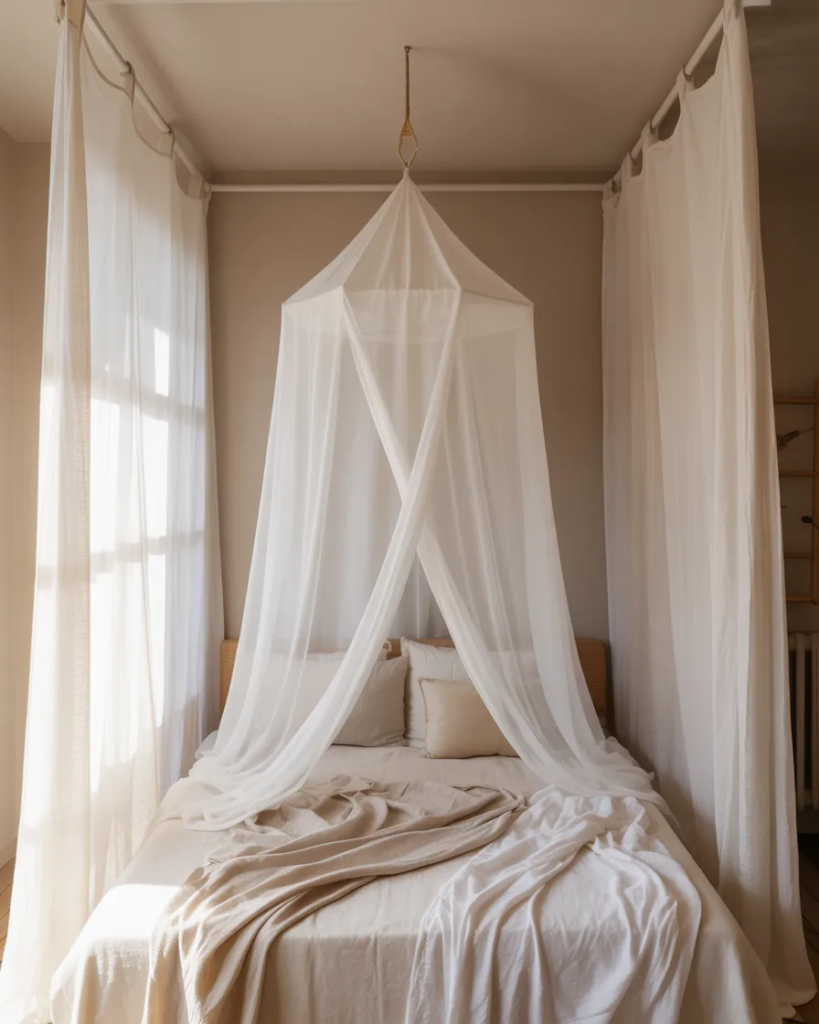
A canopy above the bed creates a sense of enclosure and intimacy that makes sleep feel more deliberate and more cozy. It’s one of those bedroom decor ideas that looks incredibly luxurious but is genuinely achievable without a four-poster frame or a significant budget. The canopy changes the scale of the bed within the room — it creates a room within the room — and that shift in scale is what makes it feel so special.
The simplest version: install a single ceiling hook above the center of the bed and drape four panels of sheer fabric from it, letting them fall to the floor on each side. White or cream sheers from IKEA cost about $12 per panel. For a more structured look, a bed crown mounted to the wall above the headboard creates the same canopy effect with two fabric panels rather than four. Either version costs under $60 total and transforms the bed completely.
Bedroom Wallpaper Idea
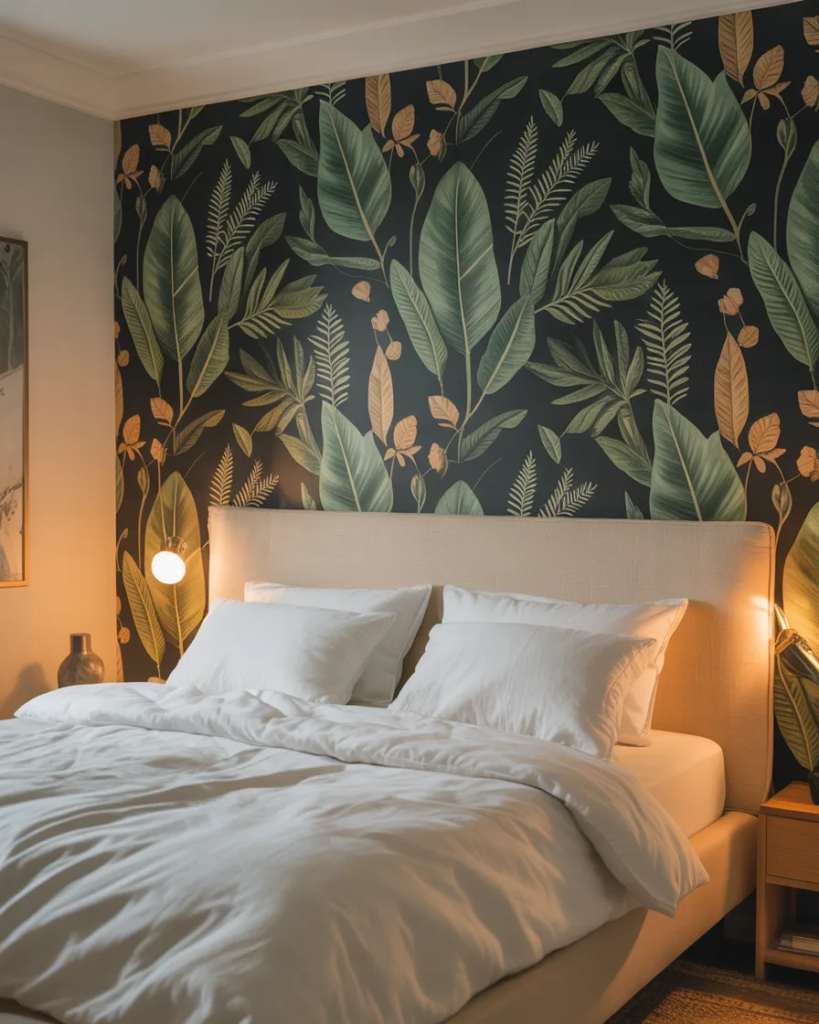
Wallpaper in a bedroom is one of those design choices that divides people — some love it immediately, others are convinced it’ll make the room feel smaller or busier. But used on a single wall behind the bed, wallpaper almost always works. It adds pattern and visual richness that paint alone can’t achieve, and it makes the bedroom feel genuinely designed rather than just painted and furnished.
Peel-and-stick wallpaper from Chasing Paper, Tempaper, or Spoonflower is entirely renter-friendly — no paste, no professional installation, completely removable. A single accent wall behind a queen bed typically takes about two to three rolls, which runs $60-150 depending on the brand. Botanical prints, abstract patterns, and textured grasscloth looks are all strong choices for a bedroom wall that needs personality.
Bedroom Declutter Idea
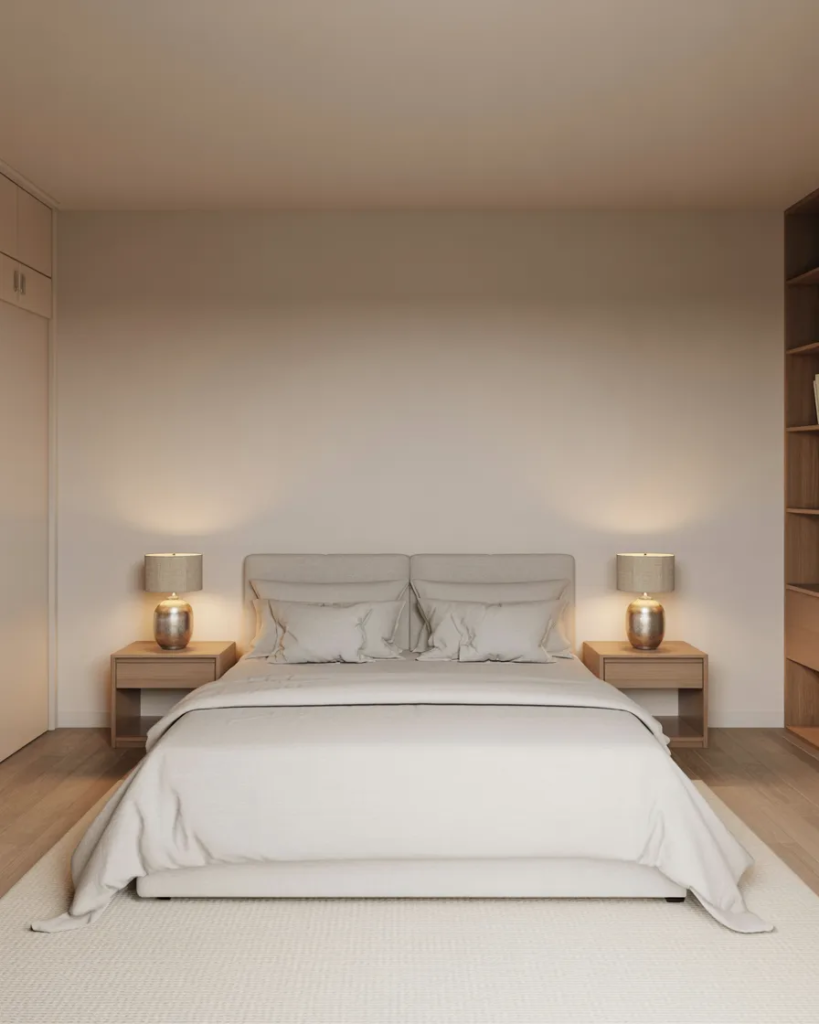
Here’s something most bedroom decor articles won’t tell you: the most impactful thing you can do for your bedroom is get rid of things. Not add things. Remove them. Every unnecessary object on a surface competes for visual attention and contributes to the low-level mental noise that makes a bedroom feel exhausting rather than restful. A bedroom with twenty well-chosen things looks better than one with sixty things where forty were chosen thoughtlessly.
Do a full bedroom audit. Walk through every surface and every piece of furniture and ask whether each item is genuinely loved, genuinely used, or just there because it’s always been there. Everything in the third category goes. Storage for things you need but don’t want to see — under the bed, inside the dresser, in a pretty basket — keeps the room calm without requiring you to live with nothing. Less, done well, is always more.
Bedroom Hardware Upgrade Idea
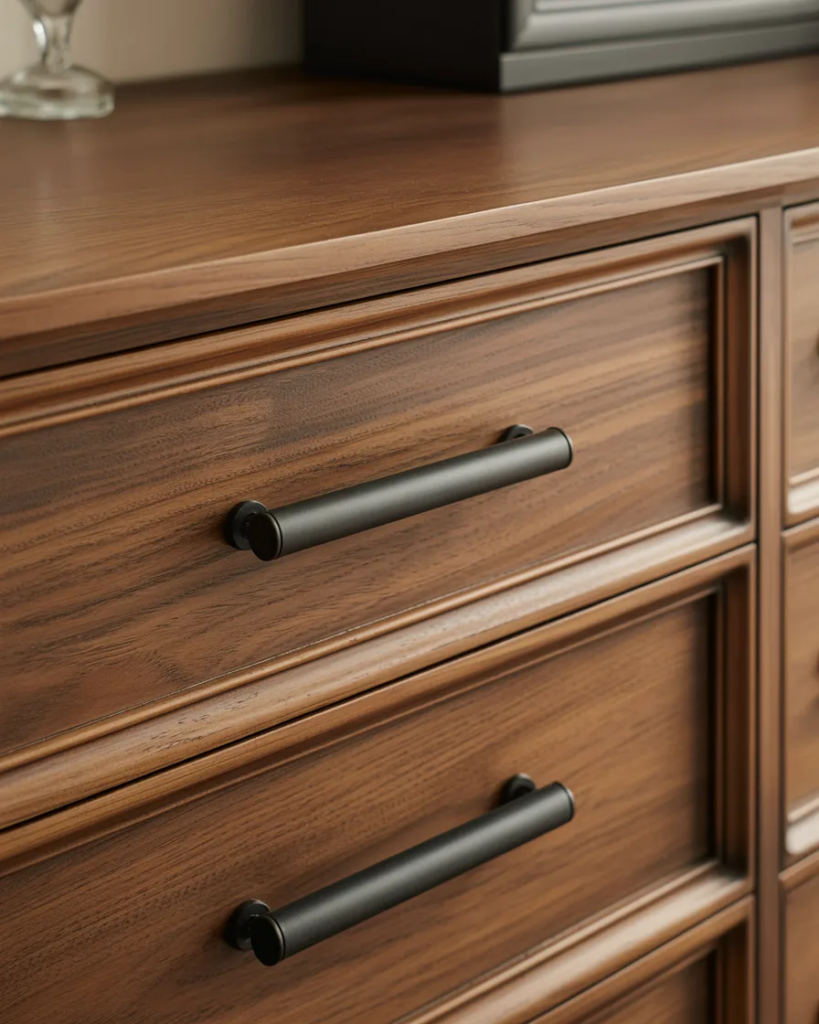
Cabinet hardware is bedroom decor’s most overlooked detail. The pulls and knobs on your dresser, the hinges on your wardrobe, the handles on your nightstands — they’re small, they’re everywhere, and they have more effect on how a piece of furniture reads than most people realize. Cheap, generic hardware makes even a beautiful dresser look bargain. Upgraded hardware makes a basic dresser look custom.
Swapping out hardware is one of the easiest DIY projects there is — a screwdriver, fifteen minutes, and about $3-8 per knob or pull. Matte black, brushed brass, and aged bronze are all strong choices for bedroom furniture right now. Rejuvenation, Anthropologie Home, and Amazon all carry excellent options. Stick to one metal finish throughout the room — mixing chrome, brass, and black in the same bedroom reads as unresolved.
Bedroom Lighting Dimmer Idea
If you take one piece of advice from this entire article, make it this one: put your bedroom lights on dimmers. Not as a luxury. As a basic quality-of-life improvement that costs almost nothing and changes how the room functions every single evening. Bright light at 10pm tells your brain it’s still daytime. Warm, dim light tells it to wind down. That shift affects how quickly you fall asleep, and how rested you feel in the morning.
A standard dimmer switch costs about $15-25 at any hardware store and installs in about 20 minutes — no electrician needed for most standard setups. Smart plug dimmers from Kasa or TP-Link cost about the same and work with any lamp without any wiring at all. Set a warm scene at 8pm every evening and within a week you’ll notice the difference in how easily you fall asleep. It’s one of the most underrated bedroom investments out there.
Bedroom Personal Touch Idea
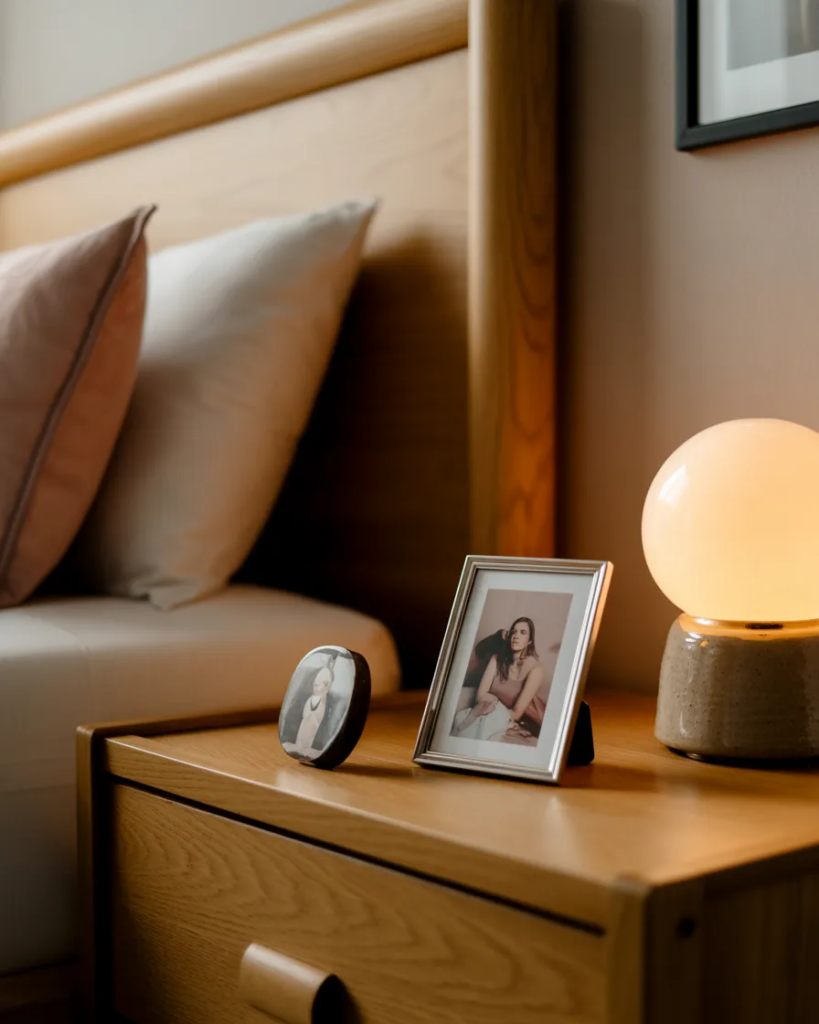
The bedroom that feels most like home is always the one with personal meaning built into it — not the one with the most expensive furniture or the most carefully curated aesthetic. A framed photograph of a place that matters. A small object brought back from a trip. A piece of inherited furniture given a new life with fresh paint. A stack of books by a favorite author. These things cost nothing in design terms. They cost everything in terms of how the room actually feels to be in.
Don’t edit out everything personal in pursuit of a polished look. The polished look without the personal layer is what makes rooms feel like hotel lobbies rather than homes. Three or four meaningful objects on a shelf, a photograph in a frame you actually like, a piece of art you saved up for because you genuinely loved it — these details are what makes a bedroom yours. That’s the whole point.
FAQs About Bedroom Decor
What bedroom decor changes make the biggest difference for the least money?
Honestly, it’s the bedding, the lighting, and clearing the clutter. Layered bedding in a quality fabric makes the whole room look more intentional immediately. Switching to warm, layered lighting instead of a single overhead light changes the atmosphere completely. And removing things that don’t belong costs nothing but makes more difference than almost any purchase you could make.
How do I choose a color palette for my bedroom?
Start with one color you genuinely love — not what’s trendy, not what you think you should like. Build the rest of the palette around it with two or three complementary tones. Keep it simple: one dominant color for walls and large furniture, one secondary for textiles, one accent for accessories. The simpler the palette, the more considered it looks. Benjamin Moore’s online Color Stories tool is free and genuinely useful for testing combinations.
What’s the best bedroom decor for a small room?
Go vertical, go light, and go multipurpose. Tall headboards make low ceilings feel higher. Light wall colors make small rooms feel more open. Furniture that does double duty — a storage bed, a bedside table with drawers, floating shelves instead of a bulky bookcase — keeps the floor clear and the room feeling bigger than it is. A large mirror also helps enormously; it reflects light and visually doubles the perceived space.
How much should I budget for a bedroom decor refresh?
You can make a meaningful difference for $150-300 if you focus on the right things: new bedding, one good lamp, a plant, and a can of paint for an accent wall. A more complete refresh with a new rug, curtains, and some art typically runs $500-800. A full bedroom redesign including furniture can range from $1,500 to $5,000+ depending on what you buy and where. The key is investing in the pieces that have the most visual impact — usually the bed, the lighting, and the rug — before anything else.
What’s the most important piece of furniture in a bedroom?
The bed, without question. It’s the largest piece in the room, it’s the one you interact with most, and it’s what every other design decision responds to. Investing in a good mattress and quality bedding before anything else makes more difference to how you experience your bedroom than any decorative purchase. After the bed, the rug is probably the most impactful furniture-adjacent choice — it anchors the room and adds warmth in a way nothing else does.
Conclusion of Bedroom Decor
Good bedroom decor isn’t about having the most beautiful room on Instagram. It’s about having a room that makes you feel genuinely rested, genuinely comfortable, and genuinely at home every single day. That happens through intentional choices — not expensive ones, not trendy ones, but choices that reflect who you actually are and how you actually live. A bedroom that does that job well is worth far more than one that photographs beautifully but never quite feels right to be in.
Start with one thing. The bedding if the bed feels flat. The lighting if the evenings feel harsh. The accent wall if the room feels directionless. One good change almost always leads to another, and before long you have a bedroom you’re actually proud of — not because it looks like a Pinterest board, but because it finally feels like yours.