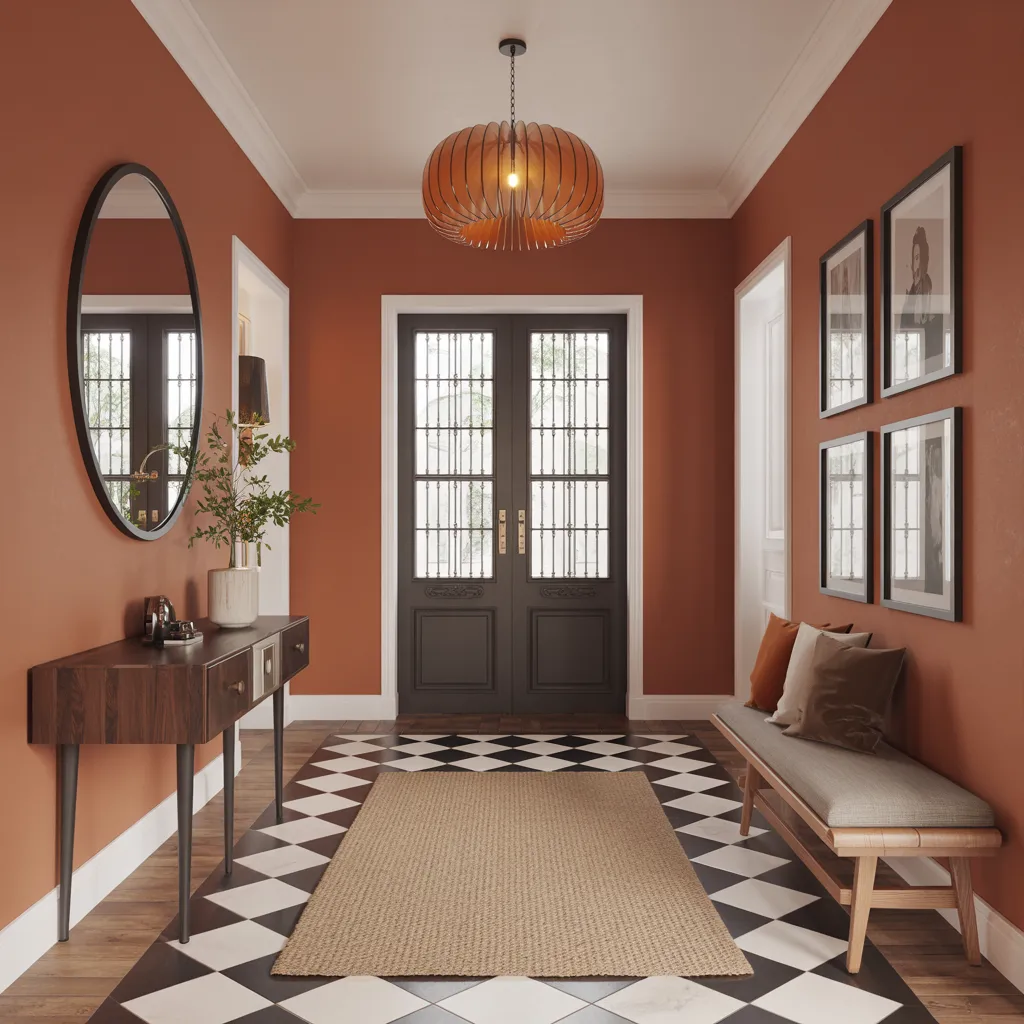
27 Foyer Design Ideas That Make a Powerful First Impression Every Single Time
The foyer is the first room anyone sees when they enter your home. It takes about four seconds for a first impression to form — and the foyer is where that impression happens. A foyer that’s been thought about communicates, before a single word of welcome, that someone cares about this home and about the people coming into it. A foyer that hasn’t been thought about communicates the opposite. And the rest of the house has to work harder to overcome that beginning.
Most foyers are undertreated — a coat hook, a mat, whatever furniture didn’t fit elsewhere. The ideas in this list cover the full range of foyer design, from the large decisions like lighting and color to the small details like scent and hardware consistency that make an entry feel genuinely complete. Whether your foyer is a generous two-story entry or a narrow hallway between the door and the rest of the house, there’s something here that applies to your space and improves it immediately.
Best Foyer Design Ideas to Try in Your Home
The best foyer designs share a quality that’s easy to overlook in favor of aesthetics: they function. The keys have a spot. Coats have somewhere to go. Shoes are contained rather than piled by the door. Bags don’t end up on the floor. When the functional layer is right — when every daily item has a designated home — the foyer stays looking good with minimal effort. And a foyer that works well feels welcoming in a way that a beautifully staged but practically dysfunctional entry never quite manages.
What follows covers both the practical and the aesthetic — because in a foyer, the two are inseparable. A well-lit entry with a statement mirror and no place to put your keys is still frustrating to come home to. A drop zone with hooks and a tray but no design intention is functional and nothing more. The ideas ahead address both layers together, which is the only way foyer design actually works.
Statement Light Fixture Foyer Idea
The light fixture in a foyer is more visible, from more angles, than almost any other light fixture in the house. It’s seen from the front door, from the hallway, from the staircase landing if there is one, and often from adjacent rooms. This visibility makes it the most impactful single design decision in many foyers — more so than the wall color, the flooring, or the furniture. A statement fixture makes the foyer feel designed. A generic basic fixture makes it feel like nothing in particular was decided.
For a standard 8-foot ceiling foyer, a statement pendant or semi-flush mount at 7 feet from the floor is the right height — low enough to be seen and appreciated, high enough to clear movement. For two-story entries, a dramatic chandelier that hangs into the double-height space transforms the foyer from a transition space into a room. Budget $80-300 for a quality pendant from Wayfair, Rejuvenation, or Schoolhouse; $300-800 for a statement chandelier worth the double-height space it occupies.
Console Table Foyer Design Idea
A console table is the foundational furniture piece in most foyers — it creates a surface for styling, provides a place for daily items, and defines the foyer as a room rather than just a hallway. Without a console or any furniture piece, a foyer feels like a transition zone between outside and the actual house. With one — even a slim one in a narrow entry — the space immediately reads as considered and complete.
The console should be proportional to the wall it occupies: roughly two-thirds the wall width is the standard guideline. For narrow foyers, a 12-inch deep console takes minimal floor space while providing the necessary surface. West Elm’s Herringbone console in natural wood is a perennial favorite around $300. A thrifted or vintage console refinished in the foyer’s accent color is often more interesting and costs far less. Style the top as a vignette: a mirror or art behind it, a lamp to one side, a tray for daily items, one plant or vase.
Large Mirror Foyer Design Idea
A large mirror in the foyer serves more purposes simultaneously than almost any other single piece. It reflects light, making a windowless entry feel brighter. It creates visual depth, making a small foyer feel larger. It provides the practical last-look surface that everyone needs before leaving the house. And it adds a decorative element that anchors the space visually in a way that art alone usually doesn’t achieve, because its reflective quality makes it active rather than passive.
An arched mirror in brushed gold or natural wood frame leaned against the wall or wall-mounted above the console is one of the most popular foyer choices right now — the curved top softens what is otherwise a space full of right angles. Options from Amazon or Target run $80-200 in most standard sizes. For a narrower foyer, a tall rectangular mirror (at least 48 inches tall) makes the space feel significantly less cramped. Position it to reflect a window or a light source rather than a blank wall for maximum effect.
Foyer Color and Wallpaper Idea
The foyer is one of the best rooms in a home for a bold color or pattern choice. It’s a small space, guests pass through rather than live in it, and a strong wall treatment creates an immediate impression that sets the tone for the whole house. Deep navy, forest green, warm terracotta, rich burgundy — colors that might feel too committed in a living room read as confident and intentional in a foyer. And because the space is small, even an elaborate wallpaper requires only one or two rolls to cover completely.
Peel-and-stick wallpaper from Chasing Paper or Spoonflower makes bold foyer choices completely reversible for renters — a botanical print or a geometric pattern at $30-50 per roll transforms the space in an afternoon. For a painted approach, one can of Benjamin Moore or Sherwin-Williams paint ($55-70) covers a standard foyer in two coats. Dark colors in a windowless foyer need good lighting to work — pair any bold color with a warm, adequately bright light fixture and the moodiness reads as sophisticated rather than gloomy.
Foyer Drop Zone Idea
The functional heart of any well-designed foyer is the drop zone — the organized system that gives every daily item a designated home. Keys have a hook or a bowl. Bags have a hook at the right height. Mail has a tray or a wall organizer. Shoes have a basket or a rack. When every item that enters with people has somewhere specific to go, the foyer stays clear with minimal daily effort. When nothing has a designated home, everything accumulates on the floor and whatever surface is nearby.
Wall-mounted hooks from IKEA’s Enudden or Grundtal lines run about $5-15 each and install in minutes. One hook per household member plus two for guests is a reliable formula. A key holder with a small shelf above for mail runs about $20-30 from Amazon. A shoe rack with a lid (which doubles as a bench) from IKEA runs about $40-60 and contains shoes without leaving them visible on the floor. A small tray or ceramic bowl on the console for daily carry items — keys, wallet, sunglasses — corrals everything into a single organized spot.
Foyer Bench or Seat Idea
A bench in the foyer solves a practical problem that most people don’t notice until it’s solved: somewhere to sit while putting on or taking off shoes. Without it, people balance awkwardly, sit on the floor, or go all the way to another room. With it, the entrance has a furniture piece that makes it feel furnished and considered, provides practical seating, and can double as surface space or hidden storage. Even a small narrow bench makes a meaningful difference to how the foyer functions daily.
An upholstered bench in a durable fabric — performance velvet or outdoor-grade fabric — adds softness and color to what can otherwise be a hard-surfaced entry. Pottery Barn’s Napoleon bench at around $250-350 is a well-proportioned option for standard foyers. A budget alternative: a simple wooden bench from IKEA’s Skogsta line at about $80-100, painted or stained to match the foyer’s palette. Pair it with a pillow in the room’s accent color and it reads as intentional rather than utilitarian.
Foyer Flooring Idea
Foyer floors take the heaviest traffic of any floor in the house — tracked-in dirt, water, sand, and constant foot traffic. Whatever flooring material is used here needs to be genuinely durable and easy to clean, not just visually attractive. Tile is the most practical choice: durable, water-resistant, and available in a range of styles from classic to contemporary. The specific tile choice sets an immediate design tone for the whole house — which makes it worth choosing carefully.
Large-format porcelain tile (18×18 or 24×24 inches) in a light grey or warm cream reads as modern and clean and requires minimal grout maintenance. Black and white checkered tile is a classic foyer choice that’s timeless and graphic — it works in everything from Victorian townhouses to contemporary homes. Encaustic cement tile in a bold geometric pattern makes an immediate and personal statement. Peel-and-stick vinyl tile from a hardware store at $1-2 per square foot is the most affordable temporary upgrade for renters.
Foyer Gallery Wall Idea
A gallery wall in the foyer is one of the most personally expressive design choices available for an entry, and it works differently here than in a living room. Where a living room gallery wall is seen from across the room, a foyer gallery wall is seen at close range as you enter, which means a denser arrangement of smaller pieces works particularly well. Family photographs, art prints, small mirrors, travel mementos — a foyer gallery wall tells the story of the household from the moment you enter.
Keep frames in one consistent color — all black, all white, or all natural wood — to make a mixed-content gallery wall read as intentional rather than random. Arrange everything on the floor first, photograph it, then use paper templates to transfer the arrangement to the wall before making holes. Command strips handle most frames up to 16 pounds without wall damage — essential for renter-friendly installation. A gallery wall assembled from personal photographs and inexpensive prints from Society6 or Etsy can cost under $80 total and be entirely unique.
Foyer Table Lamp Idea
A table lamp on the foyer console creates a pool of warm light at eye level that makes the entry feel welcoming the moment the front door opens — not just functional and adequately lit, but actually warm. It’s the detail that separates an entry that feels designed from one that feels lit by whoever installed the builder’s overhead fixture fifteen years ago. Warm light at entry level changes the experience of coming home every single day in a small but genuine way.
Choose a lamp with a shade that sits at approximately 24-30 inches above the console surface — this puts the light at the right height to be noticed and appreciated without being in anyone’s direct eyeline from the door. A ceramic lamp base in a color that picks up a tone from the foyer’s palette, paired with a warm linen or cotton shade, works beautifully in almost any foyer style. Lamps from Target’s Threshold line or Amazon’s Stone & Beam range run about $40-80 and look significantly more expensive than their price.
Foyer Coat Storage Idea
Coat hooks that are too few, poorly placed, or aesthetically mismatched create immediate clutter in an entry. When there’s nowhere good to hang a coat, it ends up on the stair railing, draped over a chair, or piled on a surface. Adequate, well-placed coat storage is one of those foyer functions that determines whether the entry stays organized in daily life or gradually accumulates the chaos that most foyers end up with. And it costs very little to do properly.
A row of wall-mounted Shaker-style hooks — about $5-10 each from IKEA or a hardware store — provides the most durable and most design-forward coat storage available for most foyers. Install them at 60-66 inches from the floor for adult use; add a lower row at 40-48 inches if children need access. For a mudroom-style treatment, a wall-mounted panel with hooks, a shelf above, and a bench below creates a complete functional zone in about 36-48 inches of wall width. This kind of built-in look from IKEA’s Pinnig system runs about $150-250 assembled.
Foyer Plant Idea
A plant in the foyer adds organic warmth that manufactured decor cannot replicate. Where an entry of hard surfaces — tile, painted walls, lacquered furniture — can feel cool or formal, a living plant softens the whole composition and makes the space feel inhabited and cared for. It also communicates something about the household before any other detail does — someone lives here who tends to growing things, which is a quiet but meaningful signal.
A tall dramatic plant — a fiddle leaf fig, a Bird of Paradise, or a large snake plant in a quality ceramic planter — makes a strong statement in a foyer corner that might otherwise feel dead. For smaller foyers, a trailing pothos on the console or a small succulent arrangement beside the key bowl achieves the same organic warmth at a smaller scale. A quality ceramic planter from CB2 or IKEA in the foyer’s color palette ($15-40) elevates even an inexpensive plant into a design element.
Foyer Wainscoting or Panel Idea
Wainscoting or board and batten paneling on the foyer walls adds architectural character that makes the entry feel finished, substantial, and genuinely designed rather than just painted and hung with some art. These details are what distinguish a foyer that was thought about from one that happened by default. They’re also more affordable than most people expect — basic board and batten materials from a hardware store cost about $2-4 per linear foot of wall.
For a classic look, white board and batten with a contrasting paint color above the rail works in every foyer style from traditional to contemporary. For a more contemporary result, board and batten painted the same color as the wall creates a tonal, textural effect that reads as sophisticated and modern. Paint the paneling with a semi-gloss finish for durability and slight sheen that catches light differently from the matte wall above. The whole installation takes a weekend and costs about $100-200 in materials for a standard foyer.
Foyer Scent Idea
Scent is the foyer design detail that most people never think to address — and it’s one of the most immediately impactful. The moment your front door opens, the scent of the house meets the person entering. It’s the first sensory impression of your home, processed before any visual information registers. A foyer that smells fresh and subtly pleasant communicates welcome in a way that no light fixture or console table can. A foyer that smells stale or of nothing in particular communicates neglect, regardless of how beautifully it’s decorated.
A reed diffuser in a subtle, universally appealing scent — clean linen, light cedar, soft eucalyptus — on the console creates a consistent first impression every time the door opens. Vitruvi, Muji, and Nest Fragrances all make excellent options in the $25-60 range. The scent should be present but not strong enough to smell before the door opens — the goal is a subtle, pleasant impression rather than an olfactory announcement. Change the reeds monthly for consistent diffusion.
Foyer Crown Molding and Trim Idea
Crown molding along the ceiling perimeter of a foyer is one of the finishing details that most people notice in a beautiful entry without being able to identify exactly what it is. It makes the space feel complete in a way that flat walls meeting a flat ceiling simply don’t. These architectural details are what separate a foyer that was designed from one that was painted and furnished. And they’re more accessible than most people assume — basic crown molding from a hardware store is inexpensive and installable with basic carpentry skills.
Standard crown molding from a hardware store runs about $1-3 per linear foot and paints beautifully. A foyer typically has about 30-50 linear feet of ceiling perimeter — total material cost $30-150. White crown molding against any wall color reads as classic and finished. Crown molding painted the same color as the wall creates a seamless, contemporary result. Either way, the detail signals craftsmanship and care that makes the foyer — and by extension the whole house — feel more considered.
Foyer Hardware Consistency Idea
The hardware in a foyer — door knob, coat hooks, light fixture, console legs or frame, mirror frame — is visible in a very small space, which means inconsistency reads loudly. A brass door knocker, chrome coat hooks, matte black light fixture, and gold mirror frame in the same foyer creates visual noise that undermines the cohesion of even a beautifully furnished space. Choosing one metal finish and carrying it through every hardware element in the foyer costs almost nothing to implement in a new installation and only the price of hardware replacement in an existing one.
Matte black is the most versatile contemporary choice — it reads as modern and graphic and pairs with virtually any wall color or furniture style. Brushed brass adds warmth and works particularly well in foyers with warm colors, natural wood, or traditional furniture. Brushed nickel is clean and neutral. Pick one and commit. Door hardware in the right finish from Schlage or Emtek runs $50-150 for a quality set. Matching coat hooks from the same hardware line keep the finish consistent throughout the space.
Foyer Personal Display Idea
The best foyers tell you something about the people who live in the home before you’ve met them. A gallery of family photographs. A collection of objects from places traveled. A piece of art that means something. An heirloom piece given a position of prominence near the door. These personal elements make a foyer feel like the entry to someone’s real life rather than a staged showroom. And they do something that no amount of design skill or budget can replicate: they make the space genuinely personal.
A single meaningful photograph in a beautiful frame on the console, or one significant object from a trip or a family history placed beside the keys tray — these details are what make guests feel immediately that they’ve arrived somewhere specific rather than somewhere generic. The personal element doesn’t need to be prominent or expensive. A small object that means something to the household, given a thoughtful placement in the foyer, is worth more in terms of how the space feels than any purchased decor item at any price.
Foyer Upkeep System Idea
A foyer that’s been designed beautifully but that defaults to chaos within a week of daily use is a foyer that was designed for photos rather than life. The final and most practical foyer design idea is the maintenance system — the habits and designations that keep the entry organized in real daily use. Every well-designed foyer needs a mail system (a tray, a wall organizer, a dedicated spot where mail lands and gets sorted weekly), a shoe management plan, and a rule about what can accumulate near the door and what can’t.
A weekly five-minute foyer reset — returning everything to its designated home, wiping surfaces, removing anything that doesn’t belong there — is the simplest maintenance system available and works better than any organizational product at keeping the space functional and looking good. A basket for shoes that can be emptied to the closet weekly. A tray for mail that gets sorted Saturday morning. Hooks at the right height for every member of the household. These small systems are what allow a beautiful foyer design to stay beautiful after the design work is done.
FAQs About Foyer Design
What foyer design ideas make the biggest impact for the least money?
A statement light fixture, a large mirror, a small console table, and a bold wall color make the most immediate visual impact in a foyer at relatively low cost. The light fixture sets the tone from the doorway. The mirror makes the space larger and brighter. The console creates a surface for styling and daily organization. And bold wall color makes the entry feel intentional rather than default. Together these four changes typically cost $200-500 and transform how the foyer reads from both inside and outside the front door.
How do I make a small foyer look bigger?
Use a large mirror to reflect light and visually expand the space. Choose light wall colors or keep the foyer palette consistent with the adjacent room to blur the visual boundary. Use a slim console rather than a bulky furniture piece. Keep the floor as clear as possible — visible floor space reads as more room. Use vertical elements like tall mirrors, tall plants, and vertical art to draw the eye upward rather than across the limited floor space.
What color should I paint my foyer?
The foyer is one of the best rooms for a bold color choice — dark navy, forest green, warm terracotta, rich burgundy all work well because guests pass through rather than live in the space, and because bold colors in a small room create a strong first impression. If you prefer a lighter approach, a warm white or soft greige that transitions naturally into the adjacent rooms creates a seamless and welcoming entry. Avoid cool greys in foyers with little natural light — they read as cold and unwelcoming rather than sophisticated.
What flooring is best for a foyer?
Tile is the most practical foyer flooring choice — it’s durable, easy to clean, and available in every style. Large-format porcelain tile (18×18 inches or larger) reads as modern. Black and white checkered tile is timeless. Encaustic cement tile makes a bold personal statement. Hardwood can work in foyers with a quality mat at the door but requires more maintenance than tile in a high-traffic, weather-exposed entry. Avoid carpet entirely — it stains, holds dirt, and is difficult to maintain in a space that sees the most external foot traffic in the house.
How do I prevent my foyer from becoming cluttered?
Give every category of item a designated home — hooks for coats and bags, a tray for keys, a basket or rack for shoes, a mail organizer for incoming post. Items that have no designated home always end up as clutter. Do a weekly reset — five minutes of returning everything to its proper place prevents the gradual accumulation that most foyers suffer from. A beautiful foyer requires maintenance as much as it requires design, and simple systems make that maintenance nearly effortless.
Conclusion of Foyer Design
The foyer is the smallest room in most homes and the one that makes the largest impression. It’s the first thing guests see when they arrive and the last thing they see when they leave. It’s the room the household passes through multiple times every day. And it’s the room that sets expectations for everything else in the house — before anyone has seen a single other room, the foyer has already told them something about who lives here and how much thought went into this home.
Start with whatever creates the most immediate impact in your specific entry — the lighting if it’s currently dim, a mirror if there isn’t one, the wall color if it’s currently whatever the previous tenant chose. Each improvement compounds on the last, and the foyer that results from those decisions — made carefully, with real attention to both function and feeling — is one that genuinely welcomes the people who matter most to you every time they walk through the door.