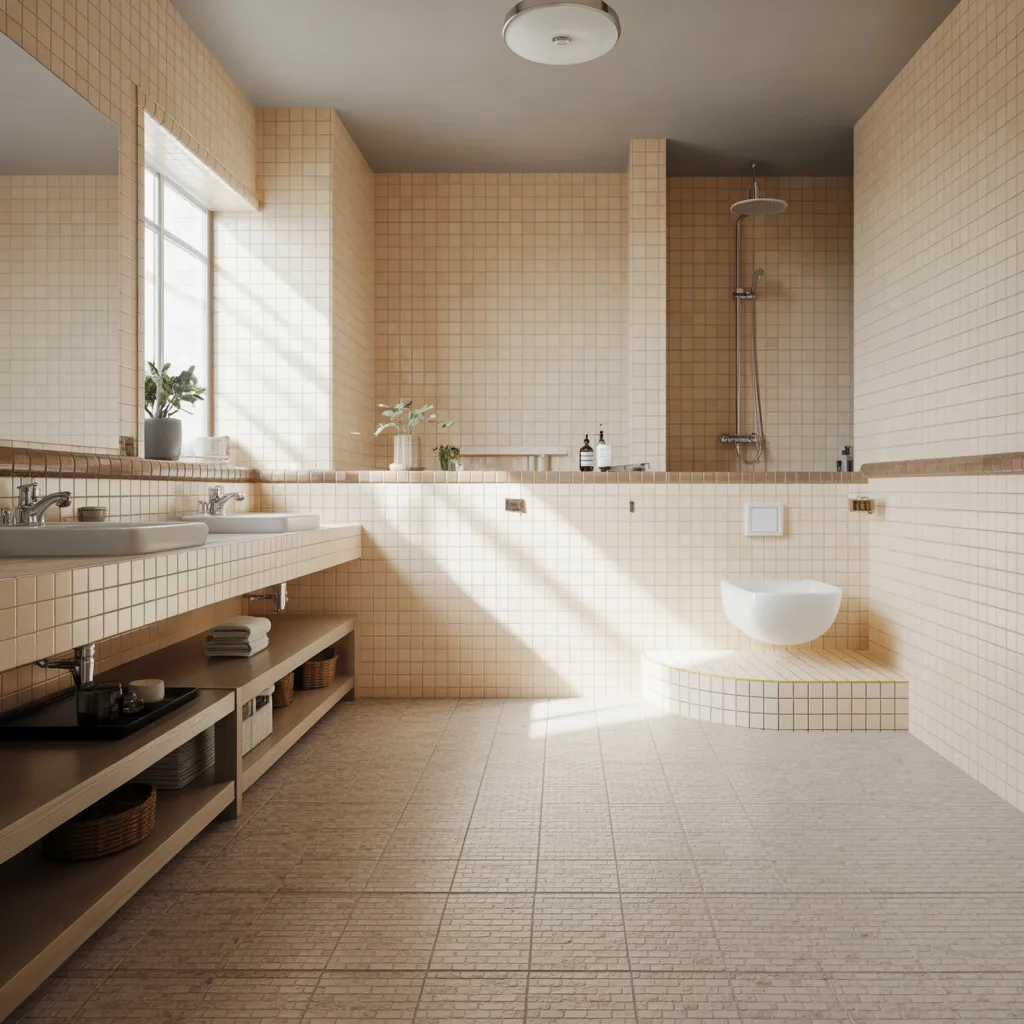
26 Bathroom Tile Ideas That Transform Any Bathroom From Ordinary to Genuinely Beautiful
Tile is the most permanent design decision in a bathroom. Paint can be changed in a weekend. Hardware can be swapped in an afternoon. But tile — once set, grouted, and sealed — defines the bathroom for years, sometimes decades. That permanence makes the tile choice one of the highest-stakes decisions in any bathroom renovation, and one of the most rewarding when it is made well. A beautiful tile choice transforms not just the bathroom but the entire experience of being in it every day.
The challenge is that tile decisions are made under conditions that are almost designed to produce mistakes. Small chips under fluorescent store lighting, samples that look completely different once installed, choices made quickly under renovation pressure. This list covers 26 bathroom tile ideas that help you think through the options clearly — what each tile type actually delivers, what it pairs with, and what the real-world considerations are before you commit to something that will be in your bathroom for the next ten years.
Best Bathroom Tile Ideas to Try in Your Home
The best bathroom tile choices share one quality that’s worth naming before anything else: they look right in the bathroom’s actual light, at the bathroom’s actual scale, in combination with the actual fixtures and materials they’ll live alongside. Not in a showroom under perfect lighting. Not on a computer screen. In the room. This is why tile samples tested on the actual walls and floor, viewed in morning light and evening light and artificial light, are non-negotiable before any tile decision is finalized.
What follows covers the full range of bathroom tile ideas — from the classic and timeless to the bold and distinctive — with specific guidance on where each tile type works best, what it pairs with, and what the practical maintenance considerations are. Use this list to move past the first safe option and toward a tile choice that genuinely reflects how you want your bathroom to look and feel every day.
Large Format Porcelain Tile Idea
Large-format porcelain tiles — 24×24 inches or larger — make a bathroom feel more spacious and more contemporary than almost any other tile choice. The fewer grout lines visible, the cleaner and more expansive the visual field. In a small bathroom especially, the jump from 12×12 tile to 24×24 tile has a dramatically noticeable effect on perceived room size. And practically, fewer grout lines means less grout to clean, which makes the bathroom genuinely easier to maintain over time.
Large-format porcelain in warm white, light grey, or stone-look finishes runs about $2-6 per square foot for the tile itself — comparable to many standard options. Installation costs slightly more because large tiles require more precise leveling, but the total project rarely costs dramatically more. The most design-forward detail: running the floor tile continuously into the shower with no threshold. This single decision makes the bathroom read as one seamless space rather than divided zones and photographs better than almost anything else in modern bathroom design.
Classic White Subway Tile Idea
White subway tile has been used in bathrooms since the early 1900s and has never looked dated — because its simplicity makes it compatible with virtually every design direction. The tile itself is neutral. The grout color is where the personality emerges. White grout with white subway reads as classic and clean. Dark grey or charcoal grout reads as graphic and contemporary. A colored grout — sage green, terracotta, navy — makes the same white subway tile feel bold and distinctive.
Standard 3×6 subway tile in glazed ceramic runs about $1-3 per square foot — one of the most affordable tile options available. For a more premium feel, handmade subway tile from a studio maker or a brand like Heath Ceramics has slight surface variation and dimension that mass-produced tile doesn’t achieve. Installation patterns extend the tile’s design range significantly: horizontal stack (classic), vertical stack (taller-feeling room), herringbone (dynamic and graphic), offset brick (timeless). The same tile, installed in different patterns with different grout colors, produces entirely different results.
Zellige Tile Idea
Zellige is a Moroccan handmade clay tile with a slightly irregular surface, variable color depth within each piece, and a glazed finish that catches and reflects light differently from every angle. A wall of zellige doesn’t look uniform — each tile is slightly different from its neighbors, creating a surface that has life and movement rather than the flat regularity of manufactured tile. In a bathroom where every other surface is hard and uniform, zellige introduces an organic quality that changes how the room feels.
Zellige is significantly more expensive than standard tile — budget $15-40 per square foot depending on color and source. It also requires an experienced tile setter because the irregular thickness and surface demand more skill to install well. But in a bathroom where the tile is a design priority rather than a background element, zellige delivers a result that no manufactured tile can replicate. Terracotta, warm white, sage green, and pale blue are the most popular bathroom zellige colors — all warm, all natural-feeling, all genuinely beautiful in the right light.
Herringbone Pattern Tile Idea
Herringbone — rectangular tiles laid in a V-shaped zigzag at 45-degree angles — adds visual energy and movement to any tiled surface without requiring a new tile type. The same white subway tile that reads as classic in a standard horizontal installation reads as dynamic and contemporary in a herringbone pattern. The pattern itself is the design decision, which means you can achieve a dramatically different result using a tile you might already be considering for another reason.
Herringbone works best with rectangular tiles — subway tile, wood-look plank tile, or pencil tile. On a floor, it creates a sense of movement that standard grid installation doesn’t achieve. On a shower feature wall, it draws the eye in a way that feels deliberately chosen rather than defaulted to. Herringbone installation requires significantly more cuts than standard grid installation and produces about 15-20 percent more tile waste — add this to your quantity estimate when ordering. Labor costs are higher, too, because more precise cuts and alignment are required throughout the installation.
Encaustic Cement Tile Idea
Encaustic cement tiles are handmade with pigmented cement rather than fired clay, producing intricate geometric and floral patterns in multiple colors that cannot be achieved in standard ceramic or porcelain tile. They are the tile choice for bathrooms where a strong, personal design statement is the goal — a bathroom floor in encaustic cement becomes the design focal point of the entire room. Everything else should be kept simple enough to let the tile do the work without competing with it.
Encaustic cement tile runs about $8-20 per square foot depending on pattern complexity and source. The important maintenance consideration: cement tile is more porous than porcelain and requires sealing before grouting and annually after installation. Unsealed cement tile stains quickly in a bathroom environment, and some stains are permanent. For a bathroom with regular use and minimal maintenance attention, a porcelain tile with an encaustic-look printed pattern achieves most of the visual result with significantly lower maintenance requirements.
Marble Tile Idea
Marble has been used in bathrooms for centuries because nothing manufactured has quite replicated its combination of veining, color variation, and surface depth. White Carrara marble is the most classic and widely available — warm, veined, immediately recognizable as a material of quality. Calacatta marble is whiter with bolder grey and gold veining, more dramatic and more expensive. Nero Marquina is black with white veining, bold and striking in a way that no other stone achieves in a bathroom.
Real marble runs about $8-20 per square foot for tile, or $60-100 per square foot as a slab for countertop applications. The maintenance requirement is the honest consideration: marble must be sealed before installation and resealed annually to prevent staining. Acidic substances — citrus, vinegar, many cleaning products — etch the surface permanently. For a bathroom where the material investment is a priority and the care investment is realistic, marble is genuinely worth it. For a bathroom where maintenance will be sporadic, a high-quality porcelain marble-look tile achieves nearly the same visual result with none of the ongoing care.
Terrazzo Tile Idea
Terrazzo — a composite of marble chips, glass, or stone set in cement or resin — has made a significant design comeback from its mid-century association with public buildings. Modern terrazzo tile comes in a range of color combinations and chip sizes that feel simultaneously retro and contemporary. In a bathroom, terrazzo adds personality and color through the chip pattern without the commitment of a single strong hue — it can incorporate four or five colors in a way that reads as complex but not busy.
Terrazzo porcelain tile — which achieves the terrazzo look in a manufactured porcelain format — runs about $5-10 per square foot and has none of the maintenance requirements of real poured terrazzo. Real terrazzo flooring, if you’re doing a full renovation, runs about $15-30 per square foot installed and has a beautiful quality that the porcelain version approaches but doesn’t fully match. For bathroom floors where you want color and pattern without committing to a single bold choice, terrazzo is one of the most versatile and most interesting options available.
Wood-Look Porcelain Tile Idea
Real wood flooring in a bathroom is genuinely problematic — water, humidity, and temperature changes cause warping, swelling, and deterioration over time. But the warmth that wood adds to a bathroom is genuinely desirable, especially in bathrooms where every other surface is tile, stone, or metal. Wood-look porcelain achieves the visual warmth of wood plank flooring with the full water resistance of porcelain — and the best contemporary versions are convincingly realistic at normal viewing distance.
Wood-look porcelain runs about $2-5 per square foot for the tile itself. The key to making it look realistic rather than obviously manufactured: choose a version with natural variation between tiles. Repetitive patterns reveal the manufactured origin at a glance; varied patterns read as real wood. Lay plank tiles lengthwise in the room to maximize the visual floor extension. A warm oak tone adds warmth to a white or grey bathroom. A darker walnut-look creates a richer, more dramatic effect. Either way, it’s one of the most effective ways to bring organic warmth into a bathroom without the maintenance implications of real wood.
Black and White Checkered Tile Idea
Black and white checkered tile is one of the most graphically bold and most enduring bathroom floor choices available. It has been used in everything from Victorian bathhouses to contemporary boutique hotels because the graphic quality is strong enough to define a room’s character entirely on its own. The check scale matters significantly — small checks (1-2 inches) read as vintage and detailed, medium checks (4-6 inches) read as bold and contemporary, large checks (12 inches) read as graphic and modern.
For a contemporary result, diagonal installation — checks rotated 45 degrees — adds visual movement and makes the floor appear larger than straight-set installation. Standard black and white porcelain checkered tile runs about $2-5 per square foot. Pair with simple walls — white, a single solid color, or a plain tile — so the floor does the visual work without competition. The checkered floor works with almost any fixture finish and any vanity style, which makes it one of the most versatile statement floor choices available despite its graphic boldness.
Hexagon Tile Idea
Hexagon tile has been a bathroom staple since the late nineteenth century and has remained consistently popular because the geometric shape creates visual interest without requiring pattern complexity. Small white hexagons (1-2 inches) read as classic and clean — they’re the most common bathroom floor tile in pre-war homes and in bathrooms designed to evoke that era. Larger hexagons (4-8 inches) read as more contemporary. Colored hexagons — sage green, terracotta, navy, dusty pink — make a statement that feels both nostalgic and current.
Small white hexagon tile runs about $3-8 per square foot and is sold on mesh backing for easier installation. Colored hexagon tile in the 4-6 inch range runs about $5-12 per square foot. The grout consideration matters particularly with hexagon tile — the many grout lines mean that grout color and consistency have an outsized visual effect. Dark grout makes the hexagon pattern more pronounced; light grout makes the tiles read as a more continuous surface. Match grout color to tile color for a seamless look; contrast grout color for a graphic result.
Penny Tile Idea
Penny tile — small round tiles approximately 3/4 inch in diameter — creates a surface that is rich in texture and grout line detail, which reads as vintage, artisanal, and warm rather than clinical. A penny tile shower floor, bathroom floor, or wainscoting element adds a texture that no other format achieves. The small scale makes it particularly effective in small bathrooms where larger tiles can feel disproportionate — penny tile gives a small room surface interest without overwhelming the space.
Penny tile is sold on mesh backing sheets for easier installation — budget about $5-12 per square foot for standard ceramic or porcelain penny tile. The maintenance consideration: penny tile has the highest ratio of grout to tile surface of any format, which means more grout to clean and more potential for grout staining over time. Epoxy grout — more stain-resistant than cement grout — is worth specifying in penny tile installations to reduce long-term maintenance. The texture and character of penny tile is genuinely beautiful; the cleaning implications are worth acknowledging before committing to a full floor.
Fluted or Ribbed Tile Idea
Fluted tile — with parallel vertical ridges across the surface — has become one of the most photographed bathroom tile choices in contemporary design over the past several years. The ridges create a three-dimensional texture that catches light differently at different times of day, producing a surface that is constantly slightly different to look at. A wall of fluted tile in a monochromatic color becomes sculptural rather than simply flat — it’s texture doing the work that pattern does in other tile styles.
Fluted tile is available in ceramic, porcelain, and natural stone from specialty tile retailers at approximately $8-25 per square foot depending on material and format. The honest practical consideration: the ridges collect soap residue and require more deliberate cleaning than flat tile. In a shower application specifically, this cleaning requirement is worth factoring into the decision. Used as a feature wall outside the shower — behind the vanity, on a bathroom accent wall — fluted tile delivers its sculptural quality without the cleaning implications of wet-area installation.
Fish Scale Tile Idea
Fish scale tile — curved tiles that overlap like fish scales or roof shingles — creates a surface with strong pattern identity and visual movement that reads as simultaneously traditional and contemporary. It appears in Victorian-era bathrooms and in the most recent design media, which is a reasonable indicator of its staying power as a choice. On a shower feature wall or above a bathtub, a fish scale installation becomes the bathroom’s most distinctive design element — the detail that makes the room memorable.
Fish scale tile in ceramic or porcelain runs about $5-15 per square foot. The installation consideration: fish scale tile is complex to cut and install at edges and corners, which increases labor costs significantly compared to standard rectangular tile. Budget accordingly — expect installation costs to run 20-30 percent higher than equivalent square footage of standard tile. Reserve fish scale for a single accent wall or feature area rather than a full bathroom application — the pattern is strong enough that one wall is typically more effective than four.
Moroccan-Inspired Geometric Tile Idea
Moroccan tile patterns — intricate geometric designs in star, cross, and interlocking diamond formations — bring a richness and cultural specificity to a bathroom that no other tile style replicates. The patterns are traditionally bold and colorful, though contemporary interpretations in monochrome (black and white, navy and white) are increasingly common and increasingly popular in design media. A single wall of Moroccan-inspired tile transforms a bathroom completely — it’s immediately distinctive and immediately personal.
Moroccan-look tile in porcelain runs about $5-15 per square foot for digitally-printed versions; handmade Moroccan cement tile runs $10-25 per square foot. The design principle that applies here: keep everything else in the bathroom very simple. Plain white or neutral walls, simple fixtures in a consistent finish, minimal accessories. The Moroccan tile is the statement — it doesn’t need competition from anything else in the room. On a bathroom floor with plain wall tile, the pattern works at the scale most people see it most clearly: from above.
Travertine Tile Idea
Travertine — a natural limestone formed in hot springs — has a warm cream-to-gold tone with natural pitting and veining that gives it a depth and character that no manufactured tile achieves. It reads as Mediterranean, spa-like, and organically luxurious. In a master bathroom with warm fixtures and natural material accents, travertine creates an environment that feels genuinely different from any tile-based bathroom — warmer, more dimensional, and more connected to natural material quality.
Filled and honed travertine — where the natural pits are filled and the surface is flat and matte — is the most practical bathroom option; unfilled travertine has more character but the surface pits accumulate soap and grime. Budget $5-15 per square foot for tile. Travertine must be sealed before use and regularly resealed — it is significantly more porous than porcelain and will stain readily without proper sealing. In a master bathroom where the daily experience of the material justifies the maintenance commitment, travertine is one of the most beautiful natural stone options available.
Matte Black Tile Idea
Matte black tile — in large format, subway, hexagon, or any other format — produces one of the most dramatic bathroom results available. A fully or partially black-tiled bathroom reads as bold, sophisticated, and confident in a way that almost no other single tile choice achieves. The matte finish rather than glossy is essential — glossy black shows every water mark and fingerprint and requires constant wiping to maintain; matte black is significantly more forgiving and reads as more deliberately chosen.
Matte black tile is available in virtually every format from standard ceramic to large-format porcelain at prices comparable to equivalent standard tile — roughly $3-8 per square foot for most formats. The design consideration: dark surfaces absorb light, which means a predominantly black bathroom needs adequate artificial lighting to prevent the space from feeling dim or oppressive. Pair matte black tile with lighter elements — white fixtures, warm wood vanity, natural stone accents — to create contrast and prevent the room from feeling overwhelming despite the darkness of the primary surface.
Grout Color as Design Decision Idea
Grout color is the most underestimated decision in any tile installation and the one most likely to produce unexpected results. White grout with white tile produces a seamless look where the tile reads as nearly monolithic. Dark grey grout with white tile creates a graphic grid that emphasizes the tile format and size. Colored grout — sage green, terracotta, navy — makes the grout itself a design element that reads as bold and intentional. The same tile with different grout colors can produce results so different they might be considered separate design choices.
Grout color must be decided at the same time as the tile — not as an afterthought. Test the grout color on a sample board in the actual tile before committing. Dried grout looks significantly different from wet grout — darker, more muted, generally more mellow. Epoxy grout is available in every color option and is significantly more stain-resistant than cement grout, which matters particularly for light-colored grout that would otherwise show staining quickly in a bathroom environment. The extra cost of epoxy — typically $5-10 per square foot more in labor — is usually worth it for the long-term maintenance benefit.
Bathroom Tile Pattern Mixing Idea
Using tiles of different sizes or formats on different surfaces in the same bathroom — large format on the floor with subway on the walls, or a patterned floor tile with a plain wall tile — creates visual interest and hierarchy that a single tile throughout the whole bathroom often lacks. The bathroom becomes more readable: the floor is the floor, the walls are the walls, and each makes its own contribution to the room’s overall character. This approach requires more planning but produces a more designed-feeling result.
The design principle for successful tile mixing: keep the color consistent while varying the format or the pattern. All tiles in warm white with different sizes and patterns creates a cohesive but visually layered bathroom. Varying both color and format simultaneously usually creates visual chaos rather than interest. A practical example: 24×24 inch light grey floor tile with white 3×12 subway wall tile in a vertical stack creates a bathroom where the floor grounds the space and the walls open it up, using color consistency to unify a varied tile palette.
Tile Extended to Ceiling Idea
Most bathroom tile installations stop at eye level — because that’s where the tile was always stopped, and because stopping earlier saves money on tile and labor. But extending tile from floor to ceiling, particularly in the shower and on the primary feature wall, creates a bathroom that reads as more finished, more intentional, and more luxurious than the same tile stopped at the standard 6-foot height. Full-height tile also eliminates the painted wall section above the tile that can accumulate moisture damage over time in a high-humidity bathroom.
Full-height tile installation adds approximately 30-40 percent to the tile material cost for a standard bathroom, and a comparable increase in labor. For a bathroom where the tile is a design priority, this is often a worthwhile investment — the full-height treatment is what separates a bathroom that looks renovated from one that looks designed. On a tight budget, prioritize full-height tile in the shower specifically and allow the main bathroom walls to stop at standard height. The shower is where full-height tile makes the most dramatic difference.
FAQs About Bathroom Tile Ideas
What bathroom tile ideas make a small bathroom look bigger?
Large-format tiles with minimal grout lines make a small bathroom feel most significantly larger. Running the floor tile continuously into the shower without a threshold amplifies the effect. Light tile colors reflect more light than dark ones. Vertical tile installation makes walls feel taller. Matching the grout color closely to the tile color minimizes the visual grid, making the surface read as a single continuous plane rather than individual tiles — which increases the sense of space.
What is the most timeless bathroom tile choice?
White subway tile in a classic brick or stack bond pattern is the most consistently timeless bathroom tile choice — it has been used for over a century without becoming dated because its simplicity is compatible with every design direction. White hexagon tile is the second most timeless option. Both function as neutral backgrounds that support rather than compete with every other design element in the bathroom, which is why they’ve endured through every trend cycle and continue to appear in both new construction and renovation projects.
How much tile do I need for a bathroom?
Measure the square footage of each surface being tiled (length times width for floors; height times width for wall sections, minus windows and doors). Add all surfaces together. Add 10 percent for standard tile installations (for cuts and breakage), 15-20 percent for diagonal installations, herringbone patterns, or very large format tile. Order all tile from the same batch — tiles from different production runs can have subtle color variations that are visible in the finished installation, and ordering more than needed upfront is significantly cheaper than trying to match a batch later.
What is the difference between porcelain and ceramic tile for bathrooms?
Porcelain is denser, less porous, harder, and more water-resistant than ceramic. It is fired at a higher temperature, making it more durable and better suited to high-moisture environments. For bathroom floors and shower walls, porcelain is the stronger choice. Ceramic is more affordable, lighter, and easier to cut, but more porous and less durable. For bathroom walls above the wet zone where durability requirements are lower, ceramic is a practical and cost-effective option. In the shower and on the floor, always specify porcelain.
Should bathroom floor and wall tile match?
Matching floor and wall tile creates a seamless, spa-like effect — this works particularly well with large-format tile in a monochromatic bathroom. Contrasting floor and wall tile creates visual interest through the contrast and allows each surface to be a distinct design choice. Neither approach is objectively better — the choice depends on whether you want a unified, quiet room or one with distinct design elements on each surface. The most consistent design advice: if mixing floor and wall tile, keep the color palette consistent while varying the format or pattern.
Conclusion of Bathroom Tile Ideas
Tile is the most permanent decision in a bathroom renovation and the one that most defines how the room looks, feels, and ages. Getting it right — really right, not just safe — requires understanding what each tile type actually delivers in real installation conditions, what it pairs well with, and what the long-term maintenance and living implications are. The ideas in this list cover the full range from the classic and timeless to the bold and distinctive, with enough practical guidance to make an informed decision rather than a default one.
Order samples of every tile you’re seriously considering and live with them in the actual bathroom for a week. View them in morning light, afternoon light, and evening artificial light. Hold them against the countertop material and the fixture finish you’re planning. The tile that looks right in every one of those conditions is the tile worth committing to — and in a bathroom you’ll use every day for years, that commitment is worth taking the time to get right.